 Elizabeth Chen
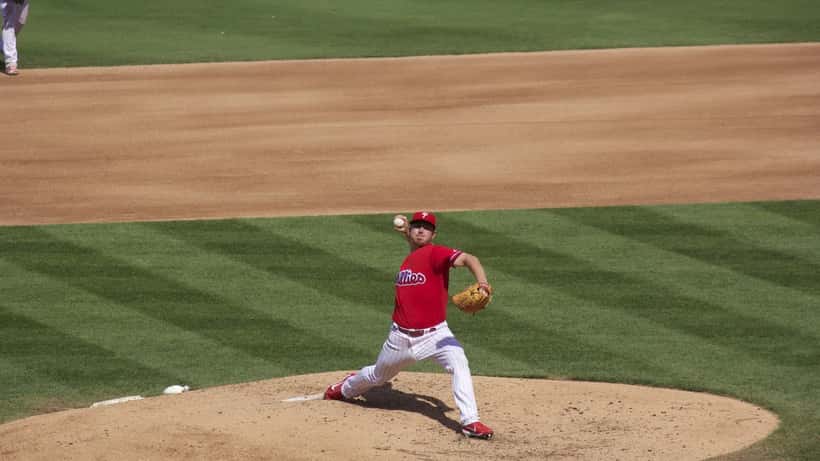
Walker Buehler, the San Diego Padres right-hander, made an admission in spring training 2026 that few professional athletes would voice publicly: his elbow only stopped hurting in early February 2026 — nearly four years after his Tommy John surgery in 2022. On March 21, 2026, Buehler was added to the Padres' Opening Day roster, pitching competitively for the first time without chronic pain since his UCL reconstruction.
His disclosure challenges the 12-to-18-month recovery timeline that coaches, agents, and parents routinely cite — and that often sends athletes back to play before their bodies have fully healed.
The Standard Timeline vs. Buehler's Reality
Tommy John surgery, the layman's term for ulnar collateral ligament (UCL) reconstruction, is among the most common procedures in professional baseball. The operation replaces a torn or damaged UCL with a tendon graft, typically taken from the forearm or hamstring.
Published return-to-play studies frequently cite recovery windows of 12 to 18 months for major league pitchers. But Buehler's case illustrates the gap between returning to the mound and returning to a pain-free baseline. After his 2022 surgery, he spent parts of 2024 and 2025 with the Boston Red Sox and Philadelphia Phillies respectively — pitching, but never quite right. He was released by both clubs before landing a minor league contract with San Diego, just weeks before his elbow finally stopped hurting.
"Four weeks before spring training, the elbow stopped hurting," Buehler confirmed in spring 2026. That timeline — surgery in 2022, pain-free in February 2026 — represents nearly 45 months of recovery.
Why UCL Pain Can Last Years
Sports medicine specialists point to several overlapping biological processes that can extend discomfort well past the initial rehabilitation milestone:
Ligamentization: The tendon graft used to reconstruct the UCL does not immediately function as native ligament tissue. It undergoes a slow remodeling process — called ligamentization — in which it gradually takes on the mechanical properties of the original structure. This process can take 18 to 24 months for the graft itself, but surrounding tissue adaptation continues well beyond that window.
Neurological repatterning: Following joint surgery, nerve endings in the reconstructed area require time to accurately signal pain and mechanical load. During this period, athletes may experience discomfort that reflects healing rather than new damage.
Compensatory mechanics: Pitchers instinctively alter their arm path to protect a painful elbow. These adjustments can strain the shoulder, forearm, and bicep — creating secondary issues that outlast the original surgery and obscure recovery progress from both the athlete and their medical team.
Buehler's 2026 results reflect the complexity of that journey: a 5.20 ERA across 8 starts and 36.1 innings — on the mound, but still calibrating mechanics after nearly four years of subconscious compensation.
What This Means for Amateur and Youth Pitchers
Tommy John surgery is no longer limited to professional athletes. According to the National Institute of Arthritis and Musculoskeletal and Skin Diseases (NIAMS), UCL injuries have increased significantly among high school and collegiate pitchers over the past decade. Younger athletes face the same recovery biology as major leaguers — without the benefit of a full-time training staff and daily imaging to monitor progress.
For youth pitchers and overhead-throwing athletes at any level, Buehler's experience offers concrete guidance:
- Do not anchor recovery to a fixed calendar. The 12-to-18-month figure represents a return-to-play threshold, not a return-to-normal endpoint. Physiological healing continues for years after a player returns to competition.
- Lingering pain does not mean the surgery failed. Discomfort in the 24-to-45-month window is documented in sports medicine literature and does not automatically indicate re-injury or surgical failure.
- Compensatory patterns require assessment even after pain resolves. A pitcher who has altered their mechanics to protect a painful elbow may have embedded movement patterns that persist and create new stress points — often in the shoulder or opposite forearm.
A sports medicine specialist can evaluate graft maturation stage, identify compensatory mechanics through video biomechanical analysis, and build a phased return-to-throw program based on physiological readiness rather than calendar weeks.
The Broader Context: Baseball's Tommy John Epidemic
Buehler is not the only high-profile pitcher navigating a longer-than-expected recovery arc. The spike in Tommy John surgeries at the youth level has produced an entire cohort of pitchers in their mid-twenties managing complex, multi-year rehabilitation histories.
The culture of professional baseball — where pain tolerance is often treated as a mark of character — makes it unusual for players to admit extended post-surgical discomfort. Buehler's candor provides a data point that most athletes never share publicly. His 45-month pain timeline, combined with a 2026 return that still shows a 5.20 ERA, suggests that the physiological finish line is not where the published recovery studies claim it is.
For any pitcher or overhead-throwing athlete navigating UCL rehabilitation, the most important professional relationship is with a sports medicine specialist who tracks longitudinal recovery data — not just return-to-play milestones. Pain after surgery may be part of the story, not evidence that the story is over.
Consult a Specialist Before Returning to Full Activity
Recovery decisions made in the 18-to-36-month post-surgical window carry the highest risk of re-injury. This is the period when athletes often feel functionally capable but have not completed the biological healing process. Walker Buehler's case places the endpoint of that window significantly later than standard guidance suggests.
If you or an athlete you coach is making return-to-play decisions after Tommy John surgery, consulting a sports medicine physician or orthopedic surgeon for a structured evaluation — including a review of current graft maturation markers and movement patterns — can prevent premature return and the repeat injury risk that follows.
This article is for informational purposes only and does not constitute medical advice. Consult a licensed healthcare provider for any health concerns related to sports injuries or surgical recovery.
