 Laura Clark
Rome Open 2026: 13 Pro Withdrawals Expose the Injury Risks All Tennis Players Share
The 2026 Internazionali BNL d'Italia in Rome — one of the most prestigious clay court events on both the ATP and WTA tours — has been defined as much by who is absent as by who is competing. As of May 8, 2026, thirteen players have withdrawn from the tournament due to injury, including world-class competitors Carlos Alcaraz and Jack Draper, who pulled out with knee complications. Marta Kostyuk withdrew from the women's draw due to a hip issue. The pattern raises a question that matters well beyond professional tennis: if elite athletes with full-time medical teams cannot escape injury in the clay court season, what does that mean for the millions of Americans who play recreational tennis?
Rome Open 2026 — A Tournament Defined by Withdrawals
The Italian Open runs May 5 through May 17, 2026 at the Foro Italico in Rome, offering a combined prize pot of over €7.2 million for the ATP Masters 1000 and WTA 1000 fields. World No. 1 Jannik Sinner is competing on home soil, seeking a record-extending sixth consecutive Masters 1000 title. Novak Djokovic is returning to the tour after a three-week absence in his first clay court tournament of the year.
But those headline narratives are overshadowed by the attrition. Thirteen withdrawals from a single Grand Slam-level event — before the tournament's second week — is a signal that the demands of the clay court swing are taking a serious physical toll. Early round results have already reflected the physical state of the remaining field, with some seeded players visibly laboring in matches that would normally be comfortable wins.
What Clay Courts Do to the Human Body
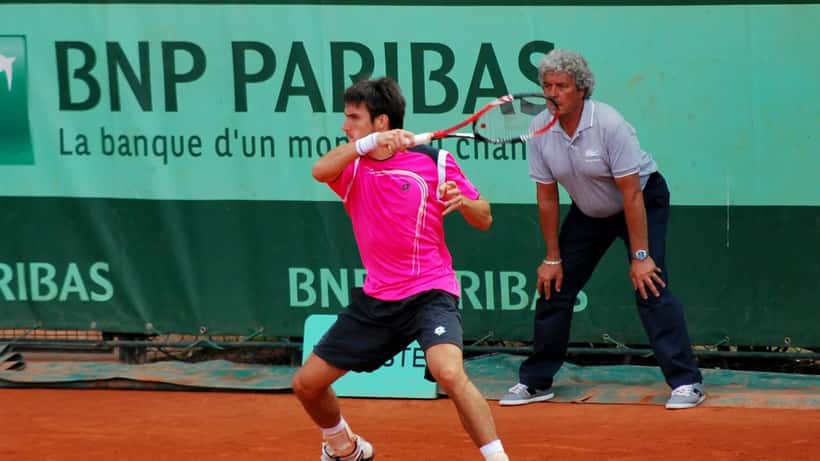
Clay courts are slower than hard courts or grass, which means rallies are longer, footwork demands are higher, and the physical load per match is substantially greater. The sliding movements required on clay — players routinely slide two to three meters per point to reach wide balls — place significant eccentric load on the quadriceps, hip flexors, and adductor muscles. Repeated stopping, pivoting, and explosive accelerations on a surface that provides less cushioning than modern hard courts also elevates the stress on the knees, ankles, and lumbar spine.
The clay court season in professional tennis spans roughly six weeks, from late April through the French Open in early June. For professional players, this concentrated period of high-intensity competition on a physically demanding surface with minimal recovery time is a known injury accelerator. According to the National Institute of Arthritis and Musculoskeletal and Skin Diseases, overuse injuries — the category that includes most tennis-related knee, hip, and shoulder conditions — develop when training and competition load exceed the body's ability to adapt and recover.
The Gap Between Professionals and Recreational Players
Professional players have daily access to physiotherapists, athletic trainers, orthopedic surgeons, and sports medicine doctors. Their injury management is continuous, not reactive. They typically know within hours whether a developing issue requires rest, treatment, or withdrawal.
Recreational tennis players in the United States — including the estimated 23 million Americans who play at least occasionally — operate in a very different environment. Most play two to four times per week without structured warmup routines, without post-match recovery protocols, and without regular access to sports medicine evaluation. They often ignore early warning signs that professional staff would flag immediately, continuing to play through discomfort until it becomes injury.
The injuries professionals withdraw from — knee tendinopathy, hip flexor strain, rotator cuff irritation, lower back fatigue — are the same conditions that sideline recreational players. The difference is that professionals withdraw before structural damage occurs. Weekend players often don't stop until they cannot continue.
As explored in Musetti's clay court comeback and tennis fatigue, even elite players who manage load carefully face the compounding effects of a full clay court schedule — a dynamic that recreational players are often unaware applies to their own bodies.
Five Warning Signs Every Tennis Player Should Know
Sports medicine specialists consistently identify five early warning signs that indicate a player needs evaluation before returning to court:
1. Pain that persists more than 24 hours after play. Normal muscle soreness after intense activity fades within a day. Pain lasting longer — particularly joint or tendon pain — indicates tissue stress that requires assessment.
2. Swelling in a joint. Any visible swelling in the knee, ankle, or wrist after tennis is a sign of active inflammation or structural irritation. Playing through joint swelling risks converting a minor issue into a significant one.
3. Altered movement patterns. If you are unconsciously favoring one leg, adjusting your serve to avoid shoulder discomfort, or avoiding certain strokes, your body is compensating for an underlying problem.
4. Pain that improves during warmup but returns during or after play. This pattern is a hallmark of tendinopathy — a condition that worsens under load despite initial relief. It requires specific eccentric loading rehabilitation, not rest alone.
5. Recurrent injuries at the same site. A second or third ankle sprain, recurring knee pain in the same spot, or shoulder stiffness that keeps returning — these are patterns indicating structural vulnerability that a sports medicine specialist needs to evaluate.
The third withdrawal story from the 2026 Italian Open confirms this dynamic. Barbora Krejčíková's return after a thigh injury illustrates how even carefully managed professional recoveries can result in setbacks when underlying biomechanical issues haven't been fully resolved.
What a Sports Medicine Doctor Does That a Rest Day Cannot
Rest is not rehabilitation. When a tennis injury involves the knee ligaments, hip flexors, rotator cuff, or Achilles tendon, the tissue damage requires specific intervention to heal in a way that restores full function and reduces re-injury risk.
A sports medicine physician can order imaging (MRI or ultrasound) to determine whether an injury is acute or chronic, structural or inflammatory. Based on that assessment, they can develop a targeted return-to-sport protocol, refer to a physical therapist for specific rehabilitation, provide injection therapy if appropriate, and — critically — identify biomechanical factors that predisposed the injury in the first place.
For recreational tennis players, that last point is often the most valuable. Many recurring tennis injuries trace back to correctable movement patterns: a serve mechanic that overloads the shoulder, a groundstroke technique that generates excessive wrist stress, or a lateral movement pattern that places the knee in a vulnerable position. A sports medicine specialist with tennis-specific experience can identify these patterns before they become chronic problems.
Rome Open 2026's wave of withdrawals is a reminder that injury risk is not a function of fitness level — it is a function of load, recovery, and early intervention. ExpertZoom connects you with sports medicine specialists and health professionals who understand the demands of court sports and can help you stay on the court through the 2026 tennis season and beyond.
