 Isabella Torres
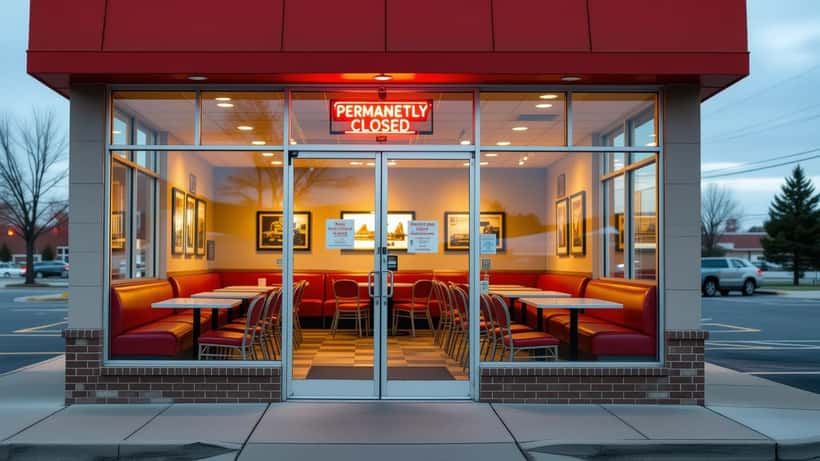
More than 800 U.S. restaurant chain locations are expected to close by the end of 2026. Wendy's, Pizza Hut, and Papa John's have each announced sweeping shutdowns, while FAT Brands filed for Chapter 11 bankruptcy in January — taking Smokey Bones with it entirely on April 28. For the millions of Americans who work at these chains, own franchises, or carry gift card balances, the question isn't just which location closes next. It's what legal protections stand between them and sudden, significant losses.
The Scale of What's Happening
The numbers are stark. Wendy's has announced up to 350 U.S. location closures in the first half of 2026. Pizza Hut is trimming approximately 250 U.S. stores. Papa John's is shutting around 200. Denny's continues to close after completing a 150-restaurant shutdown plan. Bahama Breeze, a Darden Restaurants brand, shuttered 14 locations — roughly half its entire fleet — in April 2026.
Some chains haven't survived at all. Smokey Bones permanently closed all 30-plus locations after FAT Brands entered Chapter 11. Red Lobster, which emerged from its own Chapter 11 restructuring after closing approximately 130 restaurants during 2024, is still contracting: its iconic Times Square flagship closed on June 14, 2026.
The underlying drivers are familiar — inflation, rising labor costs, higher commercial rents, and a consumer shift away from sit-down dining. Casual dining chains have been hit hardest, according to industry analysts at Tasting Table. But the legal fallout is landing on workers and small business owners who had no part in the strategic decisions that led here.
What the WARN Act Means for Restaurant Workers
Federal law provides a critical protection that most restaurant employees don't know about until it's too late: the Worker Adjustment and Retraining Notification (WARN) Act.
Under the WARN Act, employers with 100 or more full-time workers must give 60 days' advance written notice before a mass layoff or plant closing. According to the U.S. Department of Labor, a "plant closing" is triggered when a single location permanently shuts down and affects 50 or more workers.
In practice, many franchise locations employ 25 to 40 workers and fall below the 50-person threshold. But corporate-operated locations and larger casual-dining restaurants frequently do meet it — especially when closures are announced as part of a chain-level restructuring rather than isolated store decisions.
When employers violate the WARN Act, affected workers can recover back pay and benefits for up to 60 days. The law does not enforce itself, however. Workers must file a claim, and that window closes fast.
Twenty-three states also have their own "mini-WARN" laws with lower thresholds or stronger protections. California's version covers worksites with 75 or more employees and requires 60-day notice for layoffs affecting just 50 workers. New York's WARN Act goes further still, applying to employers with 50 or more workers. If you live in one of these states and your employer gave you little or no notice, a consultation with an employment attorney may reveal you have a valid claim.
Franchise Agreements Offer Less Protection Than You Think
For franchisees, the legal picture is more complicated — and often more painful.
A franchise owner who invested $300,000 or more to open a Pizza Hut or Papa John's location operates under a franchise agreement that gives the parent company significant control. When a chain restructures, franchisees can find that corporate decisions override their own business viability.
Chapter 11 bankruptcy creates an especially treacherous environment for franchisees. The debtor company can use the bankruptcy process to reject "executory contracts" — which typically include franchise agreements. This can leave franchisees holding leases and equipment costs for locations they're no longer permitted to operate, without the brand support they paid for.
Franchisees do have rights. The Bankruptcy Code requires courts to consider equities before approving contract rejection. Franchisees can file objections, submit proofs of claim for damages, and seek representation on unsecured creditors' committees. A lawyer who understands both franchise law and the bankruptcy process can mean the difference between recovering a portion of your investment and losing everything. As ExpertZoom covered when Applebee's sued one of its own franchisees in 2026, these disputes are increasingly common — and franchisees who engage counsel early fare significantly better.
Your Gift Card Balance Is an Unsecured Debt
If you're holding gift cards to a restaurant chain that has filed for bankruptcy or is closing, here is the hard truth: your balance is an unsecured claim against the estate.
When a company files Chapter 11, gift card holders become unsecured creditors — the lowest-priority class in bankruptcy proceedings. Secured lenders, employees with priority wages, and administrative expenses all take precedence. In practice, gift card holders typically receive nothing, or pennies on the dollar, when a chain liquidates.
The Federal Trade Commission does not require merchants to honor gift cards in bankruptcy. Some states have statutes that protect gift card holders within a defined period after filing, but these vary widely. Your best defense is simple: use restaurant gift cards promptly and don't treat them as stores of long-term value.
When to Consult a Lawyer
If your employer announces a closure, consult an employment attorney before your last day, not after. The WARN Act clock runs from the date of notice, and acting quickly maximizes your options.
If you are a franchisee facing corporate restructuring or a parent company bankruptcy filing, contact a bankruptcy attorney who specializes in franchise law. Bankruptcy proceedings run on court-imposed deadlines, and missing a claims filing window forfeits rights permanently.
If you are a landlord, vendor, or supplier to a closing restaurant chain, the type of contract you hold — and when you file your proof of claim — determines your standing as a creditor.
Restaurant chain closures in 2026 are moving faster and at greater scale than many affected workers and business owners realize. The protections that exist are real. But only for those who act in time.
This article is for informational purposes only and does not constitute legal advice. Consult a licensed attorney for guidance specific to your situation.
