 Elizabeth Chen
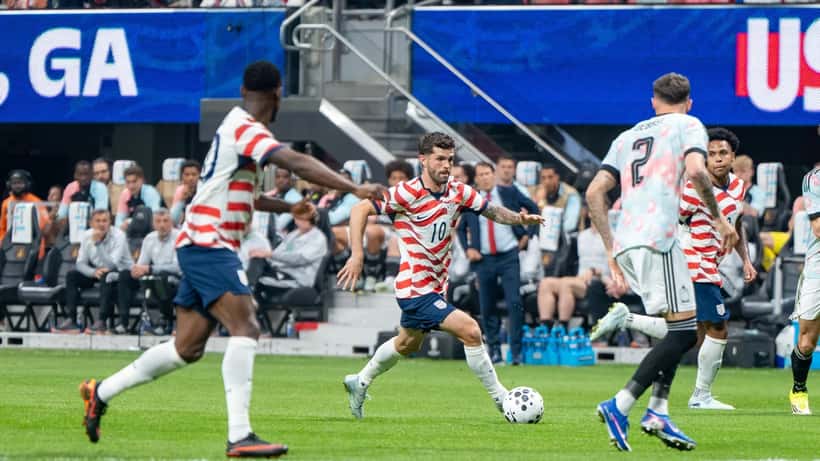
Christian Pulisic's World Cup dream nearly hit a wall before it started. On June 12, 2026 — in the first half of the USA's opening Group D match against Paraguay at SoFi Stadium — the USMNT's star forward delivered an assist and helped set up two goals, then walked off at halftime in what Fox Sports analyst Stu Holden called a substitution that was "not tactical." The United States won 3-0, but Pulisic's status for the rest of the tournament immediately raised alarm bells.
It wasn't the first time. Over the past 12 months, Pulisic has navigated a troubling cycle of recurring muscle injuries — and his experience raises an important question for athletes at every level: when does a recurring injury become a warning you can't afford to ignore?
A Year of Muscle Problems: Pulisic's Injury Timeline
Pulisic's 2025–26 season was repeatedly disrupted. In October 2025, a hamstring strain sidelined him for approximately 25 days and four matches with AC Milan. By February 2026, the injury shifted: he was held out of a Milan match with hip bursitis — inflammation of the small fluid-filled sacs (bursae) near the hip joint — prompting his coach Massimiliano Allegri to state publicly that "Pulisic has bursitis that's bothering him."
Then, in May 2026, Pulisic was ruled out of AC Milan's Serie A fixtures with a gluteal muscle strain. With the World Cup camp set to begin May 27 in Atlanta, the timing was deeply concerning for the USMNT. USMNT head coach Mauricio Pochettino had already expressed frustration: "What I'm seeing is that Christian is playing, then not playing, then on the bench... He's an important player that we wish could be fit."
Pulisic recovered in time to start the World Cup opener. He then limped — or, at minimum, was managed — off at halftime, gesturing to family that he was OK.
What These Injuries Have in Common
Three different injury types — hamstring strain, hip bursitis, gluteal muscle strain — in the same anatomical region suggest a connected problem rather than isolated incidents. Sports medicine clinicians describe this as a "kinetic chain breakdown": when one muscle group is weakened or improperly rehabilitated, adjacent structures compensate, creating a cascading pattern of strain and re-injury.
- Hamstring strains are among the most common injuries in elite soccer. Recurrence risk climbs significantly if the athlete returns before full rehabilitation — studies consistently show that early return following a hamstring strain doubles the risk of re-injury within the same season.
- Hip bursitis develops when the bursae become chronically inflamed, often due to overuse, muscle imbalance, or incomplete recovery from adjacent injuries. Mild cases resolve with 1–3 weeks of rest and anti-inflammatories; chronic cases require injection therapy or physiotherapy.
- Gluteal muscle strains (Grade 1–3) affect the gluteus medius or maximus and are closely linked to hamstring and hip mechanics. A Grade 2 strain can take 4–6 weeks to fully heal.
When all three appear in sequence over 8 months, the underlying cause is rarely the individual muscles — it's typically a core stability deficit, movement compensation, or a training load management failure.
Playing Through It: The Elite Athlete Dilemma
For elite players like Pulisic, the pressure to return to competition before full tissue recovery is immense. A home World Cup — the most-watched sporting event in the world, held on U.S. soil for the first time in 32 years — creates extraordinary incentive to mask pain and play through discomfort.
The medical risk is real. According to MedlinePlus, the U.S. National Library of Medicine's consumer health resource, untreated or prematurely cleared muscle injuries significantly increase the probability of more severe tissue damage upon re-injury. A Grade 2 strain rushed back to competition can escalate to a Grade 3 tear — potentially a season-ending rupture.
The World Cup doesn't wait. Neither does chronic injury.
What Recreational Athletes Can Learn
Pulisic's pattern mirrors what sports medicine clinicians see regularly in non-professional athletes: weekend warriors, amateur league players, and fitness enthusiasts who push through muscle discomfort and accumulate a chain of related injuries.
The warning signs that a muscle injury warrants professional evaluation include:
- Recurrence in the same region within the same season
- Pain that shifts location — from hamstring to hip to glute — without a clear new traumatic cause
- Performance decline despite apparent recovery (Pulisic scored 0 goals in 17 Milan matches from January to May 2026)
- Swelling or bruising that lingers beyond 48–72 hours
- Compensatory movement patterns — a slight limp, altered gait, or unconscious favoring of one side
Ignoring these signals in favor of pushing through "minor soreness" is how athletes turn a two-week injury into a six-month one.
When to See a Sports Medicine Specialist
A sports medicine physician or physical therapist can identify the root cause of a recurring injury pattern — not just treat the symptoms. Diagnostic tools such as ultrasound imaging or MRI can confirm whether a strain has fully healed at the tissue level before return-to-play clearance is granted.
An ExpertZoom health specialist can help you understand whether your own recurring muscle pain needs professional assessment — before a minor strain sidelines you for the season.
Will Pulisic Be Ready for the Next Match?
As of June 13, 2026, no official injury designation has been confirmed for Pulisic's halftime exit. Pochettino's post-match press conference was expected to clarify his status. With USA's second group match on the horizon, every day of recovery management counts.
For now, the USMNT has its win. Whether its star player's body holds up through the knockout rounds may come down to one question: was enough time truly taken to heal what was broken — or just enough to play through the pain?
