 Elizabeth Chen
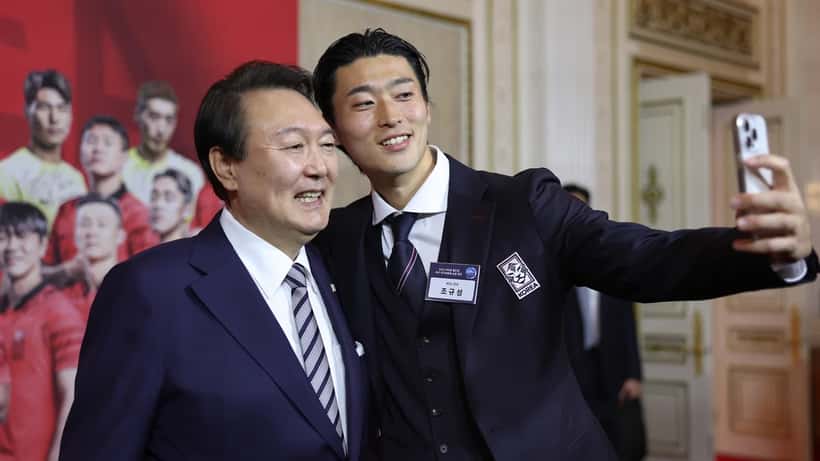
South Korean striker Cho Gue-sung takes the field as the number nine for South Korea against Czech Republic on June 13, 2026, at the FIFA World Cup. If his record from the 2022 tournament holds, he will be one of the most physically imposing presences in the group stage — the Korean forward won 21 aerial duels in Qatar, second only to Morocco's Youssef En-Nesyri among all outfield players, and scored twice against Ghana in a single match.
That aerial dominance is exactly what sports medicine specialists are scrutinizing in 2026. The science around repeated heading and long-term brain health has matured significantly in the last three years — and what it suggests has real implications for players from professional strikers to youth athletes.
Cho Gue-sung's Game and the Heading Problem
At 25 years old and on a five-year contract with Danish Superliga club FC Midtjylland, Cho has built his professional identity on physical presence in the box. His 2023-24 season produced the highest number of won aerial duels in the Danish Superliga, and South Korea's tactical approach under their 2026 World Cup setup leans on his ability to hold up play and win headers against larger central defenders.
But every header is a controlled head impact. Research published over the past decade — most recently in longitudinal studies tracking professional players from the UK and Scandinavia — has found measurable changes in white matter microstructure in the brains of players who head the ball most frequently over their careers, even without any history of diagnosed concussion.
The debate is no longer whether heading is entirely safe. The debate is how much cumulative exposure is too much, and what protocols should govern high-frequency heading at the professional level.
What the Science Says
The CDC's HEADS UP program, which tracks concussion and head impact research in youth and professional sports, identifies soccer as a high-contact sport requiring active concussion management protocols. U.S. Soccer banned heading for players aged 10 and under in 2015 and restricted it for ages 11 to 13 — policy changes driven directly by emerging research on developing brain tissue and cumulative impact exposure.
FIFA has issued training guidance recommending limits on heading repetitions in practice sessions, particularly during high-volume pre-season blocks. Whether competitive match play is subject to similar guidance remains an open policy question — one that is particularly live during tournaments like the World Cup, where match frequency and physical intensity are both elevated.
The scientific consensus is not that heading in a single match causes severe harm. The concern is accumulated exposure across hundreds of matches and thousands of training sessions over a career that often spans 15 years or more.
How Elite Programs Monitor Head Impacts
Sports medicine teams working with international squads at the World Cup have protocols in place that go beyond basic concussion assessment. For players like Cho Gue-sung, whose game style generates frequent aerial contact, those protocols typically include:
Baseline neurocognitive testing. Most major national team programs now conduct pre-tournament cognitive baseline assessments. These establish an individual's normal performance across memory, reaction time, and processing speed metrics — and allow comparisons if a player is assessed following a head impact during competition. Objective comparison is far more reliable than asking a player to self-report symptoms mid-match.
Temporary substitute protocol. FIFA's laws of the game now permit a temporary substitute while a player undergoes on-field head injury assessment. South Korea's medical staff can remove Cho from play for evaluation without exhausting a permanent substitution — a rule change that directly addresses the problem of players and coaches under pressure to keep key players on the field despite potential head injuries.
Post-match monitoring windows. Symptoms of concussion can be delayed by hours. Elite programs monitor players through a specific post-match window — typically 48 to 72 hours — checking for headaches, cognitive fog, balance issues, or mood changes that were not apparent immediately after the game.
Long-term neuroimaging programs. Growing advocacy among sports neurologists has pushed some clubs and national federations toward regular MRI and cognitive monitoring throughout a professional player's career. As of 2026, this is a recommendation at the most progressive programs, not an industry-wide standard.
Warning Signs That Recreational Players Should Recognize
For amateur soccer players, parents of youth athletes, and anyone who participates in heading-intensive training, there are specific symptoms that warrant professional medical evaluation and should never be dismissed:
- Headaches that appear or worsen following heading practice or match play
- Dizziness, balance disturbance, or light sensitivity after head contact
- Cognitive fog, difficulty concentrating, or mood changes in the 48 hours following significant head impacts
- Any loss of consciousness, however brief, following a heading collision
These may indicate a concussion that was not recognized as such at the time of the incident. Second-impact syndrome — a serious condition in which a second concussion occurs before the brain has fully recovered from the first — is among the most dangerous outcomes in contact sports and is largely preventable with proper recognition and management.
Do not rely on general practitioners for head impact evaluation. Sports medicine physicians and neurologists with concussion specialization have access to neurocognitive testing platforms, concussion-specific return-to-play protocols, and neuroimaging tools that standard primary care does not.
At Expert Zoom, you can consult with sports medicine specialists and health experts who can evaluate heading-related concerns, review symptom history, and recommend neurological screening appropriate to your activity level and exposure.
The Broader Health Picture at the 2026 World Cup
Cho Gue-sung heads into the tournament facing the standard World Cup health challenges alongside the heading question. Altitude will be a significant variable for groups playing in Mexico City at the Estadio Azteca — where reduced oxygen availability affects cardiovascular performance and recovery. The compressed match schedule between group stage games limits recovery time for all players, and the physical demands of a striker role at tournament level are among the highest of any position.
South Korea's medical and performance staff will be managing Cho's load carefully. But the long-term conversation about heading, brain health, and what football owes to the players who build their careers around aerial dominance is one that extends well beyond this tournament.
For athletes at any level, the message from sports medicine in 2026 is consistent: take head impacts seriously, recognize symptoms early, and consult a specialist rather than assuming recovery will happen on its own.
This article is for informational purposes only and does not constitute medical advice. Consult a qualified healthcare or sports medicine professional for diagnosis or treatment of any sports-related injury.
