 Emily Wang
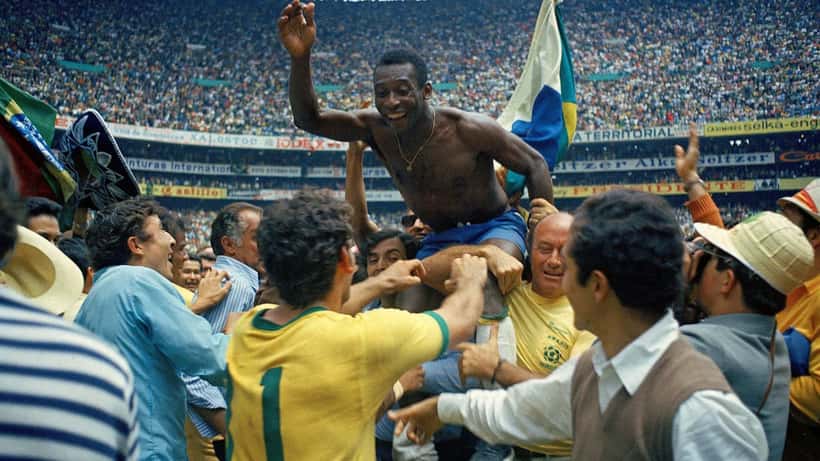
As Kylian Mbappé shattered Pelé's FIFA World Cup goals record on June 16, 2026 — scoring his 14th World Cup goal in France's 3-1 win over Senegal — the Brazilian legend's name immediately surged to the top of search trends across America. More than three years after Pelé's death on December 29, 2022, his image graced the opening ceremony at Estadio Azteca on June 11, his likeness appeared in countless broadcast packages worldwide, and tribute content flooded social media and major brand campaigns. But who has the legal right to authorize — and profit from — all of that?
A Legend Who Never Stops Generating Value
Born Edson Arantes do Nascimento, Pelé won three FIFA World Cups (1958, 1962, 1970) and remains one of the most commercially recognizable names in sports history. His estate continues to manage licensing deals, brand partnerships, and image authorizations — a legal and financial operation that generates substantial revenue long after the man himself left the field.
During WC2026 alone, his likeness appeared in official FIFA tribute packages, luxury watch brand commemorations, and an uncounted volume of social media campaigns by brands leveraging his name's emotional resonance. Each authorized use requires a negotiated legal agreement. Each unauthorized use is potentially actionable in court. With a record-breaking tournament placing his name back in the global conversation, the Pelé estate is navigating one of the most complex environments in posthumous image rights management.
What Is the Right of Publicity?
The right of publicity is the legal right to control the commercial use of one's name, image, likeness, and voice. In the United States, it is governed primarily at the state level, with California and New York offering the strongest protections due to their entertainment and media industries.
California's post-mortem right of publicity statute — California Civil Code § 3344.1, commonly called the Celebrities Rights Act — extends this protection for 70 years after death for deceased personalities whose name or likeness carries commercial value. Heirs, trustees, or designated rights holders control this entitlement and can license or refuse any commercial use.
For estates of internationally famous individuals like Pelé, multiple legal jurisdictions are at play simultaneously: Brazilian law governs his domestic image rights, while California's framework applies to American-based companies that wish to use his likeness in the US market. Navigating both requires specialized legal expertise. You can read more about how the right of publicity operates under U.S. law at the Legal Information Institute (Cornell Law School).
Who Controls Pelé's Image at WC2026?
Pelé passed away on December 29, 2022, at age 82, after a prolonged battle with colon cancer. He is survived by seven children from three relationships. His estate — including all rights to his name, image, likeness, and intellectual property — is managed by his family, with his daughter Kely Nascimento serving as the most public family representative since his death.
The estate has worked with authorized partners on WC2026 commemorative content, but the precise legal structures governing those licensing deals are not public. This is typical: high-value celebrity estates rarely disclose the commercial terms of image rights agreements. What is known is that the Pelé brand remains actively managed and that unauthorized uses — particularly in advertising and sponsored content — are regularly contested.
The AI Problem Nobody Is Ready For
For Pelé's estate, and for families of any well-documented public figure, 2026 introduces a dimension that no legal framework has fully resolved: artificial intelligence. AI-generated videos, voice clones, and interactive chatbots using deceased celebrities' likenesses have proliferated dramatically in the past two years.
Several technology companies have used archived match footage and audio recordings to reconstruct Pelé's voice, movements, or reactions without estate authorization. Some of this content has appeared in commercial contexts — product promotions, social media ads, even interactive experiences at WC2026 fan events.
The legal framework is still racing to catch up. The proposed federal NO FAKES Act would create national protections against unauthorized AI replications of a person's likeness or voice, including posthumously. Tennessee's ELVIS Act (2024) was among the first state-level laws to address AI-generated replicas explicitly. Whether Pelé's estate has built AI-specific protections into its licensing agreements is unknown publicly — but any estate that has not done so faces material legal exposure in 2026 and beyond.
5 Legal Questions Every Estate Should Resolve Now
If you are managing a high-profile estate, or if you have a name and likeness that may carry commercial value after your death, these are the essential questions to address with a qualified attorney:
- Which state's law governs your posthumous rights? Protections vary enormously across the US. California protects posthumous image rights for 70 years; some states offer no post-mortem protection at all.
- Is the right of publicity explicitly addressed in your will or trust? Without clear documentation, disputes among heirs can freeze the estate's ability to license or enforce its rights for years.
- What happens to existing licensing deals at death? Many commercial contracts are personal to the individual and do not automatically transfer to an estate. Without legal review, valuable deals can lapse or become unenforceable.
- How are AI-generated uses of your likeness handled? Any licensing framework created in 2026 without explicit language covering synthetic media is already incomplete.
- Is there a designated image rights manager? High-value estates frequently establish a dedicated LLC or trust with a clear mandate to manage licensing, pursue infringement, and negotiate new deals systematically.
What Families Can Do Now
Pelé's legacy offers a concrete example of the complexity involved. A deceased athlete's image is simultaneously a tribute, a commercial asset, a legal instrument, and an emotional symbol — all at once, across multiple jurisdictions, in real time during a global event watched by 5 billion people.
Families and estates navigating this terrain are not in a position to improvise. A qualified entertainment or intellectual property lawyer can audit your estate's current exposure, identify what rights you hold and what is at risk, build AI-specific licensing language into all future agreements, and establish enforcement protocols before infringement occurs.
The Pelé estate will manage the image of O Rei for decades to come, through tournaments, AI advances, and cultural shifts that none of us can fully predict. Your own legacy — whether that of a professional athlete, a musician, a business founder, or simply a person whose name means something — deserves the same structured protection.
Legal note: This article is for informational purposes only and does not constitute legal advice. Image rights and estate law vary significantly by jurisdiction. Consult a qualified attorney for guidance specific to your situation.
Like the entertainment law issues raised when a music legend's estate navigated biopic licensing rights, or the complexities that emerge when an artist's royalties must be distributed posthumously among multiple heirs, every high-value legacy requires a legal architecture that is built before it is needed. A lawyer who specializes in intellectual property and estate planning is the right expert to guide that process.
ExpertZoom connects you with qualified entertainment and IP lawyers who can help you understand your posthumous image rights — before your name becomes someone else's marketing campaign.
