 Charles Jackson
Iran's national football team qualified for the 2026 World Cup, setting up the prospect of matches and traveling supporters on United States soil for a tournament co-hosted by the U.S., Canada and Mexico. For Iranian players, staff and fans, that prospect collides with one of the thorniest areas of American law: entry rules for nationals of countries facing U.S. travel restrictions. The question now dominating fan forums in June 2026 is simple but urgent — who can actually get in, and how?
What is happening
Iran has long been one of the most consistent Asian qualifiers, and its return to the World Cup brings a recurring legal headache. The United States maintains entry restrictions affecting Iranian nationals, and these rules interact with visa categories, the Electronic System for Travel Authorization (ESTA) and case-by-case waivers in ways most travelers find confusing.
Iran is not part of the U.S. Visa Waiver Program, so Iranian passport holders cannot use ESTA. That means a traditional nonimmigrant visa — typically a B-1/B-2 visitor visa — is the standard route, and that process can take months. For a tournament with fixed match dates, timing is everything.
Why it matters now
The 2026 World Cup runs across 16 host cities, 11 of them in the United States. Fans who buy match tickets assume attendance is guaranteed, but a ticket is not a visa. Sporting bodies and host governments have historically negotiated facilitation measures for accredited athletes and officials, yet ordinary supporters generally remain subject to standard immigration screening.
For Iranian nationals specifically, U.S. policy has included presidential proclamations restricting entry for certain countries, with exceptions and waiver provisions written into the rules. Whether a given fan qualifies depends on visa category, dual nationality, residence in a third country and individual circumstances. These are exactly the variables where a small mistake — an incomplete form, an unexplained gap in travel history — can mean a denial.
The expert take: why an immigration lawyer matters
This is where professional guidance becomes more than a luxury. An immigration attorney can assess whether a traveler falls inside a restricted category at all, identify whether a waiver may be available, and prepare the documentation that consular officers expect.
"The biggest errors we see are people assuming a tournament ticket changes the immigration analysis. It does not," is the kind of warning specialists repeat every major-event cycle. A lawyer can also advise dual nationals — for example, an Iranian-Canadian or Iranian-European supporter — on which passport to travel with, a decision that can determine whether the Visa Waiver Program is even an option.
For players and team staff, the calculus differs again. Accredited athletes usually travel under specific arrangements coordinated between federations and host authorities, but support personnel, family members and journalists may not be covered by the same facilitation. Confirming status early, rather than days before departure, is the difference between attending and watching from home.
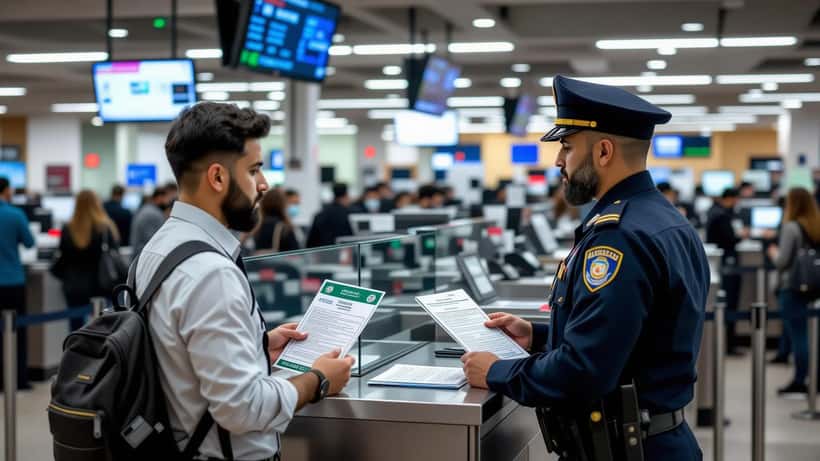
There is also the question of what happens after arrival. A valid visa grants the right to seek entry; it does not guarantee admission. Customs and Border Protection officers conduct a final inspection at the port of entry, and travelers can still be questioned or, in rare cases, refused. An attorney can prepare a fan for that conversation — what to carry, what to declare and how to explain the purpose and length of the trip — so a months-long visa process is not undone in a five-minute interview at the airport.
Practical steps for travelers
If you are an Iranian national — or hold dual nationality — hoping to attend a 2026 World Cup match in the United States, experts suggest a clear sequence:
- Check your category first. Determine whether you fall under any current entry restriction and whether a waiver pathway exists for your situation.
- Apply early. Visitor visa interviews can carry long wait times at U.S. consulates. Build in months, not weeks.
- Document your ties. Consular officers assess intent to return home. Employment letters, property records and family ties strengthen an application.
- Consider dual nationality routes. If you hold a second passport from a Visa Waiver Program country, an immigration lawyer can advise whether traveling on it is appropriate and lawful.
- Keep records consistent. Discrepancies between your application, your travel history and your stated purpose are a common reason for refusal.
A qualified immigration lawyer can review each of these points against your personal file and flag risks before you spend money on flights and accommodation.
A reminder on official sources
Immigration rules change, and proclamations can be amended or rescinded. Always confirm the current position through official U.S. government channels before booking. The U.S. Department of State publishes authoritative visa guidance at travel.state.gov, and any individualized advice should come from a licensed attorney.
The football story is about whether Iran can advance on the pitch. For thousands of supporters, though, the more pressing 2026 contest is administrative — securing the right to be in the stands at all. Getting expert legal advice early is the surest way to make sure the only uncertainty left is the final score.
This article is for general information only and does not constitute legal advice. Immigration outcomes depend on individual circumstances; consult a licensed immigration attorney for guidance on your situation.
