 Davis Caesar
A Gulfstream G100 medical transport jet operated by Canada-based Latitude Air Ambulance disappeared off the coast of Nantucket early Saturday, October 3, 2026, with six people aboard, prompting a major U.S. Coast Guard search operation across the Atlantic waters south of Massachusetts. The aircraft, en route from Bermuda to Boston, declared an emergency at approximately 12:46 a.m. local time before losing contact with FAA air traffic controllers moments later.
What Happened Off Nantucket Saturday Night
The twin-engine Gulfstream G100 — a mid-size jet certified for international medical transport operations — was carrying at least four Canadian nationals among the six people aboard, according to Canada's minister of transport. Latitude Air Ambulance, registered in Canada, dispatched the flight as a patient repatriation mission from Bermuda to Logan International Airport in Boston.
Aviation radio transmissions reviewed by the Boston Globe indicate the flight crew raised a chilling question — "You're coming in blind?" — moments before the emergency declaration, suggesting possible navigational failure or sudden incapacitation in the aircraft's final minutes.
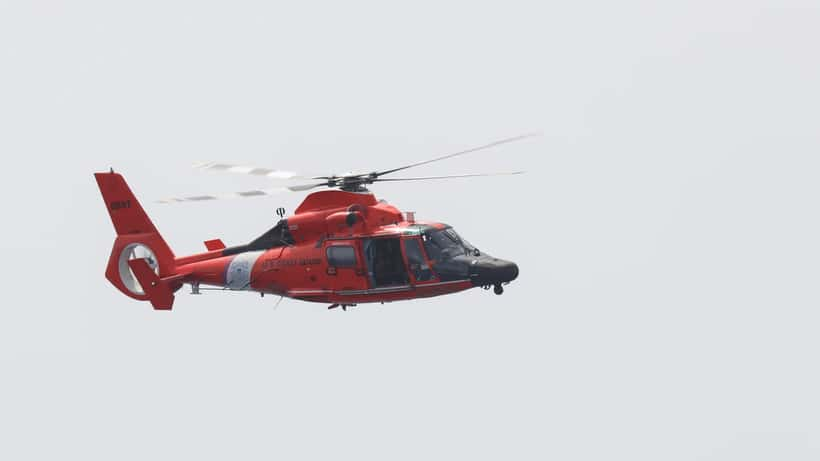
The U.S. Coast Guard deployed an extensive multiasset response: an HC-144 Ocean Sentry aircraft, an HC-130 Hercules airplane, an MH-60 Jayhawk helicopter, a 47-foot Motor Lifeboat, and the Fast Response Cutter William Sparling, according to CNN. By daybreak on October 3, the search zone encompassed hundreds of square nautical miles south of Nantucket Island.
Why Air Ambulance Crashes Are Legally Different From Commercial Aviation Disasters
Most Americans assume aviation accident law works the same regardless of carrier type. That assumption can be a costly mistake.
Private air ambulance operators like Latitude Air Ambulance occupy a distinct regulatory and liability space that differs from commercial carriers in three important ways. First, the Montreal Convention — the international treaty that governs most commercial aviation liability and sets minimum compensation thresholds — does not automatically apply to all air ambulance flights. Whether it covers this mission depends on whether the flight was contracted as a commercial service or a private charter, a question that requires detailed contract review.
Second, when an aircraft disappears over U.S. offshore waters beyond 3 nautical miles from the coast, the Death on the High Seas Act (DOHSA) applies instead of standard wrongful death statutes. DOHSA limits recoverable damages to pecuniary (financial) losses only: documented lost income and financial contributions to surviving dependents. Non-economic damages — pain and suffering, loss of companionship, grief — are not recoverable under DOHSA. This is a provision that consistently surprises bereaved families and can dramatically reduce settlement values compared to deaths that occur on land.
Third, because Latitude Air Ambulance is a Canadian operator, civil suits filed in U.S. courts may face jurisdictional challenges from defense counsel arguing that Canadian courts — which have different discovery rules and damages caps — are the more appropriate forum. Navigating this argument requires attorneys with experience in both U.S. federal aviation law and international aviation liability.
A Scenario That Illustrates What Families May Actually Recover
Consider a situation that closely mirrors what the families of those aboard the Nantucket flight are now facing.
A 61-year-old Massachusetts resident suffered a cardiac event while on a work trip in Bermuda. Their corporate travel insurer arranged emergency medical repatriation through a certified international air ambulance operator, billing approximately $48,000 directly to the insurer for the Bermuda-to-Boston flight. The family signed no direct contract with the aircraft operator; the insurance company contracted the service.
When the aircraft disappears over the Atlantic, the legal reality for that family unfolds as follows:
Under DOHSA, because the crash likely occurred beyond 3 nautical miles from the U.S. coastline, the family cannot sue for non-economic damages. If the passenger was a 61-year-old with a pension but no significant earned income remaining in their career, the pecuniary loss calculation — the amount courts will actually award — may fall between $180,000 and $300,000, not the $2–3 million figure commonly associated with aviation wrongful death suits in domestic cases.
If the insurer subrogates, the insurance company may pursue the operator for the $48,000 transport cost through their own legal action. The family's wrongful death claim remains entirely separate — and depends entirely on proving negligence in aircraft maintenance, pilot certification, crew training, or operator standards. AIN Online reported in September 2026 that Latitude Air Ambulance was already facing investigation for a runway overrun incident in Libya — evidence that an experienced aviation attorney would move quickly to preserve and deploy in civil litigation.
The statute of limitations is two years from October 3, 2026. Waiting for the NTSB's final report — which typically takes 12 to 24 months to complete — before consulting an attorney means the deadline may expire before the investigation closes. Families must initiate or preserve legal claims during the NTSB investigation, not after it concludes.
The NTSB Process: What Families Are Entitled To — and What They Are Not
The National Transportation Safety Board will lead the U.S. investigation of the crash. Under the Aviation Disaster Family Assistance Act of 1996, registered families are entitled to designated liaisons, regular investigation updates, and access to select portions of any public hearing that results from the probe. Because four of the six aboard are Canadian nationals, the NTSB will also coordinate with Transport Canada and the State Department.
But families should understand clearly what the NTSB process does not do. The NTSB is an investigative body — not a compensation authority. Its final report will determine probable cause — mechanical failure, crew error, weather, or a combination — but it does not bind civil courts and does not compel any payment.
What the NTSB's investigative docket can do is serve as the most powerful evidentiary tool in civil litigation. The raw materials gathered during the investigation — cockpit voice recorder transcripts, flight data recorder readings, maintenance logs, pilot training files, and pre-flight weather briefings — can all be subpoenaed in civil proceedings, often forming the factual foundation that aviation attorneys use to prove negligence. Families who engage counsel early are better positioned to request this docket through formal discovery channels as it is being built, rather than waiting for the finished product.
For more context on how U.S. families have pursued compensation in recent aviation incidents, see how plane crash families navigated claims earlier in 2026, and how passengers injured in the Kenmore Air seaplane crash pursued their legal rights.
What to Do in the Next 30 Days
Aviation liability attorneys who specialize in offshore crash cases recommend three parallel tracks — not sequential — starting immediately:
1. Preserve all documents now. Gather the transport contract, all insurance correspondence, the original medical referral for the air ambulance, and any direct communications with Latitude Air Ambulance or the insurer. These records establish the contractual chain between operator and insured — documents that can be difficult or impossible to obtain once an operator enters bankruptcy proceedings following a fatal accident.
2. Issue a preservation demand before day 30. An aviation attorney can send a formal legal hold letter to the operator, the insurer, the FAA, and Transport Canada, requiring that all maintenance logs, pilot training files, communication records, and flight data be retained beyond standard document retention schedules. Without this letter, operators may legally destroy records they are not otherwise obligated to keep.
3. Register with the NTSB Family Assistance Program. Registration gives families official status in the investigation, access to a dedicated liaison, and coordination with the American Red Cross and other support agencies. Registration does not affect civil litigation rights and does not constitute acceptance of any settlement terms.
Aviation law is a narrow specialty for a reason — the rules that apply here, from DOHSA's damage caps to the Montreal Convention's liability thresholds, differ sharply from what most general-practice attorneys encounter. The next 30 days matter more than most families realize.
Disclaimer: This article provides general legal context for educational purposes only and does not constitute legal advice. If you or your family has been affected by this incident, consult a licensed aviation liability attorney as soon as possible.
