 Daniel Sterling
On the afternoon of July 23, 2026, a Kenmore Air seaplane departed Lake Union in Seattle bound for Roche Harbor on San Juan Island — and went down in the waters off Sucia Island less than 90 minutes later. All 11 people aboard were rescued, but four passengers were transported to hospitals. What those passengers do in the next few days could determine whether they recover their full losses or walk away with nothing.
What Happened at Sucia Island
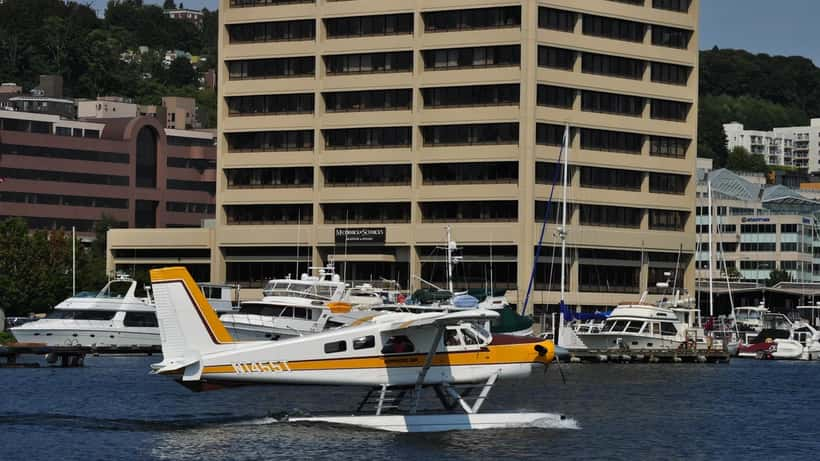
The Kenmore Air aircraft took off from Lake Union at approximately 4:00 to 4:30 p.m. and crashed into the water near Sucia Island at around 5:15 p.m. on July 23, 2026. The flight was carrying 10 passengers and one pilot. All 11 were accounted for after a rescue operation involving the U.S. Coast Guard and Orcas Island Fire & Rescue. Four passengers were transported to medical facilities — two to Orcas Island and two to Bellingham — for treatment of injuries whose severity had not been publicly confirmed as of press time.
The cause of the crash remains under investigation. Witnesses reported lightning in the area around the time of the incident, though no official determination has been made. The National Transportation Safety Board (NTSB) is expected to open a formal investigation, as it does with all aviation accidents involving injuries or substantial aircraft damage.
Kenmore Air, founded in 1946 and headquartered at Lake Union in Seattle, is one of the oldest and best-known seaplane operators in the United States, offering scheduled routes throughout Washington State, British Columbia, and Southeast Alaska. The airline holds an impeccable safety reputation — but a single accident with four injured passengers raises immediate legal questions that every person on that flight needs to understand.
Why a Seaplane Crash Is Legally Different from a Delta or United Flight
If this accident had happened on a major commercial airline, passengers would enter a well-worn legal framework: the Montreal Convention, Department of Transportation consumer regulations, and standardized insurance protocols. The Kenmore Air crash is different in ways that matter enormously to compensation.
Kenmore Air operates under FAA Part 135, the federal regulatory framework for commuter and on-demand air carriers. Part 135 covers smaller aircraft operations — those with 30 or fewer seats — and differs significantly from Part 121, which governs major commercial airlines. The liability standards, insurance requirements, and procedural rules are not the same.
Adding another layer of complexity: seaplanes operate at the intersection of aviation and maritime law. Depending on precisely where in the water a seaplane crashes — and under what circumstances — admiralty jurisdiction and maritime statutes like the Death on the High Seas Act (DOHSA) may come into play. An attorney unfamiliar with aviation law may miss these jurisdictional nuances entirely.
Perhaps the most counterintuitive fact: the NTSB's investigation cannot be used against Kenmore Air in a civil lawsuit. Under federal law (49 U.S.C. § 1154(b)), no part of an NTSB accident report may be entered as evidence or used in civil litigation for damages. This does not mean passengers cannot sue — it means the crash investigation and the legal claim run on entirely separate tracks. Passengers do not need to wait for NTSB findings before consulting an attorney or filing a claim.
Legal notice: This article is for informational purposes only and does not constitute legal advice. If you were aboard the Kenmore Air flight on July 23, 2026, consult a licensed aviation accident attorney before taking any legal action.
What Injured Passengers Can Actually Claim
Under Washington State tort law and applicable federal aviation regulations, passengers injured in an accident caused by the carrier's negligence may be entitled to recover:
- Medical expenses — emergency transport, emergency room treatment, hospitalization, surgery, physical therapy, and any future care required as a result of crash-related injuries
- Lost income and earning capacity — wages lost while recovering, and if injuries are permanent, a reduction in future earning potential
- Pain and suffering — non-economic damages for physical pain, emotional distress, and diminished quality of life
- Property damage — electronics, luggage, and personal items destroyed in the crash and water immersion
- Psychological harm — post-traumatic stress disorder (PTSD) following a traumatic water crash is a documented and compensable injury
One significant legal distinction: the Montreal Convention, which caps damages for international air travel at approximately $175,000 per passenger in some circumstances, generally does not apply to domestic flights on small Part 135 carriers. This means there is no automatic cap on what passengers can seek — the full extent of demonstrable damages is potentially recoverable.
The key legal question, as always, is negligence: was the crash caused by operator error, maintenance failure, improper training, or another factor that a competent carrier should have prevented? That determination will drive the outcome.
Concrete Case: Two Passengers, Two Very Different Recoveries
To understand what the Kenmore Air crash means financially, map two realistic scenarios onto the 4 hospitalized passengers.
Passenger A is transported to the hospital at Orcas Island with lacerations and a suspected concussion. They are admitted overnight for observation and discharged the next morning. Total hospital bill: approximately $12,000 to $18,000. They miss 10 days of work at Washington State's median weekly wage of roughly $1,100 — about $1,571 in lost income. They also develop sleep disturbances and anxiety about flying. Under Washington law, a personal injury claim could include all of these costs. If negligence is established, economic damages total roughly $13,500 to $19,500, and non-economic damages (pain, suffering, emotional distress) often valued by Washington juries at 1.5 to 2.5 times economic losses, could bring the total claim to $34,000 to $49,000.
Passenger B is airlifted to Bellingham with a fractured arm requiring surgery and hardware placement. Surgical costs: $35,000 to $60,000. Post-surgical physical therapy: 12 weeks at $200 per session, twice weekly — approximately $4,800. Lost income: 8 weeks off work at $1,100/week — $8,800. If the arm injury affects future work capacity by even 20% over a 20-year career, the economic impact compounds significantly. Total economic damages in this scenario: $48,600 to $73,600, before non-economic damages. A Washington jury award factoring in pain, suffering, and PTSD could realistically reach $120,000 to $200,000+.
The critical if/then: if Kenmore Air or its insurer contacts you within the next 30 to 60 days with a settlement offer, then that offer will almost certainly be calibrated to what they believe you know about your rights — not what you are actually entitled to. Accepting a low early settlement forfeits all future claims, including costs from injuries that fully manifest weeks or months after a crash.
Washington State's statute of limitations for personal injury claims is three years from the date of the accident (RCW 4.16.080). For the Kenmore Air passengers, that clock started on July 23, 2026. But aviation cases are complex, and early consultation — within weeks, not years — preserves evidence, witnesses, and options.
What Kenmore Air Passengers Should Do Right Now
For anyone aboard the Kenmore Air flight on July 23, the following steps apply regardless of whether injuries seem minor:
Get a full medical evaluation immediately. Cold water immersion causes physiological stress that can mask pain and injury. Symptoms of traumatic brain injury, spinal injury, and internal trauma may not appear for 24 to 72 hours. A documented medical evaluation creates an objective record that is essential to any legal claim.
Do not sign anything from Kenmore Air or its insurance carrier without first having an aviation accident attorney review it. Early settlement offers from carriers or insurers are rarely made in your favor.
Document everything you remember. The sequence of events on the aircraft, what you saw, what you heard, how you were extracted from the water, what medical personnel told you — all of it. Write it down today, while memories are fresh and before the NTSB investigation shapes public narrative.
Preserve all communications. Save every email, voicemail, and letter from Kenmore Air, their insurance company, or any legal representative they retain.
Limit what you share on social media. Posts about the crash, your injuries, and your recovery can be and have been used by opposing counsel to challenge damage claims.
Finally, seek a consultation with an aviation accident attorney who specializes in Part 135 carrier claims — not a general personal injury lawyer. The intersection of FAA regulations, maritime law, and state tort law in seaplane accidents is a specific and complex specialty.
The FAA's official regulations governing Part 135 air carriers, including safety standards, equipment requirements, and pilot certification requirements applicable to operators like Kenmore Air, are publicly available at 14 CFR Part 135 via eCFR.
The passengers rescued from the waters off Sucia Island on July 23 survived what could have been far worse. Whether they recover what they are legally owed depends on the decisions they make in the days and weeks ahead.
