 Carl Graham
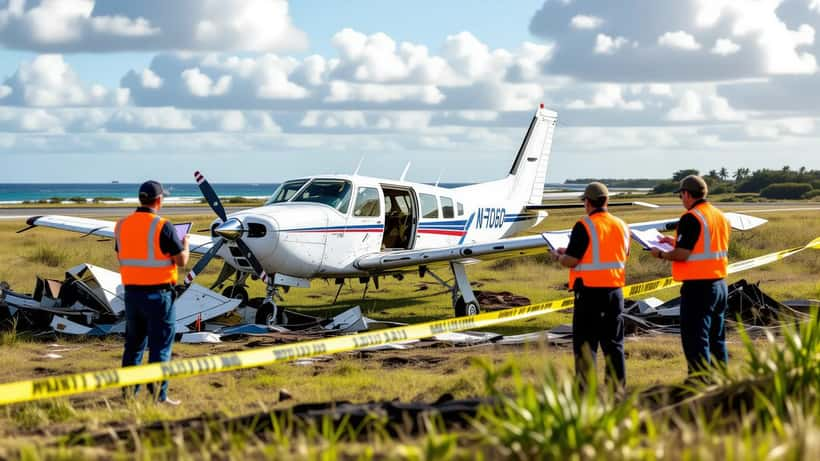
A Flamingo Air Cessna 402 crashed on July 11, 2026, shortly after departing Lynden Pindling International Airport in Nassau, killing all 10 people on board before the commuter flight could reach San Andros Airport in the Bahamas. The Bahamas Musicians and Entertainers Union confirmed that five members of Da Pond Band were among the dead, and the Aircraft Accident Investigation Authority of the Bahamas has opened a formal inquiry. Within hours, authorities suspended the airline's operating licence after a second Flamingo Air aircraft caught fire in Nassau the same day.
For the thousands of Americans who fly small commuter and charter aircraft across the Caribbean every summer, the tragedy raises a hard question that has nothing to do with grief and everything to do with money and accountability: when a plane goes down, who is legally responsible, and what are surviving families actually entitled to claim?
What happened, and why the legal picture is complicated
The aircraft was a Cessna 402, a twin-engine turboprop widely used for short island hops. The route was domestic within the Bahamas, but the passenger mix on these flights frequently includes US citizens connecting from international arrivals in Nassau. That single fact — the nationality and itinerary of each passenger — can change which law governs a compensation claim, sometimes by hundreds of thousands of dollars.
Aviation lawyers describe crash liability as a layered problem. There is the airline operator, the aircraft manufacturer, the maintenance provider, and sometimes the entity that leased or chartered the plane. Each can carry a share of legal responsibility depending on the eventual finding of cause, which is why the investigation matters far beyond aviation safety.
The two legal frameworks that decide everything
For a purely domestic Bahamian flight, local law and the airline's insurance policy typically govern claims. Compensation can be modest and slow.
For a passenger whose journey began outside the country — for example, a US traveler on a through-ticket that started in Miami — the Montreal Convention may apply instead. This international treaty, ratified by both the United States and the Bahamas, holds the carrier strictly liable for a defined baseline of damages regardless of fault, and allows families to pursue substantially more if negligence is proven. The difference between "domestic ticket" and "international itinerary" is not a technicality; it is often the single most valuable fact in the entire case.
A lawyer will also examine where a lawsuit can be filed. Under the Convention, a claim can sometimes be brought in the passenger's home country rather than where the crash occurred — a distinction that affects both the size of an award and how quickly it is paid.
Why the licence suspension matters to a claim
The immediate suspension of Flamingo Air's operating licence, prompted by a separate aircraft fire the same day, is more than a regulatory headline. If investigators ultimately link the crash to maintenance failures, inadequate crew training, or an operator that continued flying despite known problems, that evidence can support a negligence claim and expose the airline to damages well beyond any minimum insurance floor.
This is the kind of pattern aviation attorneys look for: not a single mechanical failure in isolation, but a chain of operational decisions. Regulators in the United States operate the same way. The Federal Aviation Administration publishes safety oversight and airworthiness information that lawyers and investigators use to establish whether an operator met its legal duty of care; travelers can review that guidance at faa.gov.
What families and survivors should do first
If you have lost a relative in an aviation accident, or survived one, aviation lawyers consistently give the same early advice.
Preserve every document. Tickets, booking confirmations, boarding passes, and payment records establish the itinerary that determines which legal framework applies. Do not discard anything, even screenshots.
Be cautious with early settlement offers. An insurer or airline may approach families quickly with a payment that looks generous in a moment of shock but falls far below what the law allows, particularly under the Montreal Convention. Signing a release can permanently close the door on a larger claim.
Act within the deadlines. Aviation claims are governed by strict time limits — often two years under the Convention — and the clock generally starts on the date of the crash. Missing that window can extinguish an otherwise strong case.
Get an independent assessment. Because liability may be shared across an airline, a manufacturer, and a maintenance contractor, a specialist can pursue multiple defendants at once rather than accepting the first party's version of who was at fault.
Why an aviation lawyer, not a general attorney
Aviation accident law sits at the intersection of international treaties, foreign jurisdictions, manufacturer liability, and technical crash investigation. A specialist can read a preliminary accident report, coordinate with foreign counsel in the country where the crash occurred, and value a claim realistically against the correct legal standard. For US families facing a loss abroad, that expertise often determines whether a claim is settled fairly or quietly undervalued.
A qualified aviation attorney can review your itinerary, identify which legal framework applies to your specific ticket, and preserve your right to full compensation before any deadline passes. If you or your family have been affected by an aviation accident, connecting with an aviation law specialist early is the single most protective step you can take.
This article is general information, not legal advice. Compensation rights depend on the specific facts of each case and the jurisdiction involved. Consult a qualified aviation attorney about your individual circumstances.
