 Ava Miller
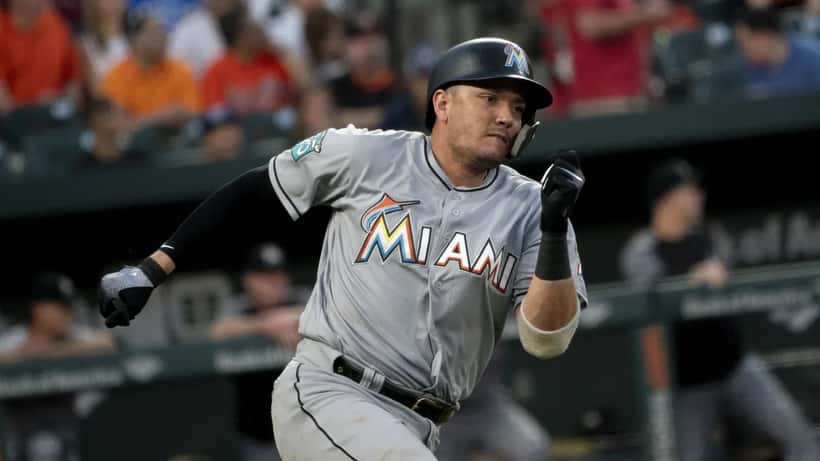
Los Angeles Dodgers infielder Miguel Rojas was named to the team's National League Championship Series roster on October 11, 2026, days after a back injury forced him out of the Division Series against the Braves. He left Game 3 in the eighth inning with lower back pain, sat out Game 4, and received a cortisone injection that loosened the area enough for manager Dave Roberts to keep him on the 26-man group facing the Brewers.
What happened to Rojas' back
According to MLB.com, Rojas was unavailable for NLDS Game 4 while the Dodgers continued to evaluate the injury. Testing after he exited Game 3 mostly showed prior back issues rather than a brand-new structural injury, as reported by Dodgers outlets, and the club bought time before deciding on his postseason status. MLB Trade Rumors reported on the cortisone shot that cleared him for the NLCS, and ESPN confirmed the Dodgers kept him on the roster as the Brewers held steady with the group that won their previous series.
Rojas has also been open about the bigger picture: he is contemplating retirement after this season, though no decision has been announced. That context matters. A veteran infielder who bends, twists, and dives for ground balls hundreds of times a season puts the lumbar spine through repeated stress, and "prior back issues" is a phrase that many non-athletes recognize from their own lives.
Why a flare-up like this is so common
Lower back pain is one of the most common reasons adults see a doctor. The National Institute of Arthritis and Musculoskeletal and Skin Diseases explains on its back pain overview that most episodes improve with time and conservative care, but that people with a history of back trouble are prone to repeat episodes.
Baseball is a rotational sport. Hitting and fielding load the muscles and discs of the lower back in a twisting motion, often at high speed, after long stretches of sitting in a dugout. Cold October nights, compressed schedules, and the adrenaline of the playoffs add to the strain. Nothing about Rojas' situation is unusual medically. What is unusual is the stage on which it is playing out.
What a cortisone injection actually does
Reports say Rojas received a cortisone injection. A corticosteroid injection delivers a powerful anti-inflammatory medicine near the irritated tissue. It does not repair a damaged disc or joint. It calms the inflammation so that the body, and the player, can move with less pain.
That distinction is the key point for everyday patients. An injection can open a window in which you can do rehabilitation work, such as core strengthening and mobility exercises, that was too painful before. Used alone, it can simply postpone the next flare-up. Specialists in sports medicine and physical medicine generally treat it as a bridge, not a cure, and they limit how often it is repeated in the same area because repeated steroid exposure can weaken nearby tissue.
A concrete case: the weekend softball player
Consider a 44-year-old recreational softball player in Ohio who has had two mild back flare-ups over the past three years. During a tournament on October 17, 2026, he feels a sharp pull in his lower back while twisting to field a grounder. By the next morning his pain is a 7 out of 10, and he can barely put on his socks.
Here is how the decision tree looks with real numbers:
- If the pain drops from 7 to 3 within about two weeks with rest, gentle walking, and over-the-counter anti-inflammatories, he is likely dealing with a muscular strain. A physical therapist can guide a return to play over roughly 4 to 6 weeks.
- If the pain is still 6 or higher after 2 weeks, or if it keeps returning to the same spot, he should see a physician. An exam and possibly imaging can tell whether a disc or joint is involved.
- If a doctor recommends a cortisone injection, he should expect relief to last anywhere from a few weeks to a few months, and he should ask how many injections are considered safe in his case. Many clinicians avoid giving more than a few per year in the same location.
- If he feels numbness, leg weakness, or loses bladder or bowel control, that is an emergency, and he should go to the nearest ER the same day.
The point is that the injection only works as part of a plan. If he gets a shot on Monday, then goes straight back to a Saturday tournament with no strengthening work, there is a good chance he will be back in the same pain by December. If he uses the pain-free window for six weeks of targeted physical therapy, the odds of a repeat episode in the next year go down.
Why professional athletes and weekend players should think alike
The Dodgers medical staff can order imaging, administer injections, and coordinate with trainers within hours. Most people do not have that kind of access. But the logic they follow is the same one a good clinician would use for anyone:
- Identify whether this is a new injury or a recurrence of an old problem.
- Reduce inflammation enough to allow movement.
- Rebuild the muscles that support the spine so the problem is less likely to return.
- Decide, with a specialist, how much risk is acceptable given the goal.
For Rojas, the goal is a pennant. For most readers, it is getting through a workday, lifting a toddler, or finishing a round of golf without pain. The principles are the same. The stakes feel different.
Questions to ask a specialist
If Rojas' story sounds familiar, consider bringing these questions to an appointment:
- Is my pain mechanical, meaning it changes with movement, or is something else going on?
- Do I need imaging, or is a trial of physical therapy a better first step?
- If I consider an injection, what are the risks, how long will it likely help, and how many are too many?
- What exercises should I do during the pain-free window, and for how long?
- When should I think about a surgical consultation, and what are the alternatives?
Good answers to these questions often come from a sports medicine physician, a physiatrist, or an experienced physical therapist. If you have had back pain more than once, getting a clear plan matters more than any single treatment.
What to watch next
Rojas' availability will be a storyline throughout the NLCS. Roberts has said the club will monitor how his back responds day to day, which is how most clinicians handle a post-injection return. A player who feels fine in the first inning can tighten up by the seventh, so even with a clearance, the situation can change quickly.
Fans looking for more on how teams handle other injuries this season can read our coverage of Mookie Betts' return from an oblique injury and Walker Buehler's long elbow recovery.
This article is for general information and is not medical advice. Back pain with numbness, weakness, fever, or loss of bladder or bowel control needs urgent care. For ongoing or recurring pain, consult a licensed physician. Expert Zoom connects you with health specialists who can evaluate your situation, build a recovery plan, and tell you whether an injection, therapy, or another path makes sense for you.
