 Ava Miller
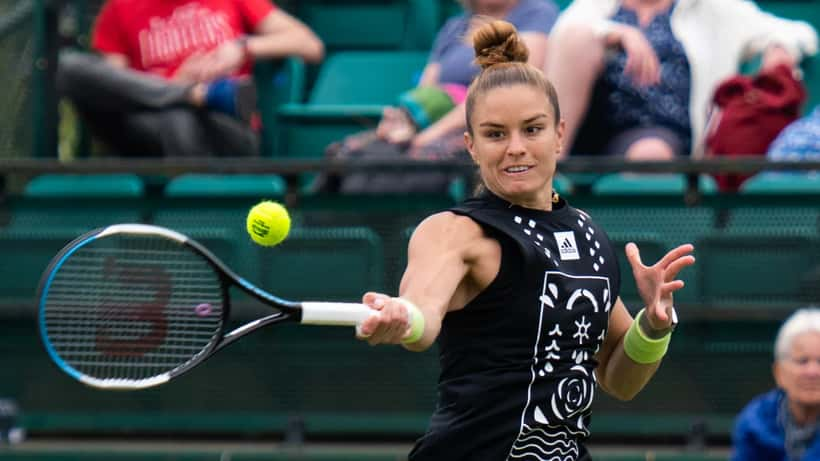
Maria Sakkari walked onto the court at the Wuhan Open on October 12, 2026, and defeated Donna Vekic 6-4, 6-2 — a result that looked routine on paper but represented the conclusion of one of professional tennis's most difficult recoveries. Twelve months earlier, the Greek star was ranked outside the top 80, forced to withdraw from tournaments in Beijing and Cincinnati following a shoulder injury sustained at the 2025 US Open, and facing a genuine question about whether she would ever return to elite competition.
A Comeback Built on Patience and Specialist Care
Sakkari's ranking had sat as high as World No. 3 before the injury. By late 2025, she had dropped to No. 82, parted briefly with her coaching team, and was describing the experience of trying to return to the top 10 as "more difficult than anything I've imagined." She eventually reunited with coach Tom Hill and committed to a methodical rehabilitation process guided closely by medical staff.
The progress, when it came, was substantial. In July 2026, Sakkari reached the final of the WTA 250 Athens tournament — her first WTA Tour final in more than two years — before losing to Barbora Krejčíková. By August 2026, she had qualified for the season-ending WTA Finals. As of October 12, 2026, she holds a ranking of approximately No. 33 in the world and is competing with the form she showed in the best years of her career.
Her recovery rested on one discipline that medical professionals say distinguishes successful returns from failed ones: she did not wait until the damage was irreversible before seeking structured specialist care. That decision — and the timing of it — is something sports medicine doctors emphasize regularly, because most recreational athletes make the opposite choice.
What Research Shows About Delayed Shoulder Treatment
Sakkari's experience aligns precisely with what clinical literature shows about shoulder injuries and delayed treatment. A 2022 meta-analysis in sports medicine research found that while a short delay in addressing rotator cuff damage does not substantially increase re-tear risk, waiting 12 months or more is associated with significantly worse functional outcomes and a lower rate of successful return to activity.
A prospective cohort study of athletes with recurrent shoulder dislocations confirmed that those who delayed surgical intervention by 12 or more months experienced inferior functional scores and longer rehabilitation timelines than those treated earlier. According to the American Academy of Orthopaedic Surgeons, rotator cuff injuries affect approximately 2 million Americans every year — a figure that has grown significantly as participation in racquet sports, including pickleball and recreational tennis, has expanded across age groups.
The pattern across the research is consistent: successful recoveries, at both the professional and amateur level, overwhelmingly involve early evaluation, an accurate diagnosis, and a structured rehabilitation protocol that begins before degeneration sets in.
From the Pro Tour to the Weekend Court: A Concrete Case
Consider the situation of Dana, a 38-year-old recreational tennis player in Chicago who first noticed a dull aching pain in her right shoulder during serves in April 2026. She played through it for five months, occasionally taking ibuprofen and reducing her serve speed, but otherwise continuing her two-to-three-times-per-week schedule.
By September 2026, the pain was no longer limited to her serve. Dana was waking up at night unable to sleep on her right side. Reaching for a cabinet shelf or putting on a coat produced a sharp catching sensation in the joint.
When she finally saw a sports medicine specialist in late September 2026, imaging confirmed a partial rotator cuff tear with early degenerative changes.
If she had been evaluated in April 2026 (two to three months of symptoms): Physical therapy with a targeted strengthening protocol, an estimated 12 to 16 weeks of structured rehabilitation, out-of-pocket cost with standard insurance of approximately $800 to $1,500, and a realistic return to full tennis within four to five months.
As of September 2026 (five-plus months of worsening symptoms): The partial tear has progressed and now requires a more intensive approach. Conservative treatment remains possible, but carries roughly a 40 to 50 percent chance of ultimately requiring surgery if she wants to return to regular serve-heavy tennis. Arthroscopic repair, if required, costs between $8,000 and $15,000 before insurance, followed by nine to twelve months of rehabilitation.
The five-month difference in Dana's timeline — from a $1,500 conservative rehabilitation program to a potential $15,000 surgical pathway — was not caused by the sport itself. It was caused by the decision to wait rather than seek evaluation when symptoms first appeared.
A specialist consultation in April 2026 would have cost Dana approximately $200 to $400 for an initial visit. The window for effective non-surgical intervention was open. By September, it had narrowed considerably.
Disclaimer: This article is for informational purposes only and does not constitute medical advice. Consult a licensed healthcare professional for evaluation, diagnosis, and treatment of any injury.
Four Signs Your Shoulder Needs More Than Rest
Sports medicine physicians are clear that not every aching shoulder warrants immediate clinical attention — muscle soreness from a new training load typically resolves within two to three weeks. But certain patterns consistently indicate structural involvement that rest alone cannot address:
Pain persisting beyond four to six weeks without improvement. This timeline distinguishes soft-tissue soreness, which heals relatively quickly, from tendon or structural damage, which does not resolve without targeted intervention.
Night pain or disrupted sleep. The inability to sleep on one side is among the most consistent clinical indicators of rotator cuff pathology. Athletes — professional and recreational — who report this symptom are frequently describing tendon damage rather than muscle strain.
Overhead or lateral weakness. If the shoulder has lost measurable strength — not just pain on exertion — structural damage may require imaging to assess properly. Sakkari specifically described difficulty with overhead mechanics during her injury period, a flag her medical team used to guide her treatment plan.
Mechanical compensation. If you have unconsciously begun altering your swing, serve motion, or reaching mechanics to avoid pain, the body is working around a structural problem rather than resolving it. This adaptation pattern accelerates tissue degeneration over time and typically leads to secondary injuries in the elbow or neck.
Any of these signs warrants a conversation with a sports medicine physician or orthopedic specialist who can order appropriate imaging, interpret the results in the context of your activity level, and outline a rehabilitation plan matched to your goals.
For context on how comparable shoulder recovery timelines played out in elite tennis in 2026, Novak Djokovic's Wimbledon return revealed similar milestones in rotator cuff rehabilitation. The range of outcomes across both cases demonstrates how significantly the timing of specialist intervention shapes the final result. The experience of Clara Tauson's 2026 injury cascade also shows how compensation patterns across joints create compounding problems when the primary injury goes unaddressed.
Your Next Step
If you play recreational tennis, pickleball, golf, or any overhead sport and your shoulder has been bothering you for more than a month, the most important first action is not to book surgery — it is to get an accurate diagnosis from a qualified sports medicine doctor or orthopedic specialist.
Many partial rotator cuff tears resolve fully with physical therapy, anti-inflammatory management, and progressive strengthening, provided treatment begins within the right window. Surgery is frequently avoidable when the injury is identified early. Waiting closes that window.
The cost of a specialist consultation in the United States runs approximately $200 to $450 for an initial appointment. Maria Sakkari spent months rebuilding her career with professional medical support. For a recreational athlete, the equivalent is a single consultation that can determine whether you are dealing with something that heals with exercise or something that requires a more structured intervention before it becomes irreversible.
ExpertZoom connects patients with experienced health professionals, including sports medicine physicians and orthopedic consultants, who can provide an initial evaluation and help you understand your options before a manageable injury becomes a long-term problem.
