 Evelyn Carter
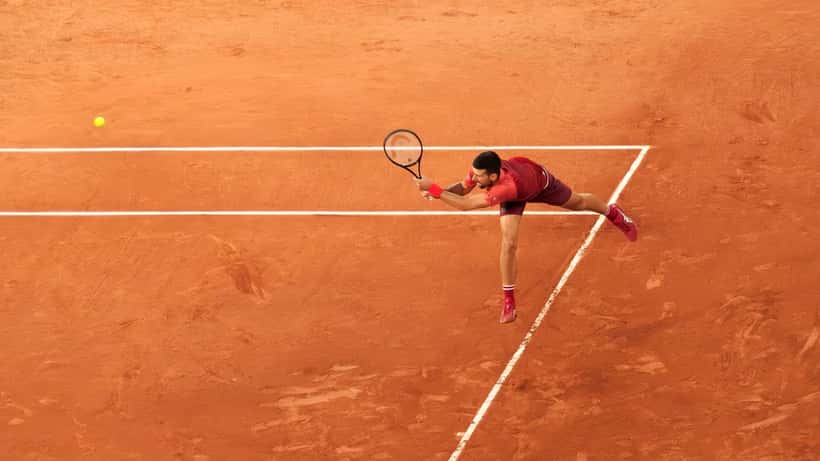
Novak Djokovic walked onto the grass of Centre Court this week having spent four months away from the game, working through a right shoulder injury that disrupted his entire 2026 spring season. The 39-year-old Serbian is now in the third round of Wimbledon on July 3, chasing his eighth title at the All England Club — a record that would equal Roger Federer. His comeback is a masterclass in shoulder rehabilitation. And for the millions of recreational tennis players who push through shoulder pain every weekend, there are real lessons here.
The Injury That Threatened His Season
In late March 2026, Djokovic withdrew from the Monte-Carlo Masters citing a right shoulder problem first identified during the Indian Wells tournament. Weeks later, he also pulled out of the Madrid Open. The injury left him with only three tour-level appearances between his Australian Open final run in January and his return to grass — one of the lightest competitive schedules of his career.
Djokovic declined to specify the exact diagnosis at press conferences. "I have an injury, I hope to be ready at least for Roland Garros," he told reporters in April. "I'm working to get to Rome but I can't make a prediction now because it depends on the progress of the injury."
He arrived at Wimbledon 2026 with what ATP insiders described as a "higher dose of confidence," having managed a careful rehabilitation timed precisely for the grass season. He defeated Wu Yibing in four sets in the first round, then progressed to face Arthur Rinderknech in Round 3 — still on track for a potential record-breaking eighth title.
Why Tennis Is So Hard on Shoulders
The shoulder joint is the most mobile in the human body. That mobility comes at a cost: it is stabilized primarily by soft tissue — specifically the rotator cuff, a group of four muscles and their tendons that seat the head of the upper arm bone inside the shoulder socket. Repeated overhead movements, like the high-velocity serve, place extreme demands on these tendons.
According to a clinical review published on the National Center for Biotechnology Information (NCBI) Bookshelf — part of the U.S. National Institutes of Health — rotator cuff injury is the most common tendon injury treated in adults, with prevalence rising sharply with age: approximately 30 percent of adults over 60 have a rotator cuff tear, whether or not they have symptoms.
In professional tennis, first serves regularly exceed 120 miles per hour. The cumulative load across thousands of service games stretches and inflames the rotator cuff tendons over years. Club-level players face the same biomechanical stresses at lower speeds — often compounded by technique errors and insufficient warm-up time.
Five Signs Your Shoulder Needs Professional Evaluation
Most shoulder soreness after a long match is normal delayed-onset muscle fatigue. These symptoms are different and should not be ignored:
Pain that does not resolve within 48 hours. Muscle soreness clears within two days. Pain that lingers — particularly deep in the joint or at the front of the shoulder — may indicate tendon involvement.
Night pain that wakes you up. Rotator cuff pathology and bursitis frequently cause nocturnal pain, especially when lying on the affected shoulder. This pattern distinguishes tendon injury from ordinary post-match fatigue.
Weakness lifting or reaching. If raising your arm above shoulder height, reaching behind your back, or swinging a racket triggers sharp weakness rather than soreness, a structural problem may be present.
New grinding or catching sensations. A new crunching, clicking, or locking sensation — especially when combined with pain — is worth investigating with imaging.
Changes to your serve technique. When players unconsciously alter their motion to protect a painful shoulder, they transfer load to the elbow, wrist, and neck. Secondary injuries then follow. If you have started "guarding" your serve, the underlying shoulder issue is already affecting you.
What Djokovic's Recovery Protocol Reveals
Elite athletes have one advantage over recreational players: access to immediate and precise diagnosis. Djokovic's team would have used MRI imaging to classify the injury — distinguishing between tendinopathy (inflammation without tearing), partial-thickness tear, and full-thickness tear — and tailored his rehabilitation accordingly.
The principles of his recovery are the same regardless of level:
Rest is specific, not total. Djokovic did not stop using his shoulder; he stopped loading it in the specific pattern that caused pain. Active rehabilitation — gentle range-of-motion exercises followed by progressive resistance work — preserves joint health while the tendon heals.
Timeline is non-negotiable. He skipped two major clay tournaments, costing him significant ranking points and prize money, rather than return before the shoulder was ready. For recreational players, this means accepting a two-to-four-week recovery window rather than playing through pain and risking a tear that requires six to twelve months of post-surgical rehabilitation.
Return-to-play is graduated. Sports medicine protocols sequence recovery in stages — mobility, then strength, then sport-specific drills — with each stage gated on pain-free movement at the previous level. Jumping from "no pain at rest" to "full match play" without intermediate steps is how reinjuries happen.
Djokovic's four-month timeline from withdrawal to a Wimbledon Round 3 campaign is consistent with a moderate rotator cuff tendinopathy treated conservatively. It is instructive to compare his approach to elite athlete longevity across sports — see how age shapes performance and recovery at the top level in our analysis of athletic careers extending into the late thirties and beyond.
When to Consult a Health Expert
The most common mistake recreational players make with shoulder pain is waiting too long. Players self-diagnose with ice and ibuprofen, which reduce inflammation and mask symptoms without addressing what is structurally happening inside the joint. When the pain returns — as it invariably does — the underlying problem has often progressed.
If shoulder discomfort has persisted through two or more sessions, an expert consultation is warranted. A licensed health professional can assess whether you are dealing with tendinopathy, bursitis, impingement, or a tear — and build a recovery plan matched to your actual condition, not a generic online protocol.
At ExpertZoom, you can connect directly with health professionals experienced in sports injury evaluation. A consultation takes less time than a match, and the information you get determines whether you are back on court in two weeks or sidelined for a year.
Djokovic chose the longer road in March. He withdrew, rehabilitated correctly, and arrived at Wimbledon with a genuine shot at history. Most of us do not have a Grand Slam record on the line — but the calculus is the same. Treat the shoulder properly the first time.
Disclaimer: This article is for informational purposes only and does not constitute medical advice. If you are experiencing shoulder pain, consult a qualified healthcare professional before resuming physical activity.
