 Sarah Miller
A Tornado Watch remained in effect across central, north-central and northeastern Iowa until 10 p.m. CDT on July 20, 2026, as a strong cold front pushed severe storms southeast across the state. KWWL and the National Weather Service warned of a few likely tornadoes, scattered damaging winds gusting to 75 mph, and large hail up to 2.5 inches in diameter. For the tens of thousands of Iowa households with dogs, cats, horses and backyard livestock, the threat arrived on top of a Heat Advisory, with heat index values of 100 to 105-plus reported before the storms rolled in.
While homeowners boarded windows and checked basements, animals faced their own dangers. Pets panic at falling barometric pressure and thunder long before humans notice a problem, and livestock left in open pastures have nowhere to shelter from wind-driven hail. Veterinarians say the hours before a severe-weather line arrives are exactly when owners should act.
What Iowa Faced on July 20
The setup was textbook for a dangerous evening. Storms first developed across northern Iowa during the mid-to-late afternoon as the cold front advanced, then merged into clusters and bowing line segments while tracking southeast toward central and southern Iowa. The Storm Prediction Center's Tornado Watch flagged the possibility of a couple of intense tornadoes, and forecasters cautioned that isolated wind gusts could reach 75 mph — strong enough to topple trees, tear off roofing, and send debris flying through farmyards.
The preceding heat made the risk worse for animals. Dogs and cats can suffer heat stress well before an owner feels overwhelmed, and the combination of a 100-plus heat index with a sudden loss of power — which often follows straight-line winds — can leave pets without air conditioning at the worst possible moment.
Why Storms Hit Animals Harder
Animals experience severe weather through senses far sharper than ours. Many dogs react to the drop in atmospheric pressure and the low-frequency rumble of distant thunder minutes before a storm is visible, which is why a normally calm pet may pace, drool, hide or try to bolt. A frightened animal that escapes during a tornado warning can be injured on the road or lost for days.
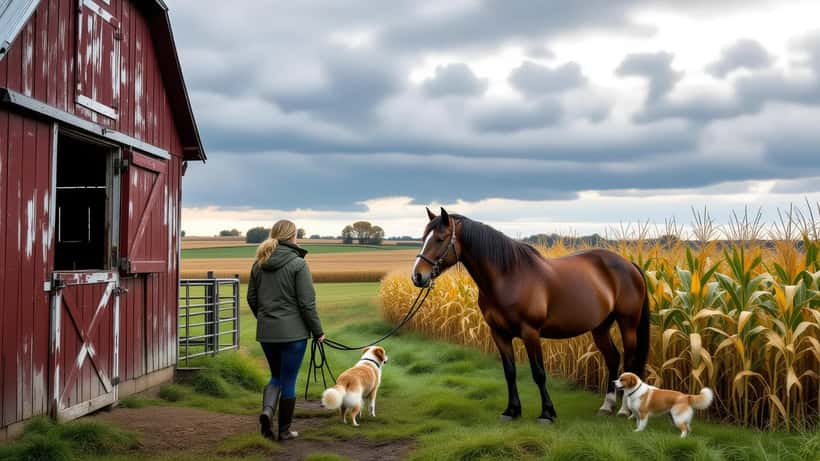
Livestock face a different problem: exposure. Cattle, horses, goats and pigs cannot be brought indoors on short notice, and pastures rarely offer protection from 2.5-inch hail or flying debris. Owners who wait until a warning is issued often have no safe way to move large animals in time.
A Veterinarian's Storm-Safety Checklist
Small-animal and large-animal veterinarians recommend a layered plan built well before the first watch is issued:
- Bring pets inside early. Move dogs and cats to an interior room without windows — the same space you would use for shelter. Do this at the watch stage, not the warning stage.
- Use a crate or leash. A scared animal is a flight risk. A secured crate prevents injury and stops a panicked pet from bolting when a door opens.
- Prepare a calm space. Close blinds, add familiar bedding, and consider a vet-approved anxiety wrap or medication for animals with a history of storm phobia.
- Protect against the heat too. If power fails, keep pets in the coolest part of the home and offer fresh water constantly. Never leave an animal in a parked vehicle during a heat advisory.
- Plan livestock moves in advance. Identify a sturdy barn or lower-lying sheltered area, and map primary and secondary routes for trailering animals before conditions deteriorate.
The federal preparedness agency FEMA, through its official guidance at Ready.gov's pet preparedness page, stresses two more steps that matter most in the chaos after a storm: microchip every pet with an up-to-date address and phone number, and assemble an emergency kit with at least three days of food, water, medications and copies of veterinary records. For livestock, the same guidance calls for permanent identification on every animal and pre-arranged transport, because trailers and experienced handlers are almost impossible to find once a disaster is underway.
When to Call a Veterinarian
Not every storm reaction needs a professional, but several situations do. A pet that injures itself trying to escape, shows signs of heat stroke — heavy panting, drooling, collapse or vomiting — or refuses food and water for more than a day should be seen promptly. Animals with severe, recurring storm anxiety are also candidates for a longer-term treatment plan.
This is where a consultation pays off. A licensed veterinarian can prescribe anti-anxiety medication tailored to your pet's weight and health history, review a livestock evacuation plan for your specific property, and flag chronic conditions that make an animal more vulnerable to heat or stress. Iowa owners weighing whether a symptom is an emergency can connect with a veterinary expert through Expert Zoom to get a professional opinion before the next First Alert Day — rather than searching for answers in the middle of a power outage.
The Bottom Line for Iowa Owners
The July 20 Tornado Watch is a reminder that Iowa's severe-weather season demands a plan for the whole household, four-legged members included. Storms this summer have repeatedly produced damaging winds and large hail across the eastern half of the state, and the pattern is unlikely to ease. Owners who prepare a shelter space, an emergency kit and a livestock route now — and who know which veterinarian to call — will spend the next warning protecting their animals instead of scrambling.
For related guidance on protecting animals during other recent events, see our coverage of how vets urged owners to shield pets from Canadian wildfire smoke and why a New Jersey fireball spooked pets across the state.
This article is for general information only and is not a substitute for professional veterinary advice. Always consult a licensed veterinarian about your animal's specific health and safety needs.
