 Sarah Miller
Thick smoke from wildfires burning across Canada and northern Minnesota pushed into the Midwest and the U.S. East Coast this week, triggering air quality alerts for tens of millions of people and hazing over skylines from Chicago to New York. Human health warnings dominated the headlines on July 17, 2026 — but veterinarians are urging owners not to forget the members of the household who breathe closest to the ground. Dogs, cats, birds and small animals are often hit harder by smoke than the people caring for them, and the warning signs are easy to miss until they become an emergency.
Why smoke hits pets harder than it hits you
The fine particulate matter in wildfire smoke — the microscopic PM2.5 particles that slip past the body's defenses — is dangerous for anyone. For pets, several factors stack the odds against them. Dogs and cats have smaller airways than adults, so the same concentration of particles irritates a proportionally larger share of their lungs. They also spend far more time at or near floor level, where heavier particulates settle and concentrate. And a dog panting to cool off is pulling smoke deep into its respiratory tract with every breath.
Health officials speaking to local outlets this week described the effects bluntly: smoke can trigger asthma-like flare-ups, inflame the eyes and airways, and worsen any existing heart or lung condition. Birds are the most vulnerable of all — their highly efficient respiratory systems, the same trait that once made canaries early-warning detectors in coal mines, make them acutely sensitive to airborne toxins.
The warning signs that mean "call now"
The tricky part is that a pet cannot tell you it feels short of breath. Owners have to read the body. Veterinary guidance converges on a consistent list of red flags: persistent coughing or gagging, wheezing, rapid or open-mouthed labored breathing, unusual lethargy, refusing food, disorientation, or eyes and a nose that stay irritated and running. In cats especially, open-mouth breathing is never normal and should be treated as urgent. Smoke can also compound the stress-driven symptoms owners already watch for during fireworks and other high-anxiety events, so a jumpy, panting animal in hazy conditions deserves close attention.
The reason this matters is timing. A dog with an underlying heart murmur or a cat with feline asthma can slide from mildly uncomfortable to a genuine respiratory crisis within hours once air quality collapses. Animals with pre-existing cardiovascular or respiratory disease, older pets, very young ones, and flat-faced "brachycephalic" breeds such as pugs, bulldogs and Persian cats sit in the highest-risk group. If your pet is in that category, this is the moment to have your veterinarian's after-hours number somewhere you can find it fast.
What veterinarians recommend right now
The single most effective step is also the simplest: keep animals indoors. The American Veterinary Medical Association advises letting dogs out only for brief bathroom breaks while alerts are active, and skipping the long walk, the dog-park run and the backyard afternoon entirely until the air clears. Exercise forces heavier breathing, which is exactly what you want to avoid when the air is loaded with particulates.
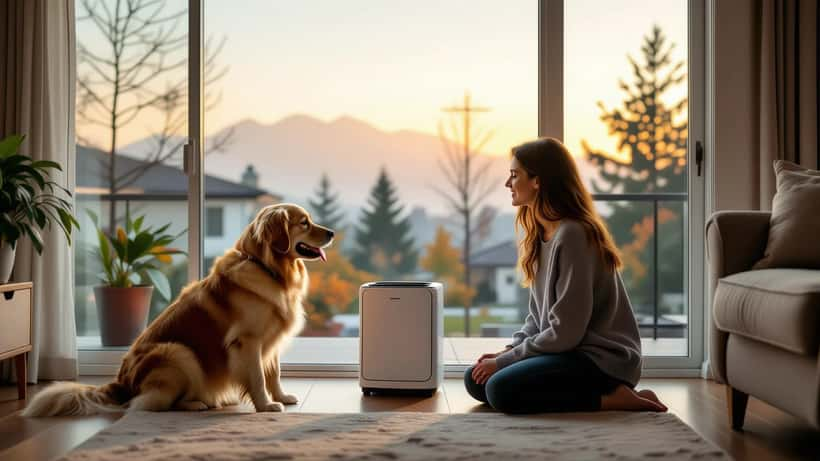
Indoors, keep windows and doors shut and run air conditioning or a fan with a clean filter to keep air moving without drawing smoke in. Replace or upgrade filters — the same steps used to seal a home against wildfire smoke protect your pets too, and an air purifier in the room where the animal sleeps can meaningfully cut the particle load. Keep water bowls full, since good hydration helps the airways clear irritants. Owners can track local conditions in real time on the federal government's official air quality site, AirNow, and use the same AQI thresholds for pets that apply to sensitive people: when the index turns red, treat your animal as a sensitive individual.
For horses and outdoor livestock, which cannot simply come inside, the advice shifts to reducing exertion, providing plenty of clean water, and giving the respiratory tract four to six weeks to recover after heavy smoke exposure before returning to hard work.
Where an expert makes the difference
Wildfire-smoke episodes have become a recurring summer event across North America, and general "keep them inside" advice only goes so far for the animals that need it most. A pet with a chronic condition — feline asthma, a collapsing trachea, congestive heart failure, or a history of bronchitis — deserves a tailored plan, not a one-size-fits-all fact sheet. This is where a quick consultation with a veterinarian pays off. An expert can tell you whether your dog's existing medication should be adjusted during a smoke event, whether that cough warrants an immediate visit or watchful waiting, and what a realistic emergency threshold looks like for your specific animal.
That guidance is hard to improvise at 11 p.m. when the AQI is spiking and your cat is breathing oddly. Talking to a professional before the crisis — mapping out which symptoms mean "monitor," which mean "come in," and what to keep in a pet smoke-emergency kit — turns a frightening night into a manageable one. If you cannot reach your regular clinic, telehealth and on-demand veterinary consultations can help you triage whether a symptom is an emergency, connecting you with a qualified expert in minutes rather than leaving you guessing.
The smoke drifting over the eastern half of the country will eventually clear, as it did after the major cross-border smoke events of recent summers. But the pattern is not going away, and the households best prepared for the next one are the ones that plan while the sky is still blue. Your pets are counting on you to read the signs they cannot describe — and to know, in advance, exactly who to call.
This article is for general information and does not replace professional veterinary advice. If your pet shows signs of respiratory distress, contact a veterinarian or emergency clinic immediately.
