 Elizabeth Chen
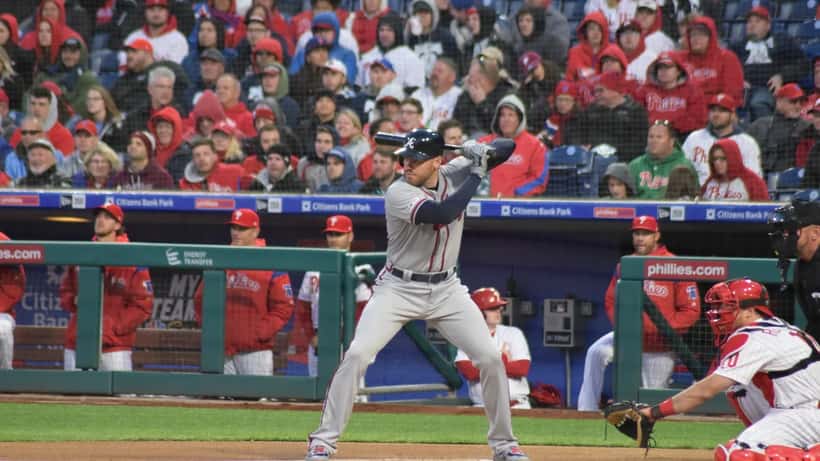
Los Angeles Dodgers first baseman Freddie Freeman was pulled from a game in late May 2026 with a left wrist contusion — then returned without missing a scheduled start. For the professional athlete, it was a brief medical footnote in one of his best months of the season. For the millions of recreational athletes watching, it is a medical lesson hiding in plain sight.
What Happened to Freddie Freeman
Freeman, 36, suffered the contusion during the Dodgers' late-May run, a period in which he batted .326 with four home runs and 20 RBI across 41 appearances — including his 100th career home run as a Dodger, hit May 8 against the Atlanta Braves off Chris Sale.
His medical team evaluated the wrist, cleared him quickly, and he returned without incident. The speed of that return is impressive but also misleading for anyone drawing personal conclusions. The Dodgers employ a full-time sports medicine staff — orthopedic physicians, athletic trainers, physical therapists — whose sole job is to determine whether a wrist injury has structural damage before allowing return to play. That determination uses physical examination, provocative testing, and imaging unavailable to anyone outside a professional sports organization or a medical clinic.
Most weekend athletes have none of that. They have a bag of ice, Google, and a stubborn belief that playing through pain is the right call.
Understanding Wrist Contusions
A contusion is a bruise: blood vessels in soft tissue rupture from direct impact, causing pain, swelling, and discoloration. In minor cases, the injury resolves within a week with rest, ice, and compression. But the wrist is not simple anatomy.
It contains eight small carpal bones, a network of tendons and ligaments, and three major nerves — median, ulnar, and radial — running through a confined space. The National Institute of Arthritis and Musculoskeletal and Skin Diseases (NIAMS) notes that soft-tissue wrist injuries vary widely in severity, from minor bruising to complete ligament tears requiring surgical reconstruction.
The core diagnostic problem: in the first 24 to 48 hours, a simple contusion and a scaphoid fracture — the most commonly missed carpal bone break — are clinically indistinguishable without imaging. Both present with local swelling and pain. One heals on its own. The other, if untreated, risks avascular necrosis: the bone tissue dies from interrupted blood supply, resulting in long-term arthritis and potential permanent loss of wrist function.
4 Warning Signs That Require Evaluation
Sports medicine physicians consistently identify four signals that shift a wrist injury from "watch and rest" to "see a doctor today":
1. Pain at the anatomical snuffbox. Press your thumb down and locate the small depression between the two tendons on the back of your wrist near the thumb. Pain there — the Watson snuffbox sign — indicates the scaphoid bone directly below. Scaphoid fractures are missed on standard X-rays 20 to 30 percent of the time and require CT or MRI to confirm.
2. Swelling that worsens after 48 hours. Mild swelling that peaks and then improves is consistent with a simple contusion. Swelling that expands or hardens two days after impact signals ongoing inflammation from a structural injury.
3. Grip strength below 50 percent. If you cannot form a complete fist, turn a doorknob, or press your palm flat without significant pain 24 hours after the injury, you have a functional deficit that warrants imaging.
4. Numbness or tingling in the fingers. Any neurological symptom following wrist trauma — tingling in the thumb, numbness in the ring or pinky fingers — may indicate compartment syndrome, a pressure-driven condition that restricts blood supply. This is rare, but untreated it leads to permanent nerve damage and constitutes a medical emergency.
Freeman showed none of these — or his medical staff ruled them out within minutes of evaluation. The average person on a recreational softball field or bike trail does not have access to that rapid assessment.
The Cost of Playing Through the Wrong Injury
An untreated scaphoid fracture is among the most preventable long-term injuries in orthopedic medicine and among the most expensive to treat after the fact. A missed diagnosis that progresses to avascular necrosis may require a vascularized bone graft procedure. A scapholunate ligament tear left untreated follows a predictable progression toward SLAC wrist — scapholunate advanced collapse — causing arthritis that significantly limits daily function.
The economics are straightforward. An urgent care visit with X-rays costs $150 to $300 out of pocket in most U.S. markets. An MRI for soft-tissue evaluation runs $400 to $800. A vascularized bone graft procedure costs $15,000 to $30,000 and requires three to six months of rehabilitation.
Playing through the wrong injury is not courage. It is deferred cost.
What Freeman's Medical Protocol Teaches Everyone
Professional sports teams operate on a principle worth borrowing: evaluate first, decide second. The Dodgers did not return Freeman based on how his wrist felt during warm-ups. They performed structured clinical assessment — and in all likelihood, imaging — before authorizing return to play.
The practical equivalent for recreational athletes is this: if a wrist impact causes swelling or functional limitation that does not clearly resolve within the first hour, see a sports medicine physician within 24 hours.
A board-certified sports medicine or orthopedic physician can perform the Scapholunate Ballottement test, the Watson Shift test, and targeted palpation in under five minutes. These clinical tools detect structural instability that feel identical to a simple bruise without examination. No imaging required for the exam itself — imaging is ordered based on what the clinical findings reveal.
Getting the Right Expert Opinion
Wrist injuries do not follow schedules. When a contusion does not improve steadily within 48 hours, the right move is a consultation with a sports medicine physician or orthopedic specialist — someone equipped to distinguish a bruise from a fracture, and a fracture from a ligament tear, before the window for uncomplicated treatment closes.
ExpertZoom connects patients directly with sports medicine physicians and orthopedic specialists who evaluate wrist injuries, recommend appropriate imaging, and provide evidence-based return-to-activity protocols. Freddie Freeman has an entire medical department making that call for him. You deserve the same quality of decision-making.
This article is for informational purposes only and does not constitute medical advice. Consult a qualified healthcare professional for any injury or medical concern.
