 Emily Wang
Bronny James is not a lock to survive the Los Angeles Lakers' final roster cut, and the question fans keep asking this week is simple: what actually happens to a player's money if he is waived days before the regular season? The answer sits in a contract clause most people never read, and it applies far beyond the NBA.
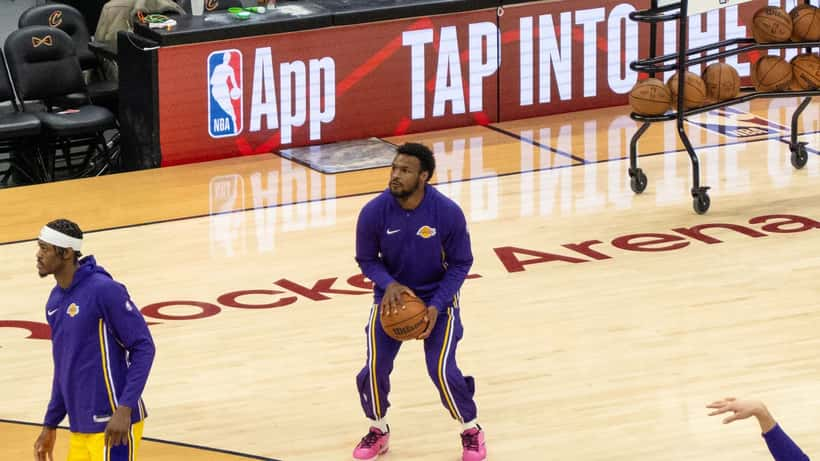
According to Sports Illustrated, the Lakers must trim to the 15-player maximum before the season opener, with Friday's preseason finale against the Nuggets serving as the last audition. Coach JJ Redick said he does not think James "has played well in the four preseason games, but he's had good practices."
What the numbers say about the roster bubble
Through four preseason games, James is averaging 2.8 points, 2.8 rebounds and 3.3 assists in 17.5 minutes, per the same Sports Illustrated report. He is shooting 26.7% from the field and 14.3% from three, with 3.0 turnovers per game. That is a thin résumé for a decision-maker weighing one final roster spot.
Context cuts the other way. Heavy.com reported on October 16 that free agent signing Collin Sexton has been sidelined with a leg injury, which raises the Lakers' need for ball-handlers and could favor James over fellow guards Dalton Knecht and Jaden Hardy. Reports citing The Athletic's Dan Woike also describe the organization as believing in him as a future rotation player.
Newsweek reported in July that his future in Los Angeles is unrelated to his father's decision to play elsewhere this season. That leaves a 22-year-old in his third season with a decision that is partly basketball and partly paperwork.
The question readers are really asking: is a waived player still paid?
In most cases, yes. A guaranteed NBA contract is a promise to pay the full salary for that season whether or not the player stays on the roster. Waiving a player does not cancel the obligation. It only removes him from the 15-man roster while the team keeps paying him.
Reports indicate James is on a guaranteed salary of roughly $2.3 million for 2026-27. If that figure is accurate, a waiver would not strip him of that income. What changes is who benefits from it and whether other teams can pick him up.
Three mechanics matter:
- Guaranteed versus partially guaranteed. Some deals guarantee only a portion of the salary until a set date. Cutting a player before that date can cut the team's obligation to a fraction.
- Waiver and claim rules. Once waived, a player usually clears waivers or is claimed by another team. A claim shifts the salary obligation to the claiming team under the rules of the collective bargaining agreement.
- Set-off language. If a waived player signs elsewhere, the original team's obligation can be reduced by the new salary, depending on how the contract is written.
The league and players' union publish the governing document. Anyone curious about how guarantees and waivers are defined can read the NBA collective bargaining agreement summary at the NBPA.
Why an attorney, not just an agent, matters in a moment like this
Agents negotiate. Attorneys read the clauses that decide what happens when negotiations fail. When a contract is guaranteed, partially guaranteed, or full of bonuses and incentives, the difference between "owed" and "not owed" can be tens or hundreds of thousands of dollars.
Sports and contract lawyers typically review four things before a player or family signs or reacts to a cut:
- The exact guarantee date and the percentage guaranteed at each date.
- Whether a set-off clause applies if the player signs with another team.
- Treatment of bonuses, incentives and any trade-related clauses.
- Tax and escrow consequences of the payment schedule.
This is not limited to professional athletes. Any employee with a fixed-term or guaranteed-pay contract can face the same question when a company restructures: if I am let go, what am I still owed?
A concrete case: a $2.3 million guarantee and a Friday cut
Take a hypothetical 22-year-old guard on a fully guaranteed $2.3 million deal, waived on October 20, two days before opening night. We will call him Marcus. This is an illustration, not a description of any real player's contract terms.
If the guarantee is full, Marcus is still owed all $2.3 million. The team pays it whether he plays one minute or none. Under the league's 10% escrow arrangement, about $230,000 is typically held back from his pay until league-wide revenue figures settle, so he may not see that portion immediately. If his agent takes a 2% commission, that is roughly $46,000 more off the top before federal and state taxes.
Now change one fact. Suppose the contract guarantees only 50% until January 10. If the team waives Marcus before that date, the team owes about $1.15 million, not $2.3 million. A single clause just cost him $1.15 million.
Now add a second one. If another team claims him off waivers on a $1.1 million minimum-type deal and a set-off clause applies, the Lakers' remaining obligation could be reduced by what he earns elsewhere. So if the clause is there, a $2.3 million promise might cost the original team only $1.2 million.
Timing adds another wrinkle. Salary is normally paid across the season in installments, so a waived player who is fully guaranteed keeps receiving checks on the original schedule, while one who is partially guaranteed may see payments stop at the guaranteed amount. Marcus and his family would want to know which situation applies before making housing, investment or tax decisions based on the full figure.
The if/then logic is the point. If the contract is fully guaranteed, then the waiver changes the roster but not the pay. If it is partially guaranteed, then the date of the cut decides the payout. If a set-off clause exists, then signing elsewhere can reduce what the first team owes.
What this means for readers outside the NBA
You do not need an NBA contract for this to apply. Severance packages, fixed-term employment agreements, and signing bonuses with clawback provisions all contain the same moving parts: a guarantee, a trigger date, and a reduction clause.
Typical warning signs worth a lawyer's review include:
- Pay described as "up to" rather than a fixed amount.
- A bonus repayable if you leave within a set period.
- A severance offer that requires a release of claims within a short window, sometimes as few as 21 days.
- Language that reduces your payout if you find new work.
A review before you sign usually costs far less than a dispute afterward.
What to do now
Whether you follow the Lakers or simply hold a contract with a guarantee in it, a few steps apply:
- Find the guarantee language. Locate the clause that says what is paid, when, and under what conditions it can be reduced.
- Mark the dates. Note any date after which the amount owed rises or falls.
- Ask about offsets. Check whether new income reduces what your former employer owes.
- Get an independent review. An attorney who handles employment or sports contracts can read the terms against your situation in a single consultation.
On Expert Zoom you can connect with a lawyer experienced in employment and contract law to walk through your agreement before a deadline arrives. For related reading, see how contract decisions shaped the Marcus Smart option debate and our look at what LeBron and Bronny's milestone means for playoff-era finances.
This article is general information, not legal advice. Contract outcomes depend on the specific terms and jurisdiction; consult a licensed attorney about your situation.
