 Emily Wang
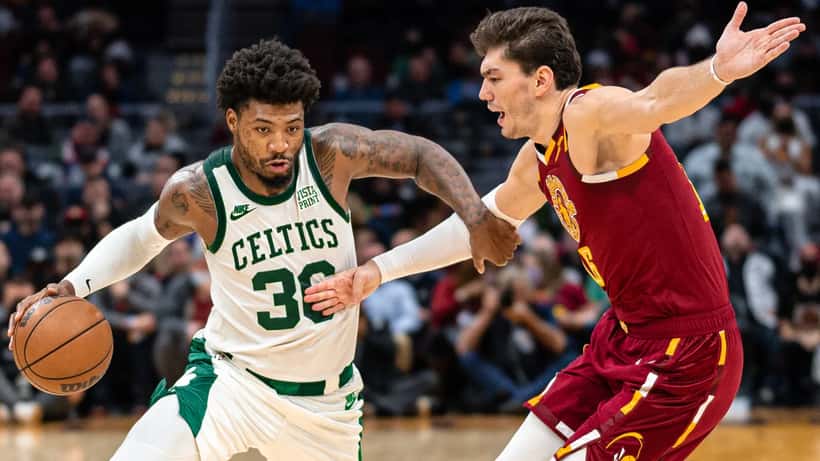
Marcus Smart is playing the best defense in the 2026 NBA Playoffs. He leads all postseason players in steals, delivered a historic 21-point, 10-assist, 5-steal game that earned him a spot alongside Magic Johnson in Lakers franchise history, and signed a one-year deal this past summer that costs the Lakers just $5.4 million.
Now that the playoffs are underway — and Smart's value is on full public display — he holds a player option for the 2026-27 season at that same $5.4 million figure. The decision he makes this summer will be watched closely by agents, contract attorneys, and veteran players across the league.
What a Player Option Actually Means
In the NBA, a player option is a contract clause that gives the athlete — not the team — the right to extend the existing contract for one additional year at the previously agreed salary. Smart can either exercise the option (accept $5.4 million for 2026-27) or decline it and become a free agent, betting he can negotiate a higher salary on the open market.
This is a powerful lever in favor of the player. Unlike a team option, which gives franchises the ability to release players without full compensation, a player option is entirely at the athlete's discretion. No team can force Smart to accept or decline — it is entirely his decision, typically made by the June deadline each offseason.
Under the NBA's Collective Bargaining Agreement (CBA), the National Labor Relations Board oversees the union's rights to collectively bargain contract terms including option clauses, making these provisions enforceable federal labor agreements, not merely contractual preferences.
The Risk Calculus: Opt In or Opt Out?
Contract attorneys who represent professional athletes frequently advise clients on exactly this kind of decision, and the calculus is rarely simple.
The case for opting in: At 31 years old, Smart is at an age where NBA careers can turn quickly. One significant injury — a torn ACL, a broken hand — could eliminate his leverage entirely and leave him earning the veterans' minimum. The $5.4 million is guaranteed the moment he opts in. Insurance, as any financial attorney knows, is never cheap; guaranteed money is its own form of career protection.
The case for opting out: Smart's performance in the 2026 playoffs has been the best of his career relative to his contract value. He is arguably the most underpaid defensive player in the league right now. If he opts out, teams competing for defensive-minded veterans — and the Lakers, who want him back — could be competing in free agency to sign him. The market could offer two or three times his current salary.
The complicating factor: Smart's performance in the playoffs is happening in a team context where Luka Doncic draws double-teams, creating statistical openings that a defensive specialist benefits from enormously. A contract attorney would counsel him to consider whether those numbers — and therefore that leverage — are portable to a different team or situation.
What Agents and Sports Lawyers Actually Do in These Situations
Most fans assume a player option decision is simple: just pick the higher number. In reality, this is where experienced sports attorneys and agents earn their fees.
A sports contract attorney will review:
- The full CBA language governing player option deadlines and procedures
- Tax implications of the salary difference between states (California vs. Florida or Texas, where no state income tax applies)
- Insurance and disability coverage that lapses if the player becomes a free agent during the negotiation period
- Potential to convert the player option into a multi-year extension before the deadline — a "renegotiation window" that the CBA permits under specific conditions
The option deadline itself has legal significance. If Smart fails to notify the Lakers by the designated date (typically late June), the option lapses and he becomes an unrestricted free agent by default. Missing the deadline is not merely an inconvenience — it is a binding legal outcome with financial consequences.
Smart's Situation vs. the Broader Lesson
Smart's contract situation mirrors a pattern contract lawyers see often with veteran role players: a legitimately excellent performer locked into a deal that reflected lower perceived value at signing, now reconsidering after outperforming expectations.
This pattern appears in industries far beyond basketball. A consultant who signed a retainer agreement two years ago at lower rates, a contractor who negotiated annual options before their specialty became high-demand, an executive with a one-year extension clause negotiated before the company's valuation jumped — all face structurally similar decisions.
The underlying legal principle is the same: an option clause you hold is only as valuable as your understanding of the rights it confers, the timing requirements it imposes, and the alternatives available if you decline it.
Whether Smart opts in or out, his 2026 playoffs have already made his decision significantly more valuable than it appeared last summer. For veteran NBA athletes navigating contract decisions, the lesson is always the same: know your leverage before the deadline arrives, not after.
If you are an employee, contractor, or professional facing an option, renewal, or extension clause in a work agreement, a consultation with a contract attorney can help you understand what you actually hold — and what you could negotiate instead.
