 Carl Graham
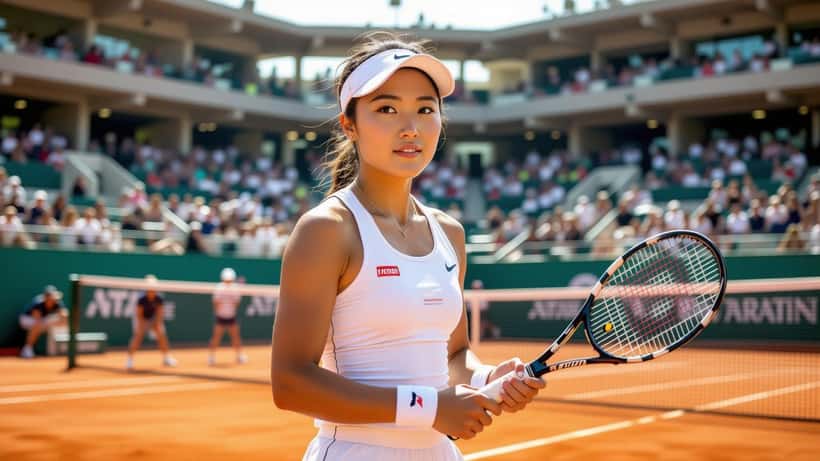
Ann Li reached a career-high singles ranking of World No. 29 on May 4, 2026, capping a stunning clay-court run that included a straight-sets win over World No. 3 Iga Swiatek and a semifinal berth at the WTA Strasbourg Open. Heading into the French Open as an American player on the rise, Li is now on every sponsor's radar — and what she does with that attention off the court could matter just as much as what she does on it.
For most athletes, a jump into the world's top 30 is more than a statistical milestone. It is a financial turning point. Sponsorship offers arrive. Image rights become commercially valuable. And decisions made in the weeks following a breakthrough ranking can define an athlete's financial future for years to come.
According to industry estimates published by the Sports Business Journal, WTA players ranked inside the top 30 can earn between $500,000 and $3 million annually from endorsements alone, depending on marketability, nationality, and media exposure. For an American player with Ann Li's profile, reaching this threshold just before a Grand Slam creates a rare commercial window — one that sports lawyers say is frequently underestimated, and frequently mishandled.
What an Endorsement Contract Actually Contains
Most sponsorship agreements in professional tennis cover three core areas: usage rights, exclusivity clauses, and performance bonuses. Each carries real financial and legal weight.
Usage rights define where and how a brand may deploy a player's name, image, and likeness. A contract might authorize a sportswear company to use Ann Li's image in North American advertising while restricting use in Asian markets — or the reverse. Athletes who skip this section can find their image appearing in campaigns, regions, or media formats they never approved.
Exclusivity clauses bar athletes from working with competing brands. A player who signs with one equipment manufacturer may be prohibited from wearing any competing label, even during training sessions. The scope of these clauses varies dramatically. Some apply globally across all product categories; others are narrowly defined. Either way, they limit future earning potential — and a poorly negotiated clause can foreclose a far more valuable partnership that arrives six months later.
Performance bonuses are often buried in the fine print. A base endorsement fee may be supplemented by escalating bonuses tied to Grand Slam quarterfinal appearances, top-25 rankings, or television exposure thresholds. For a player on a trajectory like Ann Li's — with a 7-4 clay-court record in 2026 and momentum heading into Roland Garros — these clauses can be worth tens of thousands of dollars. They are also the clauses brands prefer athletes not to notice.
A sports lawyer reviewing a contract before signature can identify each of these elements, propose amendments, and ensure the terms actually reflect the athlete's current leverage.
The Image Rights Problem U.S. Athletes Often Miss
Under U.S. law, professional athletes retain a legal right to control how their name, image, and likeness (NIL) is used commercially. But this right is not self-enforcing.
Cases in recent years have involved brands running ad campaigns past a contract's expiration date, licensing athlete images to third parties without consent, or using footage in digital platforms not contemplated when the original deal was signed. The remedies available — civil litigation, arbitration, injunctions — are expensive and slow.
Prevention is substantially more effective. A contract that defines permitted use with specificity, caps the term, and includes a written approval process for any sublicensing creates clear enforcement rights. Without that language, an athlete's NIL protections exist in theory but are difficult to assert in practice.
State-level protections also vary. Georgia, where Ann Li is based and trains in Atlanta, has its own right of publicity statute — but the scope differs from California, New York, and Florida. A lawyer familiar with multi-state athlete representation can structure agreements that account for where the athlete lives, where they compete, and where the brand operates.
Prize Money, Taxes, and the Cost of Competing Globally
A top-30 ranking brings not just sponsorships but substantially higher prize money — and with it, a complex tax picture.
Professional tennis players compete across dozens of countries in a single season. Prize winnings are typically taxed in the jurisdiction where the tournament is held. An American player earning prize money at Roland Garros will owe French tax on that income. A credit against U.S. federal taxes may be available under the U.S.-France tax treaty, but the calculation requires careful documentation and often professional guidance.
According to the U.S. Internal Revenue Service, athletes with global income sources must report all foreign earnings on their federal return, regardless of where taxes were already paid. Athletes who do not track these obligations across their season — or who wait until April to sort it out — frequently discover they owe more than anticipated.
Financial advisors who specialize in professional athlete income structures recommend establishing a tax planning framework at the start of each season, particularly when prize money and endorsement income are both growing. The window just before the French Open — when Ann Li's earning trajectory is steepest — is also the moment when that structure is most urgently needed.
When to Bring in Legal Counsel
Athletes routinely seek legal advice only after they have already signed a contract. By that point, leverage has transferred almost entirely to the brand. Sports lawyers consistently recommend the opposite sequence:
- Before any sponsorship conversation begins, to understand market rates and standard terms
- During negotiation, to identify red flags and propose protective amendments
- At each renewal, as the athlete's market value evolves with ranking and public profile
An athlete entering the top 30 for the first time occupies a uniquely strong negotiating position. That leverage erodes if the ranking stabilizes or dips. Acting quickly — and with proper counsel — is often the difference between a contract that serves the athlete's interests and one that serves the brand's.
Ann Li's 2026 clay-court season has shown that breakthrough moments can arrive at unexpected times. But preparation determines how much an athlete actually captures when they do. Whether the preparation is physical — or contractual — the principle is the same.
For athletes approaching similar milestones, consulting a lawyer experienced in sports contracts and athlete representation is the clearest first step toward protecting what they have earned. According to the U.S. Copyright Office's guidance on right of publicity and related rights, athletes have significant legal protections — but only when those rights are properly documented and enforced.
Athletes navigating similar crossroads between sport and business can also learn from the experience of younger players like João Fonseca, whose contract considerations at 19 echo many of the same legal questions that arise whenever a breakthrough ranking changes an athlete's commercial value overnight.
A specialist in athlete contract law can make the difference between signing a deal that reflects your moment — and signing one that outlasts your leverage.
This article is for informational purposes only and does not constitute legal or financial advice. Consult a licensed attorney or financial advisor for guidance tailored to your specific situation.
