 Isabella Torres
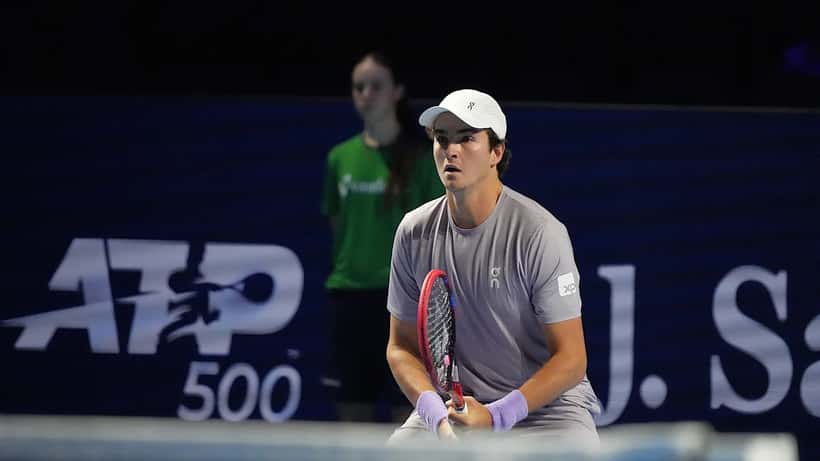
João Fonseca, 19, booked his spot in the quarterfinals of the 2026 BMW Open in Munich this week after defeating Arthur Rinderknech in straight sets — his second consecutive ATP quarterfinal appearance in as many weeks, following a deep run at the Rolex Monte-Carlo Masters. The Brazilian prodigy, ranked as high as world No. 28 in October 2025, has become one of the most talked-about names in professional tennis before his 20th birthday. What fewer people discuss is the legal scaffolding that must exist around a career like his — and what happens when it doesn't.
Why Fonseca's Rise Is a Contract Law Story
In professional tennis, a player's ranking is only one dimension of their career. The other — often the more financially consequential one — is the web of agreements that governs every commercial relationship: agent contracts, endorsement deals, tournament representation, image rights, and social media licensing. For teenage athletes ascending the rankings as quickly as Fonseca, these agreements are being signed at precisely the moment when they are most vulnerable to unfavorable terms.
Fonseca's 2026 season began with a setback: a back injury that forced him to withdraw from the Brisbane International before he could play a single match. By April, he was defeating top-50 players at Indian Wells and Monte-Carlo, beating Tommy Paul and Karen Khachanov along the way. That kind of trajectory — from injured withdrawal in January to back-to-back quarterfinals in spring — compresses years of marketability into a few months.
That compression is exactly when sports attorneys say teen athletes and their families are most likely to make binding decisions under time pressure that will govern the rest of their careers.
The Three Agreements Every Teen Athlete Needs to Understand
1. The Athlete-Agent Agreement
In the United States, athlete agents who represent professional athletes in contract negotiations are regulated under the Uniform Athlete Agents Act (UAAA), adopted in various forms by most US states, and the Sports Agent Responsibility and Trust Act (SPARTA) at the federal level. These laws require agents to register with state athletic commissions, disclose conflicts of interest, and provide athletes with specific written notifications before signing.
For a Brazilian athlete like Fonseca competing internationally, the relevant jurisdiction expands further — including ATP Tour's own agent accreditation process. But the fundamental principle applies globally: the athlete-agent agreement itself is the foundational document, and its terms — commission rates, exclusivity clauses, duration, and termination rights — determine how much of every dollar earned flows to the athlete rather than to intermediaries.
Commission rates in professional tennis typically range from 10 to 25 percent of gross income, depending on the agent's seniority and scope of services. A well-negotiated agreement caps commission at a lower rate for tournament prize money (where the agent has minimal operational involvement) while allowing a higher rate for commercial deals the agent secures directly.
2. Endorsement and Sponsorship Contracts
Fonseca already carries a racket-and-apparel deal typical of rising ATP players. As his ranking climbs and his visibility increases — a QF run in Munich, a deep Grand Slam result — the value of those agreements scales upward, and new ones will be presented.
According to the US Bureau of Labor Statistics, median earnings for professional athletes vary enormously, but for top-ranked tennis players, annual endorsement income can exceed prize money by several multiples. Fonseca's commercial leverage is growing every week.
The clauses that matter most in endorsement agreements for young athletes include:
- Morals clauses: Broad language that allows sponsors to exit a contract if the athlete engages in behavior the sponsor deems damaging to its brand. These clauses are frequently written in the sponsor's favor and can be invoked for minor incidents if not narrowed during negotiation.
- Exclusivity provisions: Most apparel and racket deals are exclusive — but exclusivity over what categories, and for which territories? A poorly drafted exclusivity clause can prevent a player from accepting deals with non-competing brands in adjacent categories.
- Performance-based escalators: Deals that reward career advancement (ranking improvement, Grand Slam wins) with payment increases are standard for ascending players. Ensuring those thresholds are achievable and clearly defined is essential.
- Injury and inactivity clauses: Fonseca's back injury at the start of 2026 illustrates why these matter. What happens to endorsement payments if a player misses three months due to injury? Many sponsor contracts include suspension or reduction clauses that are only visible when they activate.
3. Image Rights and Social Media Agreements
As Fonseca's profile has grown — he became the first Brazilian singles player to win an ATP 500 title — so has the value of his name, likeness, and social media presence. Image rights agreements define who can use that likeness and under what commercial conditions.
In several European jurisdictions where Fonseca competes, image rights are treated as a separate legal entity from employment income — with significant tax planning implications. In the UK and parts of Europe, a structure that routes image rights through a company rather than treating them as personal income can result in materially different tax treatment.
For any athlete competing across multiple jurisdictions, as Fonseca does week to week on the ATP Tour, the interaction between image rights licensing, personal income tax treaties between countries, and local labor law creates a complexity that general legal counsel is rarely equipped to manage alone.
What Fonseca's Trajectory Means for Young Athletes Beyond Tennis
Fonseca's story is not unique in structure — only in pace and visibility. Young athletes across tennis, basketball, soccer, and emerging sports are navigating the same contractual landscape at younger and younger ages, with less experience, and often with family members serving as informal advisors in place of qualified legal counsel.
The consequences of poorly negotiated early contracts can follow an athlete for years: locked into a management agreement with unfavorable commission terms, unable to pursue a more lucrative endorsement because of an overbroad exclusivity clause, or unaware that a morals clause was invoked to terminate a deal before a performance bonus triggered.
A qualified sports attorney — not just a sports agent — can review these agreements independently and negotiate on the athlete's behalf before signing. The cost of that review is nearly always lower than the cost of reversing an unfavorable agreement years later.
If you are the parent or legal guardian of a young athlete entering professional competition, or an athlete yourself reviewing a first management or endorsement agreement, speaking with a sports law attorney before signing is the most consequential step you can take. Expert Zoom connects you with verified legal specialists experienced in athlete contracts and sports law.
Related: Veronika Erjavec's WTA Breakthrough: What Emerging Tennis Stars Need to Know About Endorsements
