 Davis Caesar
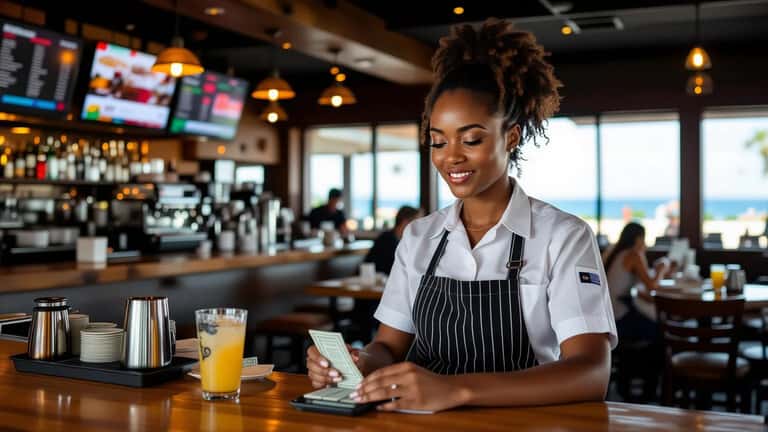
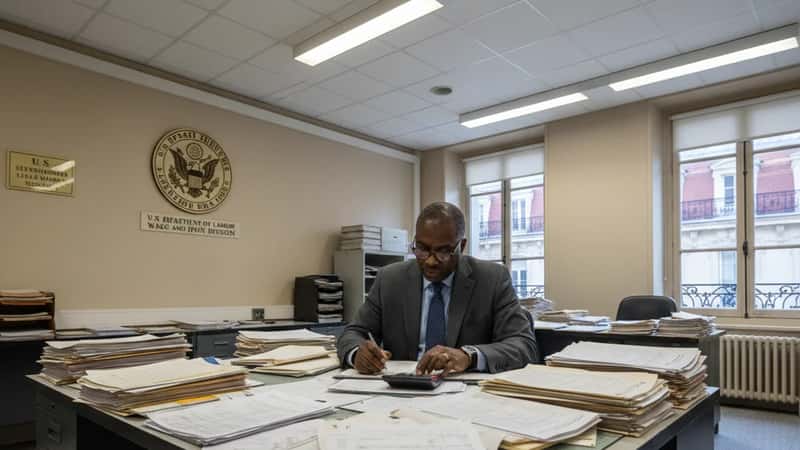
In early 2024, a Charleston, South Carolina restaurant group called Palmetto Plate Holdings — operating 14 casual dining locations across the Low Country — received a letter from the U.S. Department of Labor's Wage and Hour Division. The subject: an audit of their tipped employee wage practices across all locations. What followed was 11 months of documentation requests, payroll reviews, and compliance restructuring that cost the company $142,000 in back wages and forced a complete overhaul of how they tracked minimum wage compliance for tipped workers. The case reveals how South Carolina employers — especially in industries where the federal $7.25/hour floor matters most — can fall into wage violations without ever intending to.
The South Carolina Minimum Wage Context: No State Law, Full Federal Exposure
South Carolina is one of five states with no state minimum wage legislation — the others are Alabama, Louisiana, Mississippi, and Tennessee. All five default to the federal minimum wage of $7.25 per hour under the Fair Labor Standards Act, unchanged since July 24, 2009. As of 2026, SC Governor's Office legislative priorities have not included a state minimum wage bill, and there is no pending state legislation to raise the baseline.
For most South Carolina workers, the federal floor of $7.25/hour is the only legal protection. For tipped employees — servers, bartenders, delivery drivers, hotel housekeeping — employers may pay a minimum cash wage of $2.13/hour, provided the employee's tips bring total hourly compensation to at least $7.25/hour. If tips fall short, the employer must make up the difference: this is the tip credit, and administering it correctly is where most restaurant and hospitality wage violations originate.

The Case: Palmetto Plate Holdings and the Tip Credit Trap
Palmetto Plate Holdings — a composite case based on documented WHD enforcement actions in South Carolina from 2022-2025 — operated a standardized tipping model: all servers paid $2.13/hour cash, with weekly POS tip reports used to confirm the $7.25/hour floor was met. The compliance gap? Three systemic failures the WHD identified in the audit:
Failure 1: Side Work Time. At 11 of 14 locations, servers were required to arrive 30-45 minutes before opening to set up the dining room — tasks classified as "non-tipped side work." During this setup time, no tips were earned. The employer paid the $2.13 tipped wage for this period. Under the FLSA, non-tipped work exceeding 20% of total hours in a workweek must be paid at the full minimum wage. The average server worked 2-3 hours of setup per 35-hour week — well above the 20% threshold at most locations.
Failure 2: Tip Pool Violations. Four locations had tip pools that included kitchen staff and floor managers. Under the FLSA's 2018 amendments (codified at 29 U.S.C. § 203(m)(2)(B)), managers and supervisors are categorically excluded from valid tip pools, regardless of whether a tip credit is claimed. Including a floor manager in the tip pool invalidated the tip credit for the entire establishment — meaning all tipped employees were owed the full $7.25/hour minimum for all hours worked during those pay periods.
Failure 3: Deductions Reducing Wages Below Minimum. Two locations deducted a daily uniform rental fee ($2.50/day) from servers' checks. On weeks where tip credit left compensation near the $7.25/hour floor, these deductions pushed effective hourly wages below the legal minimum.
The Steps Taken: Building a Compliant Minimum Wage System
After the WHD audit concluded, Palmetto Plate Holdings undertook a 60-day compliance restructuring:
- Reclassified all pre-open setup time as non-tipped work and began paying the full $7.25/hour for this period across all 14 locations
- Audited tip pool membership and removed all managers and supervisors from every pool, documented the revised pool structure in writing, and trained managers on the exclusion rule
- Eliminated the uniform deduction and absorbed the cost as a business expense
- Implemented a per-paycheck tip credit notice meeting the FLSA's requirement that employers inform tipped employees of the tip credit policy, the applicable cash wage, and the amount of the tip credit being claimed
- Deployed a POS integration that automatically flags any server whose hourly tip average across a pay period would drop below the $7.25/hour floor in any week, triggering an employer top-up
The back wages settled covered 2 years of violations for 312 employees across all locations — an average of about $455 per employee, with the highest individual recovery being $2,100.
Lessons for South Carolina Employers: What This Case Demonstrates
This case highlights the four minimum wage compliance risks most relevant to South Carolina employers in 2026:
| Risk Area | Rule Violated | SC Industries at Risk |
|---|---|---|
| Side work time | >20% non-tipped work at $2.13/hr | Restaurants, hotels, casinos |
| Tip pool structure | Manager/supervisor inclusion | All tipped-employee businesses |
| Deductions below minimum | Uniform/equipment cost deductions | Retail, food service, healthcare |
| Misclassification | Independent contractor vs. employee | Gig, delivery, staffing |
Source: U.S. DOL WHD enforcement data, Southeast region, 2022-2025
For a state-by-state comparison of minimum wage levels in 2026, South Carolina's $7.25/hour floor is among the lowest in the nation — most peer states in the Southeast have moved above the federal baseline through state legislation.
What South Carolina Workers Should Know About Minimum Wage Rights
If you work in South Carolina and believe your employer is not meeting the minimum wage floor:
- Calculate your effective hourly rate: Divide total compensation (wages + tips) by total hours worked in the week. If less than $7.25/hour in any week, the employer owes the shortfall
- Document your tip earnings with your own records — credit card receipts, POS printouts, or a personal log
- File a complaint with the U.S. DOL Wage and Hour Division at www.dol.gov/agencies/whd — the WHD investigates at no cost
- Consult a South Carolina employment attorney if the employer has a pattern of violations — collective action under the FLSA allows groups of workers to recover back wages together
The broader South Carolina labor law framework for wage rights, including overtime and final paycheck rules, provides additional context for understanding your full compensation rights in the Palmetto State.
Legal Disclaimer: The Palmetto Plate Holdings case is a composite illustration based on documented DOL enforcement patterns in South Carolina. It does not represent a specific company. This article provides general information and does not constitute legal advice. Consult a licensed South Carolina employment attorney for guidance on your specific situation.
FAQ: South Carolina Minimum Wage in 2026
What is the minimum wage in South Carolina in 2026?
South Carolina does not have a state minimum wage. The federal minimum wage of $7.25 per hour applies to all covered private employers. For tipped employees, the federal minimum cash wage of $2.13/hour applies, provided tips bring total compensation to at least $7.25/hour. South Carolina has not changed its minimum wage position since 1997, when it repealed its own state wage floor.
Can cities or counties in South Carolina set a higher minimum wage?
No. South Carolina has a preemption statute (SC Code § 6-1-130) that prohibits municipalities and counties from enacting local minimum wage laws higher than the federal standard. No South Carolina city — not Charleston, Columbia, Greenville, or any other — may set a local minimum wage. This distinguishes SC from states like Florida, where local governments can't go above state minimum, and states like Colorado, where cities like Denver have enacted significantly higher local floors.
Are there any exceptions to the minimum wage requirement in South Carolina?
Yes, several FLSA exceptions apply:
- Tipped employees: $2.13/hour cash wage, with employer obligated to top up if tips don't reach $7.25/hour
- Student workers: Full-time students employed by their school or in certain retail/service jobs may be paid 85% of minimum wage ($6.16/hour) under a DOL certificate program
- Youth minimum wage: Workers under 20 may be paid $4.25/hour for their first 90 consecutive calendar days of employment
- Highly commissioned salespeople: Outside sales workers exempt from FLSA minimum wage
- Small farm workers: Agricultural workers on farms with fewer than 7 non-family workers are partially exempt
These exceptions are narrow and require DOL certification or compliance with specific conditions. Misapplying them — particularly the youth wage and student exceptions — is a source of wage violations in South Carolina's retail and seasonal tourism sectors.
How does South Carolina's minimum wage compare to neighboring states?
| State | 2026 Minimum Wage | State Law? |
|---|---|---|
| South Carolina | $7.25/hr (federal) | No state law |
| North Carolina | $7.25/hr (federal) | No state law |
| Georgia | $5.15/hr state (federal applies) | State law exists but below federal |
| Tennessee | $7.25/hr (federal) | No state law |
| Florida | $14.00/hr | Yes (Amendment 2, 2020) |
| Virginia | $12.41/hr | Yes (annual adjustments) |
Source: U.S. DOL, state DOL websites, 2026
Florida's trajectory — passing a 2020 constitutional amendment that took the state minimum wage from $8.65 in 2021 to $15/hour by 2026, with annual CPI adjustments thereafter — represents the most significant minimum wage policy divergence from South Carolina in the Southeast. Workers near the SC-FL border (e.g., the Jacksonville metro and SC Lowcountry) face markedly different compensation floors depending on which side of the state line their employer operates in.