 Odette Caplan
Montana gives workers fewer statutory break rights than most people assume — but federal law fills critical gaps, and specific groups (minors, nursing mothers) receive stronger protections. Here are the seven rules that every Montana employer and employee needs to understand about meal and rest breaks in 2026.
1. Montana Has No State Law Requiring Meal or Rest Breaks for Adult Employees
This is the fact that surprises most Montana workers: unlike California, Washington, or New York — which require 10-minute rest breaks for every four hours worked and 30-minute meal breaks for shifts over five hours — Montana has enacted no equivalent state statute for adult employees. The Montana Legislature has declined to pass a break mandate, so private-sector workers do not have a state-law right to a lunch break or a rest period.
What does this mean in practice? An adult Montana employee working an 8-hour shift has no legal entitlement to a meal break under state law. Many employers provide breaks voluntarily, and industry standards (particularly in hospitality and construction) create expectations. Collective bargaining agreements at unionized workplaces often guarantee specific break schedules. But absent a written company policy or a union contract, there is no Montana statute to enforce.
This does not mean Montana employers can ignore breaks entirely — federal law still applies.
À retenir: No Montana state statute requires meal or rest breaks for adult workers in private employment. Federal FLSA rules apply to compensability (see items 2 and 3), but the duty to provide breaks is governed by employer policy, not Montana statute.
2. Short Rest Breaks (5 to 20 Minutes) Are Compensable Work Time Under Federal Law
If a Montana employer voluntarily provides short breaks — typically 5 to 20 minutes — federal FLSA regulations require that this time be counted as paid working time. The US Department of Labor's position is clear: brief rest periods primarily benefit the employer (workers are more productive after a short break) and must be compensated.
This has a direct overtime implication. Short breaks count toward total hours worked for the week. An employee who takes four 10-minute paid breaks in an 8-hour shift has worked 8 hours and 40 minutes of compensable time that day — every minute counting toward the 40-hour overtime threshold.
Employers who auto-deduct short break time from employee time records — or who require employees to "clock out" for a 10-minute rest — are potentially violating FLSA and creating wage liability. The DLI's Wage and Hour Unit treats improperly deducted break time as unpaid wages.
3. Bona Fide Meal Periods of 30+ Minutes May Be Unpaid — With One Critical Condition
A meal period of 30 minutes or more can be treated as unpaid non-working time under both FLSA and Montana practice — but only if the employee is completely and genuinely relieved of all work duties during that time.
"Completely relieved" means the employee is free to leave the worksite, use the time for personal activities, and has no obligation to respond to work requests. If an employer requires an employee to remain available for calls, monitor equipment, or stay on-site for a business reason, the break is "on duty" and must be paid — even if no actual work occurs during it.
Common on-duty meal period situations in Montana:
- A security guard who must remain at their post during their lunch break
- A truck driver in a small operation who stays near the vehicle during a meal stop
- A sole employee at a small retail shop who cannot leave the register unattended
In these cases, the employer must pay for the meal period — or arrange genuine coverage so the employee can take a true off-duty break.
4. Minors Under 16 Are Entitled to a 30-Minute Meal Break After 5 Hours of Work
Montana's child labor statutes (MCA §41-2-101 et seq.) provide stronger protections than state law gives to adults. Any employee under 16 years of age who works more than five consecutive hours is entitled to a 30-minute meal break before continuing. This requirement applies regardless of the employer's general break policy.
Violations of Montana child labor break rules can trigger fines from the DLI. Montana minors working in hospitality, retail, and agriculture — industries with significant teen employment — are the most common subjects of child labor complaints. Employers in these sectors should build minor-specific scheduling protocols to avoid inadvertent violations.
Minors aged 16 and 17 fall outside this specific 5-hour meal break requirement but remain subject to Montana child labor restrictions on hours of work, overnight employment, and prohibited occupations.
5. Nursing Mothers Have Federal Break Rights in All Montana Workplaces
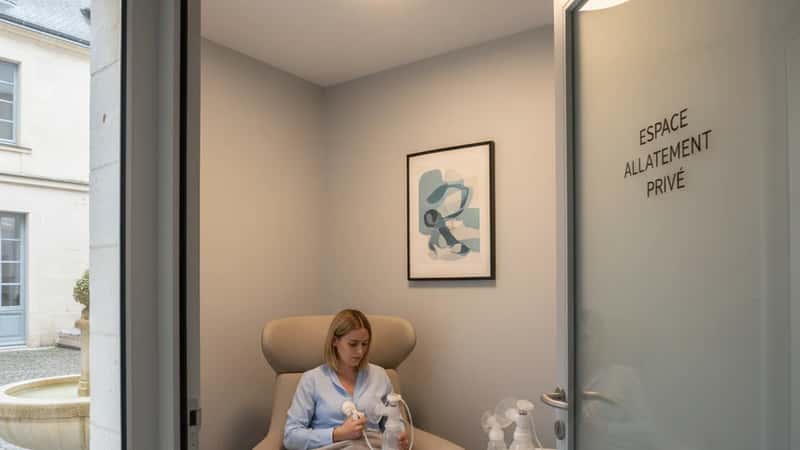
The federal Providing Urgent Maternal Protections (PUMP) for Nursing Mothers Act, which took effect in April 2023 and amended FLSA, requires all employers — regardless of size, including very small Montana businesses previously exempt — to provide:
- Reasonable break time to express breast milk for up to one year after the child's birth
- A private space (not a bathroom) that is shielded from view and free from intrusion
Montana employers must provide these breaks each time an employee needs to pump. The frequency and duration depend on the individual employee's needs; employers cannot set a rigid schedule that forces the employee to pump less frequently than physically necessary.
Compensation: These breaks are paid only if the employer provides paid break time to other employees and the nursing mother is not completely relieved of duties. If a nursing break corresponds to an otherwise paid rest period, it must be paid; otherwise it may be unpaid.
Failure to provide pump breaks or an adequate private space is an FLSA violation. The US DOL Wage and Hour Division enforces these requirements.
6. On-Call Time During Breaks Can Convert Unpaid Time Into Paid Time
Even a 30-minute break becomes compensable if the employer places meaningful restrictions on how the employee can use it. The test is whether the employee is "waiting to be engaged" (compensable) or "engaged to be waiting" (non-compensable). Courts look at the degree of restriction:
- Can the employee leave the premises? → Less likely to be compensable if yes
- Must the employee respond within minutes? → Likely compensable
- Is the employee typically interrupted during the break? → Likely compensable
Montana hospitality workers who take "breaks" while remaining on the floor, monitoring tables, or staying in radio contact are likely working compensable time. Documenting genuine off-duty breaks — and ensuring employees actually take them away from work duties — protects employers from wage claims.
7. What to Do If Break Rights Are Violated in Montana
If you are a minor denied a meal break after five hours, a nursing mother denied pump time or a private space, or an employee with short rest breaks that are incorrectly treated as unpaid:
- Document the pattern. Note dates, times, and circumstances in writing.
- Report to HR or management in writing, creating a record.
- File a complaint with the Montana DLI (for state violations involving minors) at https://erd.dli.mt.gov/labor-standards, or with the US DOL Wage and Hour Division (for FLSA break compensability violations or PUMP Act violations).
- Consult a Montana employment attorney if the violations are systematic or if you face retaliation for raising the issue.
Disclaimer: This article is for general information only and does not constitute legal advice. Break law compliance depends on specific facts; consult the Montana DLI or a Montana employment attorney for your situation.