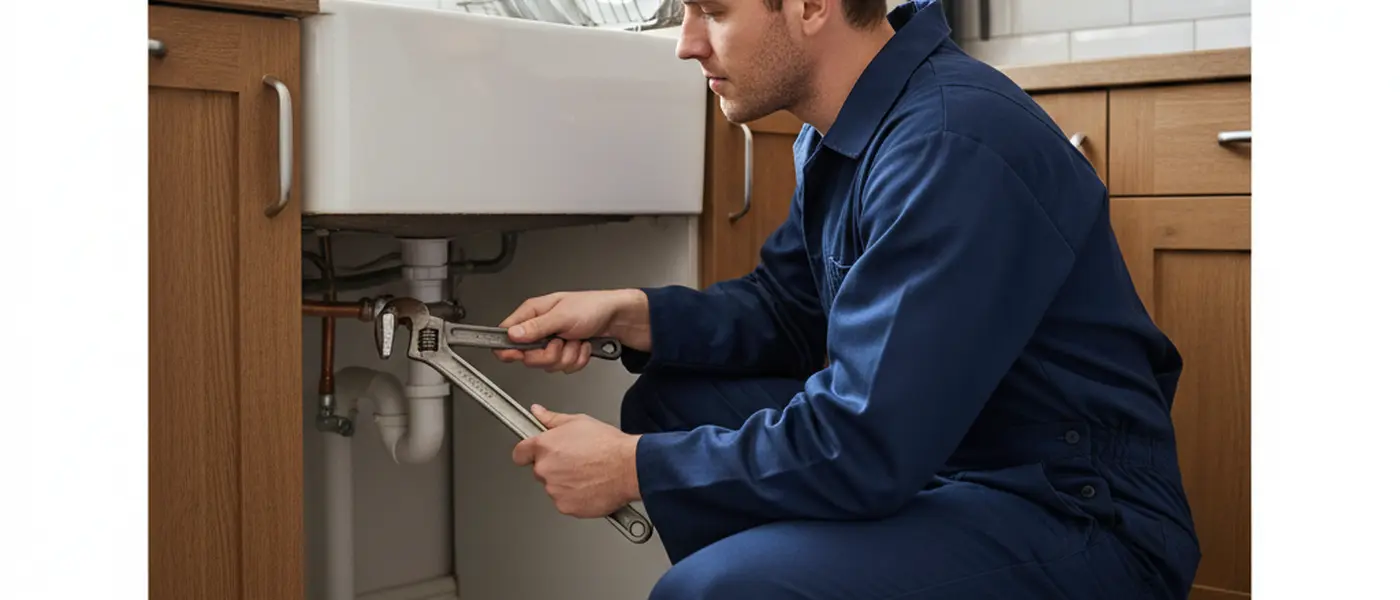
A burst pipe at 2 a.m. costs the average UK household between £150 and £400 in call-out fees alone — before a single repair begins [Checkatrade, 2025]. Knowing what to do in the first ten minutes can cut that bill in half, prevent structural water damage, and save you from unqualified cowboys. Here are five actions that separate a controlled response from a costly panic.
1. Shut Off the Water Supply Before You Pick Up the Phone
Every minute a pipe leaks inside a wall, roughly 45 litres of water escapes — enough to saturate plasterboard, warp floorboards, and trigger mould growth within 48 hours [Zurich Insurance UK, 2024]. Locating and turning off the stopcock is the single most effective damage-reduction step any homeowner can take.
The internal stopcock is usually under the kitchen sink, in a downstairs cupboard, or near the front door. Turn it clockwise until it stops. If it hasn't been touched in years, apply penetrating oil and use a cloth for grip. For flats with a shared riser, the building's isolation valve is often in a communal cupboard or basement.
Once the supply is off, open cold taps on the lowest floor to drain residual pressure. This reduces the volume of water still moving through the damaged section. If the leak involves the hot-water system, switch the boiler to off as well to prevent the cylinder from refilling.
Key point: A turned-off stopcock buys you time to compare plumbers rather than grabbing the first search result.
2. Document the Damage While It's Fresh
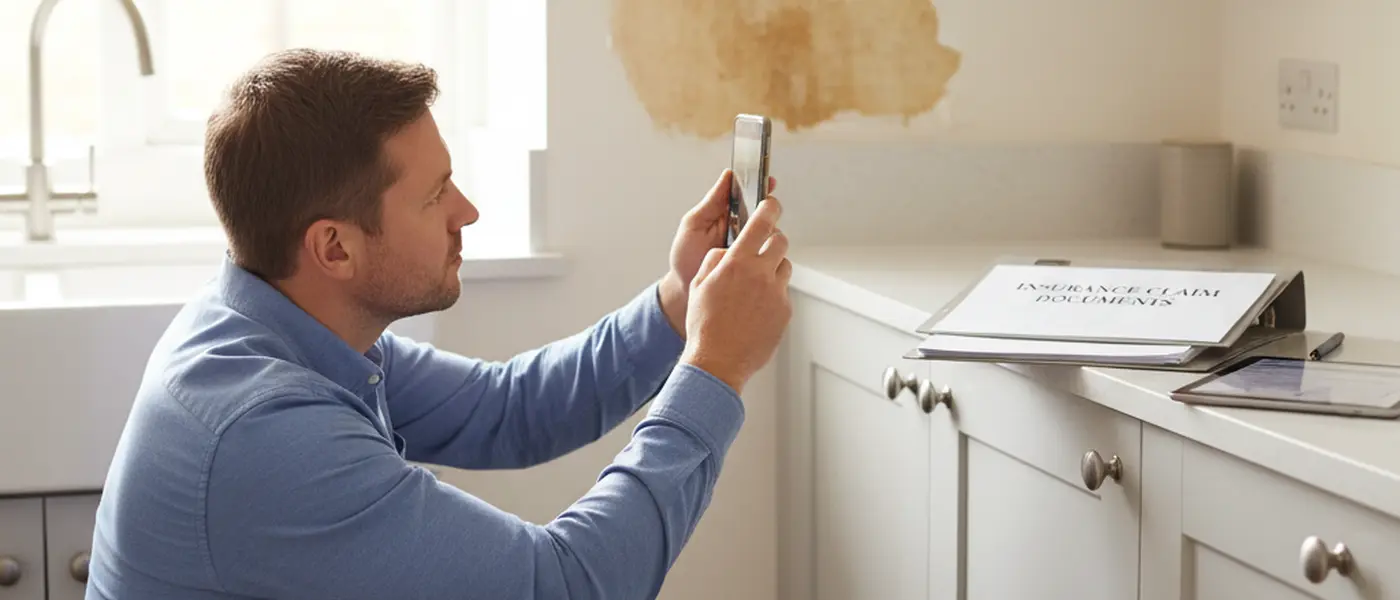
Home insurance claims for water damage average £4,700 in the UK [Association of British Insurers (ABI), 2024]. Insurers reject roughly one in five claims due to insufficient evidence. Before you mop up, take photos and video of the affected area, capture serial numbers on any damaged appliances, and note the date and time the leak started.
What to Photograph
Take wide-angle shots of the entire room, close-ups of the leak source, and images of any belongings that have been soaked. Include a timestamp on your phone camera — most insurers accept phone metadata. Save these images in a cloud folder immediately; a waterlogged phone is a real risk during a flood.
Contacting Your Insurer
Many policies require notification within 24 to 48 hours. Check whether your insurer has a preferred contractor network. Some policies cover the full call-out fee when you use an approved plumber, which could save you the emergency premium entirely.
Key point: Thirty seconds of photography can be worth thousands of pounds when making an insurance claim.
3. Verify Credentials Before You Hire
An emergency plumber near you does not automatically hold the right qualifications. In England and Wales, gas work legally requires Gas Safe registration (Gas Safety (Installation and Use) Regulations 1998). Plumbing work on its own has no mandatory licence, which means anyone can advertise as a plumber — making verification essential.
Source: Checkatrade average pricing data, 2025
Three Checks That Take Under Two Minutes
- Gas Safe Register — search by postcode at gassaferegister.co.uk if the job involves a boiler, gas hob, or gas water heater.
- WaterSafe — the plumbing equivalent of Gas Safe, run by Water Regs UK. Search approved plumbers at watersafe.org.uk.
- Public liability insurance — ask for proof before work starts. A minimum of £1 million cover is standard for domestic plumbing.
Skipping these checks is the most expensive mistake homeowners make. An unqualified gas fitter can void your home insurance, and the Health and Safety Executive (HSE) prosecutes illegal gas work under the Gas Safety Regulations.
4. Understand the Cost Structure Before Agreeing
Emergency plumber call-out fees in the UK typically include three components: a fixed call-out charge (£50–£100), an hourly labour rate (£40–£80/hour), and parts at retail markup. The call-out charge is highest between 10 p.m. and 7 a.m. and on bank holidays, when some firms add a 50–100% surcharge [Which?, 2024].
How to Negotiate Fairly
Request a written quote before work starts — even at midnight. Reputable plumbers will provide an estimate over the phone once they understand the problem. Ask whether the call-out fee is waived if you proceed with the repair, as many local firms offer this.
Mark, a homeowner in Bristol, faced a leaking expansion vessel at 1 a.m. The first plumber he called quoted £480 flat. After shutting off his stopcock and calling two more plumbers, he found one charging £210 including parts. The 20-minute delay cost nothing because the water was already off.
Red Flags to Watch For
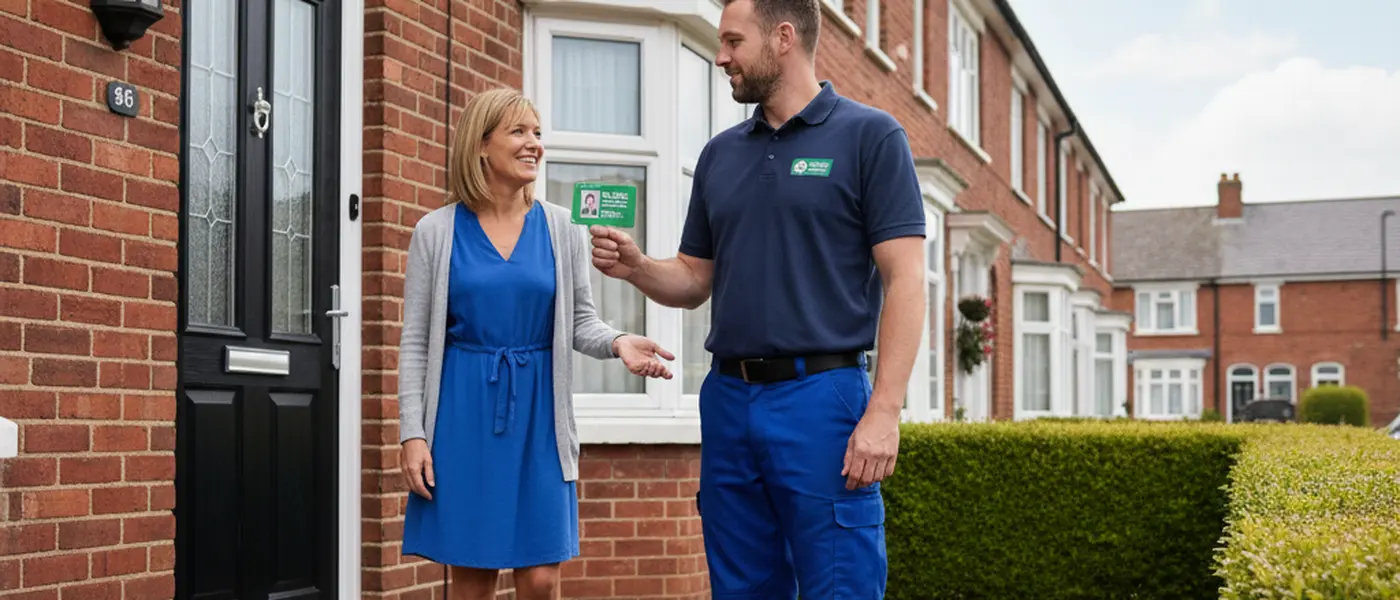
Refuse any plumber who demands full payment upfront, will not provide identification, or insists the job cannot wait until morning when the water supply is already isolated. Legitimate tradespeople welcome scrutiny; scammers rely on panic.
Key point: Isolating the water first gives you bargaining power and time to compare at least two quotes.
5. Prevent the Next Emergency With Basic Maintenance
The Water Damage Prevention Association estimates that 93% of domestic water damage claims are preventable [Zurich Insurance, 2024]. Three low-cost actions reduce the risk of a repeat callout dramatically.
Annual Maintenance Checklist
- Service the boiler — an annual Gas Safe service (£60–£120) catches failing seals, corroded pipes, and pressure-relief valve faults before they become floods.
- Lag exposed pipes — pipe insulation costs under £20 for an average three-bedroom house. Frozen pipes are the leading cause of emergency plumber call-outs between December and February [WaterSafe, 2024].
- Exercise the stopcock — turn it fully off and on once a quarter. Seized stopcocks are the reason many homeowners cannot isolate a leak and end up paying the highest emergency premiums.
Beyond DIY prevention, consider a home emergency cover plan that bundles boiler, plumbing, and drainage call-outs for a fixed annual fee. These plans typically cost £10–£25 per month and cap call-out charges.
For broader home maintenance advice — from electrician selection to general plumber hiring — Expert Zoom's UK tradesperson guides cover every trade.
When You Genuinely Need a Plumber Right Now
Not every drip is an emergency. A slowly leaking tap can wait until morning. A burst mains pipe flooding your kitchen cannot. Use this decision rule: if turning off the stopcock stops the water completely, you can wait for a daytime appointment and save 40–60% on call-out fees.
When the water will not stop — because the leak is on the mains side of the stopcock, the stopcock is seized, or raw sewage is backing up — call immediately. Contact your water company's 24-hour line first (free), as mains-side leaks are their responsibility under the Water Industry Act 1991, Section 159.
Disclaimer: The information on this page is provided for general guidance only and does not constitute professional trade or insurance advice. For specific plumbing emergencies, always consult a qualified, insured professional.