A qualified plumber in the UK typically charges between £40 and £80 per hour, with emergency call-outs reaching £150 or more. Knowing what plumbers actually do, how much they cost, and how to verify their credentials saves homeowners both money and stress. This guide covers every practical detail you need before picking up the phone.
Plumbing problems rarely announce themselves at convenient times. A burst pipe at 2 a.m. or a boiler that quits on the coldest day of the year demands fast, competent help. Yet hiring the wrong plumber can turn a £200 repair into a £2,000 headache. The sections below walk through qualifications, typical costs, warning signs, and how to find a plumber you can trust — based on UK industry standards and real pricing data.
What Does a Plumber Actually Do?
A plumber installs, maintains, and repairs water systems in residential and commercial buildings. The scope extends well beyond fixing leaky taps. UK plumbers handle central heating systems, bathroom installations, waste disposal units, and rainwater drainage.
The Chartered Institute of Plumbing and Heating Engineering (CIPHE) distinguishes between general plumbers and specialists. A general plumber tackles everyday repairs — unblocking drains, replacing radiators, fitting new taps. Specialists focus on areas like underfloor heating, gas boiler installation (which requires Gas Safe registration), or commercial pipework.
Most plumbers in the UK complete a Level 2 or Level 3 NVQ/SVQ in Plumbing and Heating, typically through a 2–4 year apprenticeship. The Construction Industry Training Board (CITB) reported that over 28,000 plumbing apprenticeships were active across England in 2024 [CITB, 2024]. Beyond formal qualifications, experienced plumbers carry public liability insurance and belong to accreditation schemes like WaterSafe, the UK's free-to-use directory of approved plumbers backed by water companies.
Key point: A plumber's scope covers far more than emergencies — from boiler servicing to full bathroom refits, choosing the right specialist for the job prevents costly mismatches.
How Much Does a Plumber Cost in the UK?
Plumber rates vary significantly by region, job complexity, and time of day. The figures below reflect 2025–2026 averages compiled from trade body data and consumer platforms.
London rates sit roughly 20–30% above the national average. A straightforward tap replacement might cost £80–£120 in Manchester but £110–£160 in central London. Always request a written quote before work begins — verbal estimates offer no legal protection under the Consumer Rights Act 2015.
"The biggest complaint we see is homeowners accepting verbal quotes, then disputing the final bill. A written itemised quote protects both parties." — James Hargreaves, CIPHE-registered plumber, 22 years' experience
Key takeaway: Get at least two written quotes. Compare not just the total price, but whether the quote includes materials, VAT, and call-out fees.
How to Find a Reliable Plumber Near You
Finding a trustworthy plumber before an emergency strikes is the single best thing a homeowner can do. Rushed decisions under pressure lead to overpaying or hiring unqualified workers.
Check accreditation first
The WaterSafe scheme lets you search for approved plumbers by postcode. Every plumber listed is vetted by their local water company. For gas work, check the Gas Safe Register — it is illegal for anyone without Gas Safe registration to work on gas appliances in the UK, under the Gas Safety (Installation and Use) Regulations 1998.
Use vetted trade platforms
Platforms like Checkatrade, TrustATrader, and MyBuilder verify qualifications and collect genuine customer reviews. Cross-reference ratings across at least two platforms before booking.
Ask the right questions
Before hiring, confirm these five points:
- Are you WaterSafe or CIPHE registered?
- Do you carry public liability insurance?
- Can you provide a written, itemised quote?
- What is your call-out fee (if any)?
- Do you guarantee your work — and for how long?
A plumber who hesitates on any of these is worth reconsidering. Reputable tradespeople expect these questions and answer readily.
Key takeaway: Start your search at WaterSafe or Gas Safe Register and always confirm insurance before any work begins.
When to Call an Emergency Plumber
Not every plumbing issue requires an emergency call-out. Knowing the difference saves you the premium that after-hours services charge — often double the standard hourly rate.
Call immediately if:
- Water is actively flooding your property
- You smell gas (call the National Gas Emergency Service on 0800 111 999 first)
- Your heating fails completely during freezing conditions
- A sewage backup poses a health hazard
Can wait until normal hours:
- A dripping tap or slow leak contained by a bucket
- Low water pressure without visible leaks
- A radiator that needs bleeding
- A toilet that runs continuously but still flushes
When Sarah, a homeowner in Bristol, called an emergency plumber at 11 p.m. for a slow drip under her kitchen sink, she paid £180 for a repair that would have cost £70 during business hours. The plumber later told her a towel and a bucket would have safely contained it overnight.
Key takeaway: Shut off the relevant stopcock (usually under the kitchen sink or near the water meter) to contain leaks, then book a standard-rate appointment unless the situation is genuinely dangerous.
Plumber Qualifications and Red Flags to Watch For
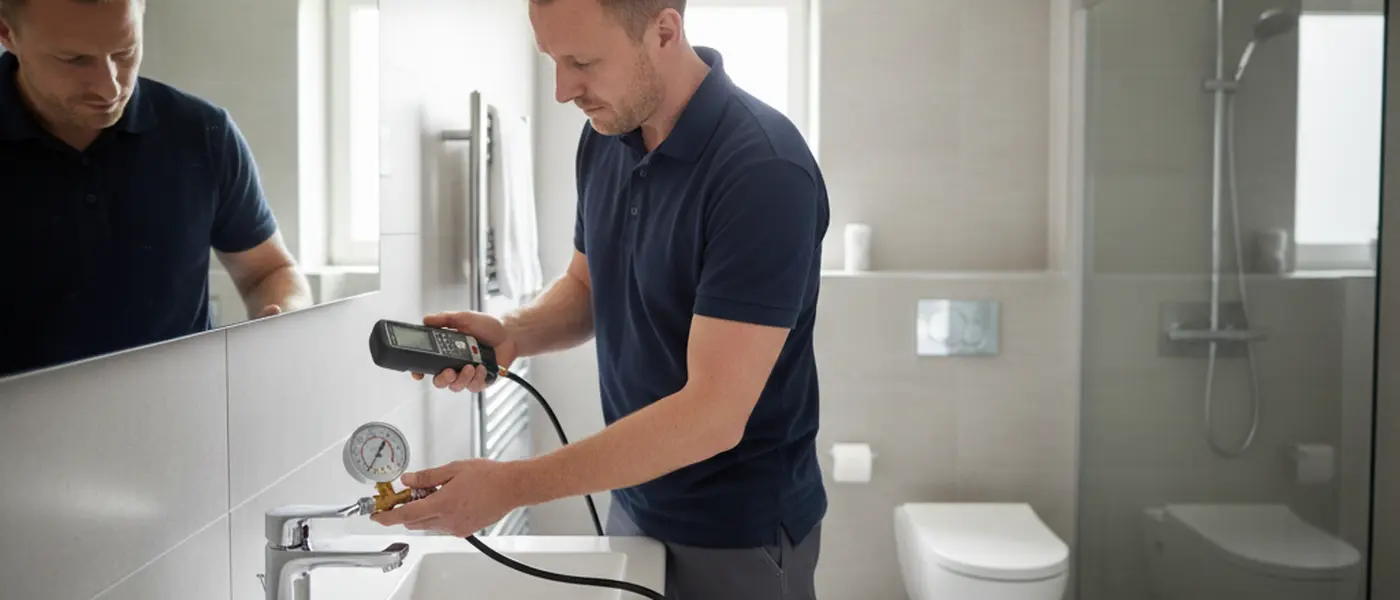
Legitimate plumbers carry verifiable credentials. The UK has no single licensing body for plumbing (unlike gas work), which makes it even more important to check qualifications yourself.
Qualifications a good plumber should hold:
| Credential | What it proves | How to verify |
|---|---|---|
| Level 2/3 NVQ in Plumbing | Completed formal training | Ask for certificate |
| WaterSafe approval | Vetted by water company | watersafe.org.uk |
| Gas Safe registration | Legal to work on gas | gassaferegister.co.uk |
| CIPHE membership | Professional body standards | ciphe.org.uk |
| Public liability insurance | Covers accidental damage | Request policy number |
Red flags:
- No written quote or a quote that changes after work starts
- Requests full payment upfront (a deposit of 10–20% is normal; 100% upfront is not)
- Cannot produce a Gas Safe ID card when doing gas work
- No visible van signage or business address
- Pressures you into immediate, unnecessary upgrades
The CIPHE advises homeowners to report unregistered individuals carrying out gas work to the Health and Safety Executive (HSE), as this is a criminal offence under UK law.
Common Plumbing Jobs and What to Expect
Understanding typical plumbing jobs helps you brief your plumber accurately, avoid surprises on the invoice, and know whether the quoted price is reasonable.
Boiler servicing and repair
An annual boiler service costs £80–£160 and is recommended by all major manufacturers to maintain warranty coverage. The Energy Saving Trust estimates that a well-serviced boiler runs up to 10% more efficiently, saving roughly £100–£150 per year on energy bills.
Bathroom installation
A full bathroom refit — including removal of old fittings, plumbing for new fixtures, and tiling connections — typically takes 5–10 days. Labour costs range from £500 to £1,500 depending on complexity. For connected advice on home repair trades, see our guide on plumbing services in the UK.
Drain unblocking
Professional drain unblocking costs £80–£200, depending on the blockage location. External drain blockages may require CCTV inspection (£100–£300 additional). Many standard blockages can be prevented with drain guards and regular hot water flushing. If your plumbing issue involves air conditioning systems, our guide on AC repair services covers what to expect from HVAC specialists.
Key takeaway: Annual boiler servicing is the single highest-return plumbing investment — it protects your warranty, cuts energy costs, and catches faults before they become emergencies.
Frequently Asked Questions About Plumbers
How do I find a plumber I can trust? Start with the WaterSafe directory, which lists plumbers approved by UK water companies. Cross-check reviews on at least two platforms (Checkatrade, TrustATrader, or Google). Confirm insurance and request a written quote before agreeing to any work.
Do plumbers need to be Gas Safe registered? Only for gas work. General plumbing (taps, toilets, drains, non-gas heating) does not legally require Gas Safe registration. However, if your plumber needs to disconnect or reconnect a gas appliance, they must hold a valid Gas Safe card. Verify at gassaferegister.co.uk.
How much should I pay a plumber per hour? Standard UK rates range from £40 to £80 per hour outside London, and £60 to £100 per hour in London [Checkatrade, 2025]. Emergency and weekend rates can double these figures. Always agree on pricing structure (hourly vs fixed quote) before work begins.
Can I do minor plumbing myself? Simple tasks like changing a tap washer, bleeding a radiator, or replacing a shower head are safe for most homeowners. Anything involving the mains water supply, drainage connections, or gas should be handled by a qualified plumber. DIY gas work is illegal and dangerous.
What should I do if a plumber damages my property? A plumber with public liability insurance is covered for accidental damage. Document the damage with photos, report it to the plumber in writing, and contact their insurer directly if needed. If unresolved, file a complaint with their trade body or use the Citizens Advice consumer service.