The cheapest electrician near you is rarely the best one. Roughly one in three electrical fires in the UK traces back to faulty installation or amateur wiring, according to Electrical Safety First [2024]. Before you search "electrician near me" and pick the top result, here are five persistent myths worth dismantling — and the facts that could protect your home, your wallet, and your safety.
Myth 1: Any Electrician Can Legally Work on Your Home
Many homeowners assume every person advertising as an electrician holds the same qualifications. The reality is more complicated. In the UK, the title "electrician" is not legally protected — anyone can call themselves one, regardless of training.
What matters is registration with a government-approved competent person scheme. The main bodies are NICEIC, NAPIT, ELECSA, and STROMA. An electrician registered with one of these schemes can self-certify notifiable work under Part P of the Building Regulations (England and Wales), which covers most domestic electrical installations.
Hiring an unregistered electrician means the work must be inspected and signed off by your local council's Building Control, costing £200–£400 extra [GOV.UK, 2024]. Worse, uncertified work can void your home insurance and reduce your property value.
Point to remember: Always ask for the electrician's competent person scheme registration number before any work begins. Verify it on the scheme's public register — it takes under two minutes.
Myth 2: The Lowest Quote Saves You Money
Price comparison is sensible. Picking the cheapest quote without context is not. Electrical work involves hidden variables that a low headline price may not include: testing, certification, materials, and post-installation inspection.
A standard domestic rewire for a three-bedroom house costs between £3,000 and £5,500 in 2026, according to Checkatrade average data. Quotes significantly below that range often exclude the Electrical Installation Condition Report (EICR), which costs £150–£300 separately and is legally required for rental properties under the Electrical Safety Standards Regulations 2020.
A low quote missing certification means paying twice: once for the work and again for retrospective compliance. Request an itemised breakdown before accepting any quote.
Myth 3: Online Reviews Tell You Everything You Need to Know
Five-star ratings feel reassuring but reveal little about an electrician's actual competence. Reviews measure customer service — punctuality, friendliness, tidiness — not technical quality. A polite electrician who installs a consumer unit incorrectly still gets five stars until something fails.
More reliable verification steps exist. Check the Electrical Safety First register to confirm competent person scheme membership. Ask for photos of previous work similar to yours. Request the BS 7671 edition their work complies with — the current standard is the IET Wiring Regulations 18th Edition, Amendment 2 (2022).
Reviews help filter out obviously poor service. They should supplement, not replace, credential checks. Treat them as one data point among several when choosing an electrician near you.
Myth 4: Small Jobs Don't Need a Qualified Electrician
Changing a light fitting seems simple. So does adding a double socket or swapping a dimmer switch. But the boundary between minor electrical work and notifiable work under Part P of the Building Regulations is narrower than most people realise.
What Counts as Notifiable Work
Any new circuit, any work in a bathroom or kitchen (within specified zones), any work in a special location such as a garden shed or swimming pool area, and any consumer unit replacement all require notification. Since January 2005, failing to notify carries a potential fine and creates legal complications when selling the property.
How to Handle Smaller Repairs
For genuinely minor tasks — replacing a like-for-like socket faceplate or changing a pendant light — a competent DIY approach is legal. Anything involving new wiring, circuit alterations, or work near water requires a registered electrician. When in doubt, the GOV.UK guidance on electrical work in the home clarifies which jobs need Building Regulations approval.
"Homeowners routinely underestimate the scope of Part P. We see properties every month where someone replaced a consumer unit themselves and now faces a £5,000 remediation bill before the sale completes." — NICEIC Technical Director, 2025 industry briefing
Myth 5: Location Doesn't Affect the Price
Typing "electrician near me" returns local results, but local rates vary significantly. London electricians charge £50–£80 per hour on average, while rates in the Midlands and North sit between £35–£55, according to the Federation of Master Builders regional rate survey [2025]. Travel time, congestion charges, and parking costs in urban areas add further to the final bill.
Rural locations face different cost pressures. Fewer electricians serve larger areas, meaning longer travel surcharges. Emergency callout fees in rural Scotland or Wales can exceed £150 before work even starts, compared with £80–£120 in major cities where competition is higher.
Point to remember: Get three quotes from electricians within a 15-mile radius. Comparing local rates against Checkatrade or MyBuilder average prices for your postcode gives a realistic benchmark.
How to Vet an Electrician Near You: Five Steps
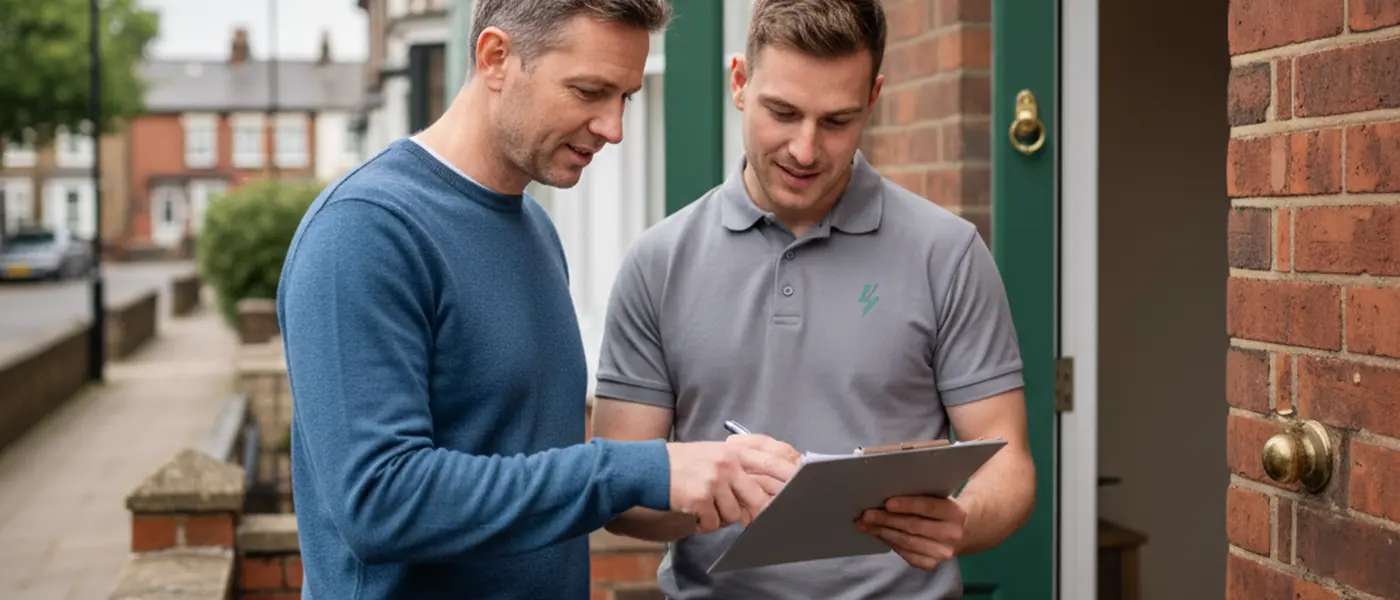
Finding a qualified electrician near you follows a clear sequence:
- Check scheme registration — search the NICEIC, NAPIT, or ELECSA register using their postcode lookup tools
- Request proof of insurance — public liability cover of at least £2 million is standard for domestic work
- Ask for an itemised quote — materials, labour, certification, and any Building Control fees listed separately
- Verify recent work — ask for two references or photos from jobs completed in the last six months
- Confirm certification — agree in writing that you will receive an Electrical Installation Certificate (EIC) or Minor Works Certificate on completion
Skipping any of these steps increases your risk. A plumber you hire without vetting can cause a leak; an electrician you hire without vetting can cause a fire.
Emergency Electricians: What to Expect Outside Business Hours
Power cuts, burning smells from sockets, or tripped circuits that refuse to reset demand urgent attention. Emergency electricians operate 24/7, but the service comes at a premium. Expect callout fees of £100–£200 for evenings and weekends, with hourly rates 30–50% above standard daytime pricing.
Before calling an emergency electrician, check whether your issue is actually an emergency. A tripped RCD (Residual Current Device) often resets once the faulty appliance is unplugged. Your electricity supplier handles problems with the mains supply, meter, or service fuse at no charge — call 105, the national power outage number.
For genuine electrical emergencies — exposed wiring, fire damage, or persistent burning smells — turn off the main switch at the consumer unit and call a registered emergency electrician. The Electrical Safety First website maintains a 24-hour helpline and a directory of registered contractors who offer out-of-hours services across the UK.
Point to remember: Save a local registered electrician's emergency number in your phone before you need it. Searching "electrician near me" during a power cut at midnight is stressful and leads to hasty decisions.
Disclaimer: The information on this page is provided for general guidance only and does not constitute professional advice. For specific electrical safety concerns, consult a registered electrician or contact your local Building Control authority.