 Olivia Dubois
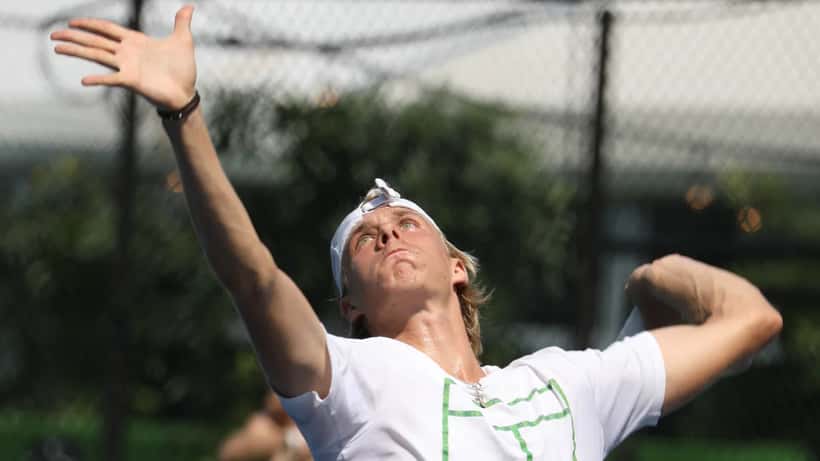
Denis Shapovalov, the 26-year-old Richmond Hill native, has climbed back to 39th in the ATP world rankings after finishing 2025 ranked 23rd — his best position since August 2023. This week he advanced to the Round of 16 at the BMW Open in Munich, defeating Dutch eighth seed Tallon Griekspoor 6-4, 3-6, 6-2. His story is no longer just about tennis. It is a lesson in how sport science, professional guidance, and deliberate recovery can bring any athlete — professional or amateur — back from the edge.
From 140th to Top 40: What Changed
Two years ago, Shapovalov's career appeared to be in permanent decline. A knee injury that required surgery had seen him drop to 140th in the world. The rehabilitation process was lengthy, the return to form slow, and doubts — from commentators, opponents, and possibly himself — accumulated.
What turned it around was not a single breakthrough moment. According to his own account, published in TSN in early 2026, Shapovalov deliberately reduced his tournament load: "Play less, play when I'm fresh." This approach — prioritizing recovery and readiness over volume — reflects modern sports medicine thinking.
In 2025, Shapovalov won two ATP titles, including the Dallas Open (a 500-level event), with victories over three top-10 players. In February 2026, his wife Mirjam Shapovalova took over his coaching duties — an unconventional arrangement that has, by the rankings, been working. His stated goal for 2026 is a return to the top 10.
The Weekend Warrior Problem
Shapovalov is 26 and has access to world-class physiotherapists, sports medicine specialists, kinesiologists, and strength coaches. Most Canadians injured playing tennis, hockey, running, or cycling do not.
According to Statistics Canada, approximately 16% of Canadians over age 12 reported a sport-related injury in the year before the survey — a figure that rises steeply with recreational sport participation. The most common injuries in adults: knee ligament tears, rotator cuff damage, Achilles tendon strains, and stress fractures.
The pattern across these injuries is nearly universal: acute pain, partial rest, premature return to activity, re-injury, discouragement, and — in many cases — chronic instability that limits activity for years. Shapovalov's trajectory was the same, until he and his team got the rehabilitation right.
What Sports Medicine Specialists Actually Do
Many Canadians treat sports injuries as either a matter for their family doctor (adequate for acute assessment) or for self-managed physiotherapy (adequate for mild strains). But a sports medicine specialist occupies a different space in the care continuum — particularly for injuries involving the knee, shoulder, ankle, or Achilles.
A sports medicine physician can:
Order and interpret imaging appropriately. Not all MRI findings are clinically significant. A sports medicine specialist understands which structural changes require surgical consultation and which can be managed with rehabilitation — a distinction that can save patients months of unnecessary wait time in the surgical system.
Prescribe load management protocols. The science of progressive return-to-sport is now highly developed. For a knee injury, returning too soon — even at low intensity — delays full ligament healing and increases re-tear risk. A structured protocol, adapted to the athlete's age, sport, and injury pattern, makes a measurable difference.
Assess biomechanical contributors. Many overuse injuries — tennis elbow, runner's knee, plantar fasciitis — are symptoms of movement pattern problems rather than isolated tissue failures. Treating the symptom without addressing the cause produces predictable results: recurrence.
Coordinate with other specialists. Complex cases benefit from coordinated input between a sports medicine physician, a registered physiotherapist, a kinesiologist, and (when indicated) an orthopedic surgeon. Without coordination, patients often receive conflicting advice.
When to Stop Managing Your Injury Yourself
The signal that self-management is insufficient is not always dramatic pain. It is more often:
- Pain that persists beyond 6-8 weeks despite rest and standard physiotherapy
- Swelling that returns after activity, even at reduced intensity
- A sense of instability, "giving way," or clicking in a joint
- Pain that is changing character — spreading, shifting, or worsening at rest
- A second injury in the same area within 12 months
Any of these patterns warrants a professional assessment. In Canada, access to sports medicine physicians varies by province, but most major cities have dedicated sports medicine clinics that operate outside the referral bottlenecks of the surgical pathway. A direct visit to a sports medicine specialist can often happen faster than a family doctor referral to orthopedics.
Shapovalov's Lesson for the Rest of Us
The insight from Shapovalov's comeback is not that elite athletes recover better — it is that elite athletes take their recovery seriously, invest in it professionally, and do not rush it for convenience or social pressure. That approach is available to every Canadian who plays recreational sport.
Other Canadian tennis players have walked similar roads. As detailed in Zverev's Monte Carlo Comeback and analysis of Achilles and foot injuries, the pathway from acute injury to return-to-sport is shorter and safer when professional guidance is involved from the start — not as a last resort.
Denis Shapovalov is chasing the world's top 10 at 26. Whether you're playing tennis twice a week at 40 or skiing once a month at 55, a sports medicine consultation when something hurts is not an overreaction. It is the same logic that got Shapovalov back on the court.
ExpertZoom connects Canadians with qualified doctors and sports medicine specialists across the country. If you have been managing an injury on your own and progress has stalled, a professional second opinion can change the timeline entirely.
