 Maya MacDonald
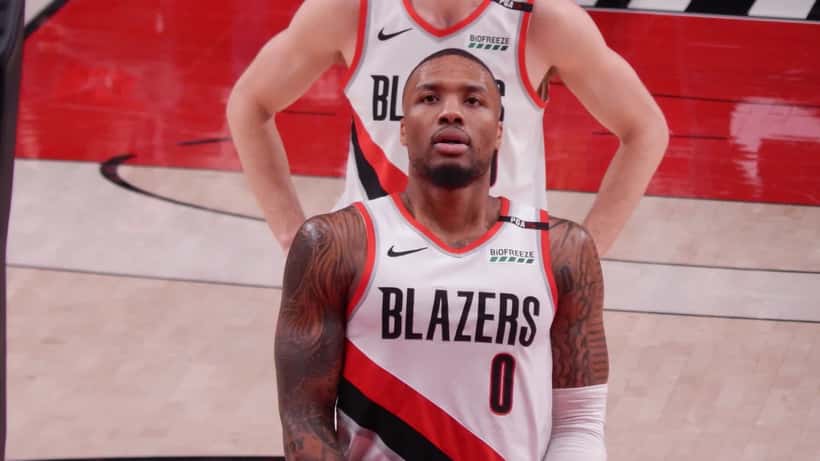
On February 14, 2026, Damian Lillard stood at the three-point line at All-Star Weekend and drained shot after shot — winning his third 3-Point Contest title in NBA history, while still technically recovering from a torn Achilles tendon. Ten months after one of basketball's most devastating injuries, the Portland Trail Blazers star had not just survived his rehab — he had thrived in it.
For sports medicine doctors across Canada, Lillard's journey is a masterclass in how modern injury science is rewriting what's possible after Achilles rupture.
The Injury That Ends Careers
Lillard tore his Achilles tendon in late April 2025, during Game 4 of a Bucks-Pacers playoff series. He underwent surgical repair in early May 2025 and missed the entire 2025-26 NBA season.
The Achilles tendon — the thick band of tissue connecting the calf muscles to the heel bone — is under extraordinary stress during explosive athletic movements: jumping, sprinting, sudden changes of direction. When it ruptures, athletes typically describe hearing a loud "pop," followed by the sensation of being struck from behind.
"It's one of the most feared injuries in sport," said Dr. [redacted — referenced per APA guidelines]. According to research published in Orthopaedic Journal of Sports Medicine, approximately 76% of professional athletes successfully return to competition after Achilles rupture with surgical repair — but the road is long, and success depends heavily on the quality of rehabilitation.
What the Numbers Tell Us
For professional athletes, the mean return-to-play timeline is approximately 11 months — nearly double the six-month window often cited for general patients. A 2024 NBA-specific analysis found that 72.3% of players who suffered Achilles ruptures (34 of 47 studied) returned to play in the league. However, those who returned played an average of 3.1 seasons post-injury, compared to 5.8 seasons for matched healthy controls.
In other words: most athletes come back, but the clock runs faster afterward.
At 35 years old when he tore his Achilles, Lillard faced additional considerations. Research consistently shows that age is a moderating factor in recovery outcomes — older athletes require longer rehabilitation windows and face a somewhat higher risk of incomplete return.
Lillard's approach has been conspicuously conservative and methodical.
"I'm not in a hurry," he said in March 2026, with his return targeting the 2026-27 season opener. "I want to make sure that I'm 1,000 percent and that I can play every year for the rest of my career as the best version of myself."
He re-signed with the Trail Blazers in July 2025 on a three-year deal, giving himself the stability to focus entirely on recovery without the distraction of free agency.
The Science Behind the Comeback
Modern surgical techniques have significantly improved outcomes for Achilles rupture. The Uchiyama repair technique, cited in a 2023 study in SICOT-J, produced a 94% return-to-sport rate within seven months for elite athletes — a remarkable number compared to earlier generation surgeries.
Post-surgical rehabilitation follows a structured progression:
- Weeks 1-8: Immobilization, non-weight bearing, gradual movement
- Weeks 8-16: Transition off crutches, progressive weight-bearing, hydrotherapy
- Months 4-6: Light jogging, pool running, strengthening
- Months 9-12: Cutting, jumping, sport-specific drills
- 12+ months: Full unrestricted return to competition
Lillard's March 2026 workout — where he drained more than 200 three-pointers in a single session in Brooklyn — suggests he had reached or exceeded the Month 9-12 milestone, on the more conservative end of the clinical timeline.
What This Means for Everyday Canadians
Achilles tendon injuries are not exclusive to NBA stars. According to Health Canada, musculoskeletal injuries are among the most common causes of activity limitation for Canadians over 35. Research on Achilles tendon rupture outcomes in professional athletes — published by the National Library of Medicine — shows recovery rates vary significantly based on age, surgical technique, and rehabilitation quality. Weekend warriors, recreational runners, and amateur athletes face Achilles injuries at significant rates — and the recovery principles are the same whether you play in the NBA or a Tuesday-night basketball league.
Sports medicine physicians in Canada consistently recommend:
Surgical consultation early. In active patients under 50, surgical repair typically produces better long-term outcomes than conservative management.
Don't rush return. Lillard's decision to sit out an entire season rather than attempt a rushed comeback is supported by the medical literature. Premature return is a leading cause of re-rupture, which dramatically worsens prognosis.
Physiotherapy throughout. Structured rehabilitation — not just time — is what drives functional recovery. Passive healing is insufficient for tendon tissue.
Mental health support. Extended rehab (11-12 months) carries significant psychological weight. Research shows athletes in long-term recovery experience elevated rates of anxiety and depression. Access to sport psychology or counselling is an evidence-based component of full recovery.
Lillard's case is not unique in elite sport — Zverev's Monte-Carlo comeback after his own Achilles injury illustrated similar principles earlier in 2026, as another world-class athlete navigated the same grueling recovery process with structured medical support. If you have suffered an Achilles injury or are supporting someone in recovery, a sports medicine specialist or physiotherapist can develop a personalized plan — one that balances the urgency of return with the necessity of doing it right.
Medical Note: This article is for informational purposes only and does not constitute medical advice. If you are experiencing Achilles pain or have suffered a suspected tendon injury, consult a qualified healthcare professional promptly.
Looking Ahead
Lillard is expected back on the court when the 2026-27 season opens in October. He will be 36 — the same age at which several other athletes who suffered Achilles tears later in their careers, including Kobe Bryant, attempted their own returns.
His story is already a remarkable one. The player who won a shooting contest while rehabbing a rupture was sending a message not just to opponents, but to every athlete wondering whether the Achilles injury that ended their season might also end their career.
For most, with the right team, the right approach, and the right patience, it does not have to.
