 Adèle Chartrand
Potapova Is 7-2 on Clay in 2026 — Here's What Her Madrid Run Reveals About Pushing Physical Limits
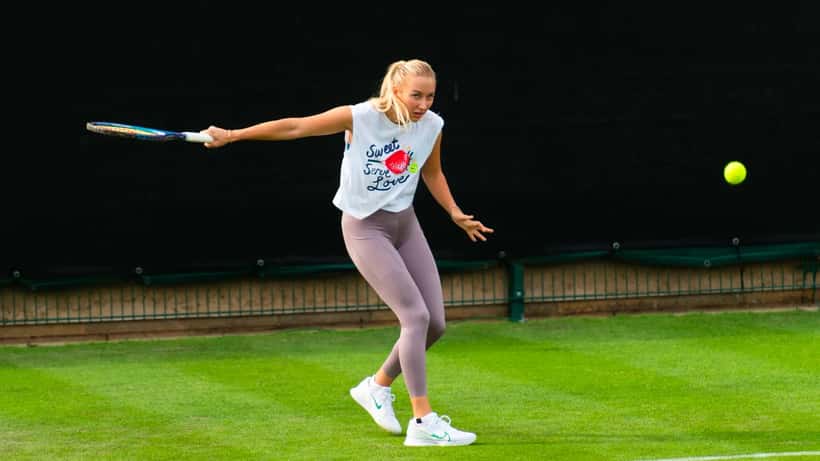
Anastasia Potapova reached the third round of the 2026 Madrid Open on April 26, having entered the WTA 1000 tournament as a lucky loser after Madison Keys withdrew with illness. The result extended the Russian player's extraordinary clay season: a runner-up finish at the Upper Austria Ladies Linz (April 5–12, 2026), where she defeated Donna Vekić and Lilli Tagger before falling to top seed Mirra Andreeva 1-6, 6-4, 6-3, followed by three more wins in Madrid. Her 2026 clay record now stands at 7-2.
What makes this run remarkable is not just the results but the physical consistency. At a moment when injury withdrawals have disrupted multiple competitors' spring schedules, Potapova has played through a high-volume clay stretch without any reported setbacks. That kind of durability doesn't happen by accident — and what it reveals about managing physical load has direct relevance for recreational players entering their own spring sports season.
Why Clay Is the Most Demanding Surface on the Body
Clay courts slow the ball significantly, extending average rally lengths and requiring more explosive lateral movement. Sports medicine specialists consistently identify clay as the surface that generates the highest biomechanical load during tennis: more rotational stress on the trunk, higher lateral hip flexion during slides, and longer total match duration compared to hard courts or grass.
Elite players absorb this through years of progressive conditioning. The 2026 clay season, which runs roughly from April through early June, compresses that demand into a few intense weeks of back-to-back competition. Potapova's ability to navigate multiple tournaments across this stretch — including three-set matches and lucky-loser-format rounds — reflects a physical base that was built over months, not days.
For recreational players stepping back onto outdoor courts in spring, the contrast matters. Many are coming off reduced winter activity, and the clay surface demands exactly the movements — lateral slides, sustained rallies, rotational power — that undertrained muscles handle poorly.
The Injury Pattern Nobody Sees Coming
The injuries most associated with clay court tennis — ankle sprains from sudden slides, patellar tendinopathy from prolonged lateral movement, rotator cuff strain from heavy topspin production — are not exclusive to professionals. They are among the most common recreational sports injuries in Canada each spring.
The pattern is consistent: a player who was largely inactive through winter returns to weekend court sessions at near-full intensity. The cardiovascular system adapts quickly; the tendons and connective tissue do not. The gap between what you feel capable of and what your body can actually sustain without breakdown is where most spring injuries occur.
According to Canada's national physical activity guidance, adults returning to physical activity after a period of reduced training should increase intensity gradually — generally no more than 10% per week. Applied to recreational tennis, this means the first two to three sessions back on court should prioritize movement quality and match familiarity over competitive intensity or duration.
What Elite Recovery Infrastructure Actually Looks Like
At the Linz final, Potapova competed for approximately two to two-and-a-half hours in a demanding three-set match against the top seed. Within a week, she was competing in Madrid. This level of performance continuity is only possible with a structured recovery system: monitored sleep protocols, nutritional support timed around match schedules, physiotherapy between rounds, and careful load management by a coaching and medical team.
Recreational players rarely have access to dedicated sports medicine staff — but the core principles translate to any level. Research consistently identifies three recovery variables that recreational athletes most commonly skip: consistent sleep quality (7–9 hours with stable sleep and wake times), adequate post-exercise hydration (not just water but electrolyte replenishment after sustained sweat loss), and a structured warm-up that includes dynamic movement rather than static stretching before play.
None of these require professional infrastructure. They require intention.
When to See a Doctor Before You Push Through
Potapova's Madrid run illustrates what a well-managed athlete in good condition can sustain. It also implicitly illustrates its opposite: what happens when load exceeds capacity without adequate recovery — exactly what forced Keys' withdrawal from the same tournament.
For recreational players, these signs warrant a visit to a sports medicine doctor before returning to play:
- Pain that changes your movement pattern, such as unconsciously favouring one leg or guarding a shoulder
- Joint pain that does not resolve within 48 hours of rest and ice
- A second injury in the same anatomical location within the same season
- Numbness or tingling in the arms or legs following a session
These are not signs of aging or weakness — they are signals from a system under more stress than it is currently equipped to handle. A sports medicine physician or physiotherapist can assess whether you are dealing with normal delayed-onset muscle soreness or the early stages of a repetitive strain injury that, if ignored, typically becomes a four-to-six-week problem.
As documented in Rybakina's ongoing leg concerns at the Stuttgart clay event, even elite professionals push past signals the body is sending — and the cost of ignoring them is steep. For recreational players, the stakes are lower, but the biological pattern is the same.
Where an Expert Changes the Outcome
Whether you're managing a new knee complaint, dealing with a recurring shoulder issue, or simply trying to structure a spring season that doesn't end with you watching from the sideline, a sports medicine doctor, physiotherapist, or orthopedic specialist can provide an individualized assessment that general advice cannot.
A professional evaluation can identify movement compensations you may not notice yourself, flag structural vulnerabilities before they become acute injuries, and establish a return-to-play timeline that accounts for your actual fitness level — not the one you remember having three years ago.
Potapova's 7-2 clay season is compelling to watch. But the most instructive part of it isn't the scoreboard. It's the days of deliberate preparation and recovery that made the scoreboard possible — and that any athlete, at any level, can choose to take seriously.
This article is for informational purposes only and does not constitute medical advice. Consult a qualified healthcare professional for the diagnosis and treatment of any sports-related injury or health concern.
