 Clara Thompson
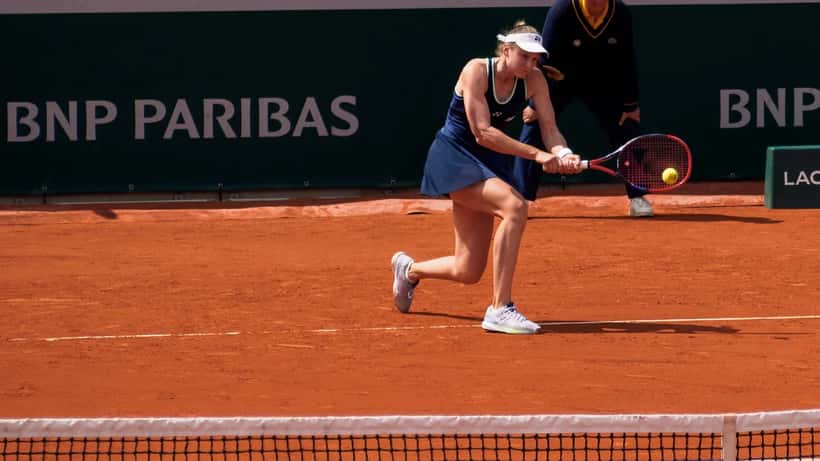
Elena Rybakina won a gruelling three-hour quarterfinal against Canada's Leylah Fernandez at the Porsche Tennis Grand Prix in Stuttgart on April 17, 2026 — but the victory came with a troubling subplot. Rybakina, playing through what she has described as "concerning" leg problems, saved two match points in a final-set tiebreak to win 6-7(5), 6-4, 7-6(6) and advance to the semifinals.
For Canadian tennis fans who watched Fernandez push the world's top player to the absolute limit, the match was a thriller. For anyone who plays recreational tennis — and there are more than 3 million Canadians who do — the story behind Rybakina's body is a reminder of how quickly playing through pain can escalate into a serious injury.
What Rybakina's Body Has Been Through in 2026
The Kazakh world No. 1 has been fighting physical issues since the start of 2026. After a back complaint at the Australian Open, she has since reported recurring leg concerns that she says won't resolve quickly. She withdrew from Stuttgart's pre-tournament event but chose to compete in the main draw — a calculated gamble that paid off Thursday.
According to the WTA Tour, Rybakina had not competed since her Miami Open semifinal loss before returning to Stuttgart. The fact that she competed through visible discomfort and still produced a three-set win against one of the most tenacious players on tour is a testament to elite athletic conditioning — but it is also exactly the kind of overloading that leads to longer injuries in less-conditioned athletes.
She is scheduled to undergo medical testing in Europe for her recurring issues. The leg concerns she describes — affecting stability and endurance over long matches — are consistent with what sports medicine physicians classify as chronic overuse injuries.
The Tennis Injury Most Weekend Players Ignore
Elite players like Rybakina have physiotherapists monitoring every session, immediate access to imaging, and recovery protocols that most recreational players will never experience. Yet millions of Canadians push through the same types of pain without any of that support.
According to the WTA's injury statistics, the most common serious tennis injuries are: lower limb injuries — particularly thigh and adductor strains, knee overload, and ankle sprains. These account for over 40% of WTA match retirements in 2025.
For recreational players — especially those in their 30s, 40s, and 50s who are returning to the sport after years away — the risks are amplified:
Lateral movement demands on aging connective tissue. Tennis requires constant lateral cuts, accelerations, and decelerations that stress the hips, knees, and ankles. Connective tissue — tendons and ligaments — becomes less elastic with age and recovers more slowly from microtrauma.
The "one more match" trap. Just as Rybakina played through pain in Stuttgart, weekend players often dismiss persistent aches as normal soreness. The difference is that elite players have professionals monitoring whether that is true. You probably do not.
Overuse without periodization. Elite players cycle their training intensity. Many recreational players go from zero activity to three sessions per week when the weather improves — exactly the pattern that causes Achilles tendinopathy, patellar tendinitis, and tennis elbow.
5 Signs You Need to See a Doctor Before Playing On
Canadian sports medicine physicians identify these as red flags that require a professional assessment — not just rest at home:
Pain that worsens during activity. If your pain builds over a session rather than easing off after warm-up, this suggests an active inflammatory or structural problem.
Swelling or warmth in a joint. This indicates acute inflammation or possible joint effusion — a signal that you need imaging to rule out internal damage.
Night pain or pain at rest. Pain that continues after you stop playing and does not resolve with elevation suggests a more serious tissue injury.
Loss of strength or range of motion. If you cannot perform a full movement pattern — a full swing, a lateral step, a serve — without compensating with another body part, a muscle or tendon is failing.
An injury that "keeps coming back." Recurring discomfort in the same location is almost always an inadequately treated original injury, not bad luck.
The Cost of Playing Through Pain
A physician-diagnosed and -treated thigh strain — what Rybakina appears to be managing — typically requires 2–4 weeks of rest, guided physiotherapy, and a structured return-to-play protocol. The same injury, if ignored and aggravated through continued play, can escalate to a partial or complete muscle tear requiring 2–4 months of recovery — and sometimes surgical repair.
Leylah Fernandez herself, watching a serve from Rybakina that appeared to catch the Kazakh mid-stride, will understand this calculus better than anyone. Fernandez has navigated her own injury setbacks over the past three seasons.
For everyday players in Canada, the message is simple: your body does not have the professional medical team that Rybakina does. When something hurts beyond normal workout soreness, a consultation with a sports medicine physician or general practitioner is not an overreaction — it is the single most effective way to stay on the court long-term.
Getting the Right Assessment
Canada's public health system can handle acute injuries, but wait times for non-emergency musculoskeletal complaints can stretch weeks. Private consultations with sports medicine doctors, physiotherapists, or orthopedic specialists can move faster and provide more detailed assessment for active patients.
Health experts on Expert Zoom include physicians and specialists who can help you identify whether your knee pain, shoulder soreness, or leg fatigue is something you can manage with physiotherapy and load management — or something that requires imaging and a longer pause from play.
The 2026 tennis season is in full swing. Whether you are watching Rybakina and Fernandez compete at the professional level or heading to your community court on the weekend, taking care of your body is the strategy that keeps you in the game for decades.
