 Liam Campbell
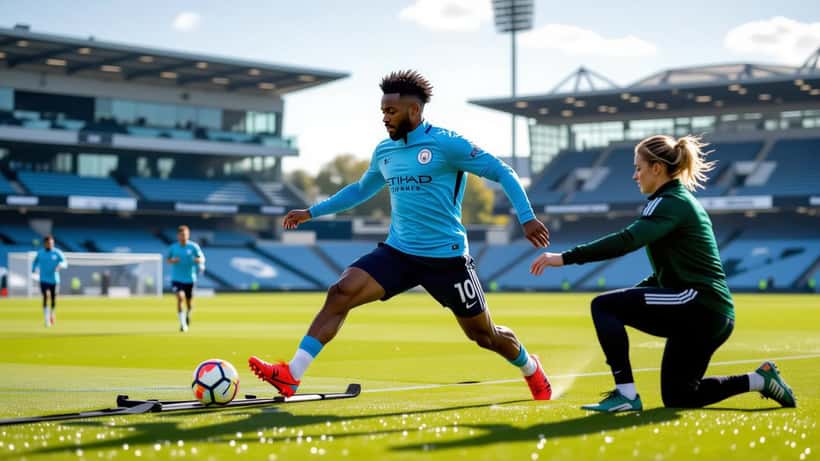
In early 2026, Manchester City winger Oscar Bobb is once again being discussed by Premier League watchers—not because of a goal or an assist, but because his lengthy rehabilitation from a serious leg fracture has become a textbook example of how modern clubs manage young talent through trauma. For Australian athletes, parents, and clinicians, the Norwegian international's return timeline offers more than gossip: it is a case study in load management, mental resilience, and the value of specialist rehabilitation guidance.
Bobb's injury, sustained in training during the 2024-25 pre-season, was the kind of setback that can derail a promising career. The Manchester City medical team immediately prioritised surgical stabilisation and a phased return. Reports from the club's camp in 2025 suggested that the player was gradually reintroduced to ball work, but the real test came during the 2025-26 campaign, when manager Pep Guardiola began naming him in matchday squads again. By mid-2026, conversations have shifted from "when will he return?" to "how has the club protected him from recurrence?"
The first lesson for Australian readers is that fracture recovery is rarely linear. While bone healing can be tracked on scans, the surrounding soft tissues, movement patterns, and confidence all take longer to restore. Sports physicians often describe this as the difference between "biological healing" and "functional readiness." A player can be cleared medically and still be weeks away from peak performance. In Bobb's case, City reportedly used GPS tracking and neuromuscular testing to decide when he could tolerate the explosive changes of direction required of a wide attacker.
This is where expert consultation becomes valuable. Platforms such as Expert Zoom connect amateur and semi-professional athletes in Australia with sports medicine specialists, physiotherapists, and strength coaches who can interpret scan results, design return-to-sport programmes, and identify subtle compensations before they cause secondary injuries. A young footballer in Sydney or Melbourne who has suffered a tibia or fibula fracture does not need access to a Premier League medical department to receive evidence-based care; they need a coordinated team and a clear roadmap.
Bobb's situation also highlights the psychological side of rehabilitation. Long-term injuries isolate players from squad rhythm and match-day adrenaline. Studies consistently show that athletes who maintain social connection with their team and set short-term, achievable milestones report lower levels of anxiety and higher motivation. Manchester City's approach—keeping Bobb involved in tactical meetings and allowing him to train in small-sided games at the appropriate moment—mirrors best-practice protocols recommended by Australian sports psychologists.
Comparisons with other high-profile comebacks reinforce the point. David Alaba's 13-month ACL recovery showed how a veteran defender can return to elite international football after a complex knee injury, provided the rehabilitation is patient and staged. Giovanni Reyna's injury history offers a different warning: repeated soft-tissue setbacks can indicate underlying load-management issues that require long-term lifestyle and training adjustments. Both cases remind Australian clinicians that no two athletes heal identically, even when the diagnosis looks the same on paper.
For younger players, the Norwegian's experience is particularly relevant. Endrick's injury story at Real Madrid has already sparked debate about how much physical demand should be placed on teenagers at the highest level. Bobb, himself still in the early phase of his senior career, benefits from a club that has publicly committed to not rushing him. Australian academies and junior clubs can apply the same principle: talent development is a multi-year project, and short-term risk-taking often produces long-term setbacks.
The technical demands of Bobb's position add another layer of complexity. Wingers must decelerate rapidly, cut inside at speed, and absorb contact from full-backs. A lower-leg fracture changes proprioception—the body's awareness of where the limb is in space—meaning that even after bone union, the player's balance and coordination must be rebuilt. Sports physiotherapists in Australia increasingly use force plates, single-leg hop tests, and on-field agility drills to measure this readiness objectively, rather than relying on how the athlete "feels."
There is also a broader conversation about workload across multiple competitions. When fit, Bobb is eligible for club and country duty. The scheduling of international windows, European club fixtures, and summer tournaments can compress recovery time between seasons. Australian footballers, rugby players, and netballers face similar pressures, especially those balancing state-level commitments with representative squads. A specialist consultation can help map out a yearly calendar that protects high-risk periods and allows deload phases.
Cricket provides another useful parallel. Jofra Archer's return to England's T20I side demonstrated how fast bowlers with stress-related injuries require not just tissue healing, but a complete review of bowling workload and biomechanics. The same principle applies to any athlete returning from a long layoff: the original injury site may be healed, but the global loading pattern that contributed to the breakdown must be addressed.
Looking ahead through 2026, the question for Oscar Bobb is no longer whether he can play again, but whether he can sustain performance over a full season. Manchester City will likely manage his minutes carefully, using him as an impact substitute in congested periods and gradually increasing his starts. Australian coaches and medical staff can adopt the same graduated approach: define clear criteria for progression, monitor training load, and be willing to step back a week if metrics suggest the player is not coping.
For readers considering their own recovery journey, the message is clear. A serious leg fracture is not a single event but a process that can take 12 to 18 months to resolve fully. Seeking expert advice early, maintaining strength in the unaffected limbs, and addressing mental health alongside physical rehab all improve outcomes. Whether you are an elite prospect or a weekend competitor, the principles that have guided Oscar Bobb back onto the pitch in 2026 are the same ones that can keep Australian athletes active and resilient.
