 Chloe Wilson
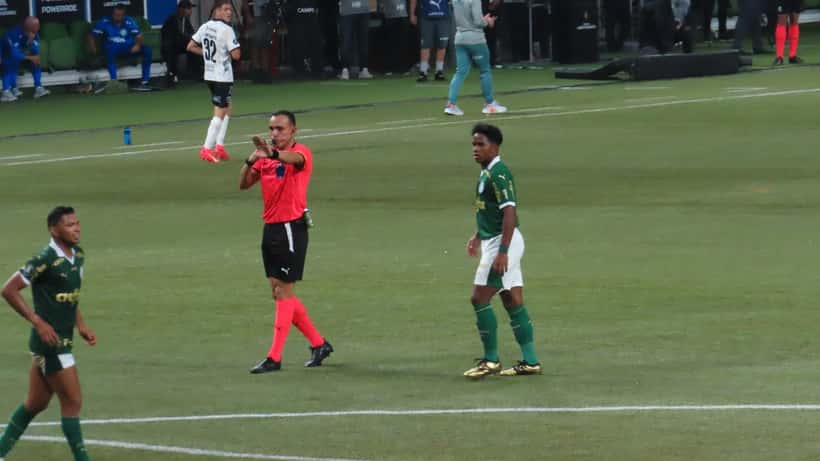
Endrick, Brazil's 19-year-old Real Madrid prodigy, lit up the 2026 FIFA World Cup alongside Rayan to become the first under-20 duo to represent Brazil since Pelé and Altafini played together in 1958. But behind the spotlight, the teenage phenomenon's path to North America carried a lesson few headlines chose to tell: at 18 years old, he suffered a right hamstring-tendon tear that kept him sidelined for at least two months.
He recovered. He went to Lyon on loan. He scored eight goals and added seven assists in 19 appearances. He made Brazil's 26-man World Cup squad. And now, watched by hundreds of millions, Endrick represents something beyond football brilliance — he represents the physical toll of accelerating young bodies into elite sporting machines.
For Australian parents, coaches, and young athletes watching the World Cup, there is no better moment to ask the question: how much is too much?
The Hamstring That Changed the Conversation
In May 2025, Real Madrid's medical services confirmed Endrick had sustained a right hamstring-tendon injury. The club projected a minimum two-month recovery window — a significant setback for a teenager who had only just turned 18 and was still physically maturing. The hamstring is one of the most common injury sites in footballers, but its vulnerability is amplified in adolescent athletes whose tendons and muscles have not yet fully developed.
Endrick's response was professional and patient. He completed his rehabilitation, accepted a loan move to Lyon to accumulate competitive minutes, and arrived at the 2026 World Cup in strong form. But his case is a reminder that even elite environments — with the world's best physiotherapists and nutritionists — cannot fully protect a body that is still growing.
For the average young Australian athlete competing in football, athletics, or team sports, the same risks apply, typically with far less medical support behind them.
Why Teenage Bodies Are Different
Growth plates are zones of soft cartilage found near the ends of long bones. They are the sites where physical growth occurs, and they remain open — and vulnerable — until approximately age 18 in girls and 20 in boys. During this window, the growth plate is structurally weaker than the surrounding muscle and ligament tissue.
According to the Australian Institute of Sport, young athletes who specialise early in a single sport face a compounded injury risk, particularly when training loads increase rapidly during growth spurts. Forces that might cause a muscle strain in an adult athlete can, in an adolescent, cause damage directly to the growth plate.
The consequences are more serious than a missed weekend match. If a growth plate is injured and left untreated, premature growth arrest can occur — meaning the bone may stop developing, grow unevenly, or cause chronic joint dysfunction into adulthood.
Real Madrid's own injury record during the 2025-26 season illustrated how even elite clubs struggle to manage heavy fixture schedules and the physical demands on their squad — and their players are full adults with fully developed skeletons. For teenagers, the margin is considerably narrower.
Three Warning Signs a Young Athlete Is Doing Too Much
Australian sports medicine specialists recognise a cluster of symptoms that signal a young athlete's body is being pushed beyond its current capacity.
Persistent, unexplained soreness. While muscle aches after training are normal, pain that lingers for more than 72 hours — particularly around joints, growth points like the knee or heel, or along tendons — is a signal worth investigating. Endrick's hamstring-tendon injury followed a period of intensive professional football without adequate recovery phases built in.
Decline in performance without explanation. A plateau or drop in a young athlete's output — slower sprint times, reduced strength, poorer concentration — often indicates the nervous system and musculoskeletal structures are not recovering between sessions. This is distinct from natural skill plateaus and frequently precedes a significant injury if training loads are not adjusted.
Changes in mood and sleep patterns. Overtraining syndrome in adolescents frequently manifests as irritability, difficulty sleeping, or a loss of motivation that parents may mistake for typical teenage behaviour. The hormonal disruption caused by chronic physical stress is real and measurable, and it compounds the physical injury risk rather than existing separately from it.
These warning signs are easy to miss when a young athlete is motivated, performing well, and surrounded by coaches focused on winning. That is precisely when the risk is highest.
The Early Specialisation Problem in Australian Youth Sport
Australia's development pathways across football, swimming, tennis, and cricket have increasingly leaned toward early specialisation — identifying talented young athletes and intensifying their training from as young as 10 or 11. This mirrors the trajectory of players like Endrick, who was training professionally at Palmeiras from age 14.
Research from Sports Medicine Australia consistently shows that athletes who specialise in a single sport before age 15 carry a significantly higher lifetime injury burden than those who play multiple sports during childhood. The multi-sport approach builds broader motor competency, reduces repetitive stress on specific joints, and supports long-term athletic development in ways that early specialisation actively undermines.
Real Madrid's decision to loan Endrick to Lyon — to manage his development load rather than immediately immersing him in a full first-team schedule — reflects an understanding of this principle at the highest level. Australian clubs, school programs, and parents can apply the same logic, even without a €60 million transfer fee attached to the decision.
When to Consult a Health Expert
Not every ache requires a specialist visit, but there are circumstances where professional assessment is not optional. A health expert with experience in sports medicine can distinguish between normal training fatigue and the early markers of stress fractures, growth plate compromise, or tendinopathies that — if left unaddressed — become career-affecting conditions.
For young athletes who train more than four days per week, who have recently gone through a significant growth spurt, or who compete year-round without a structured off-season, a health consultation is a proactive investment rather than a reactive response to injury. Catching a growth plate stress reaction early, for example, typically means two to four weeks of modified training rather than months of full rest.
Expert Zoom connects Australian families with qualified health professionals who understand the specific physiology of adolescent athletes and can provide personalised guidance on safe training loads, recovery strategies, and when to pull back.
Endrick's story ends — so far — as a triumph. But the footnote matters: at 18, one of the world's most gifted athletes stopped for two months because his body demanded it. For the tens of thousands of young Australians who train with equal commitment and a fraction of the professional support, that lesson is worth hearing before the injury, not after.
