 Isabella Torres
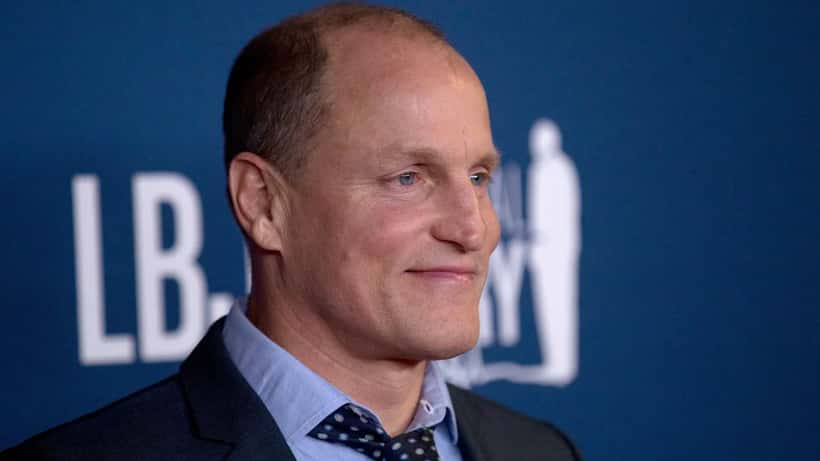
A nine-year-old interview clip with Woody Harrelson resurged across social media on September 18, 2026. In it, the actor declared he wished there were "a way to get rid of that son of a b****" — referring to Donald Trump. The clip triggered thousands of shares, fact-checks from Snopes and Yahoo News, and widespread outrage from conservative commentators. Originally recorded by the Associated Press on October 25, 2017, at the premiere of the biopic LBJ, the remarks are landing in a sharply different legal and political climate. No lawsuit has been filed against Harrelson — and legal experts say none is likely to succeed. The episode illustrates precisely where the line falls between protected political expression and actionable defamation under U.S. law.
What Harrelson Said — and Why It's Back in 2026
The clip captured Harrelson backstage at the film premiere, speaking candidly about the Trump administration. "I wish there were a way to get rid of that son of a b**** and get in a great president, you know," he told reporters, according to Associated Press records. He added: "I don't know how much he's going to continue to foment hatred."
The video circulated widely in February 2026, when it was shared on social media without its original date stamp. Many viewers believed Harrelson had made fresh remarks. Progressive organizations amplified the clip without corrections; conservative commentators framed it as a threat. By September 18, 2026, according to Pink News, Harrelson confirmed his general position in a new interview — stating that society is "going backward" — and the 2017 footage began cycling anew.
The revival illustrates a dynamic familiar to anyone with a public online presence. Old statements can return at any moment, stripped of context, and land in a completely different legal or reputational environment. Knowing what the law actually says — before a statement resurfaces, not after — is increasingly practical knowledge for anyone with a social media following.
Why Harrelson's Statement Is Almost Certainly Protected
The First Amendment to the U.S. Constitution guarantees freedom of speech and bars government action against protected expression. But two Supreme Court decisions have given that protection specific shape in the context of political commentary about public figures.
In New York Times Co. v. Sullivan (1964), the Court ruled that a public figure cannot win a defamation lawsuit without proving the speaker made a false statement of fact with actual malice — meaning the speaker knew it was false or acted with reckless disregard for the truth. In Hustler Magazine v. Falwell (1988), the Court held unanimously that parody and outrageous expression about public figures cannot support an emotional-distress claim, even when deeply offensive.
"I wish there were a way to get rid of that son of a b****" fails every element of defamation law. It is an expression of desire, not a statement of fact. Nothing in it can be proven true or false in a courtroom. It imputes no specific crime or misconduct. Any interpretation of "get rid of" as a literal threat strains the ordinary meaning of the phrase in a political context — and courts routinely read political speech as figurative.
The legal term for this is political hyperbole: expression that, taken in context, a reasonable listener would understand as frustration or rhetorical excess rather than a genuine factual claim or a credible threat. American courts have applied this doctrine consistently since the 1960s, shielding everything from satirical cartoons to heated campaign trail rhetoric.
Three Ways Celebrity Speech Can Still Create Legal Problems
Despite broad First Amendment protections, three categories create genuine legal exposure — for celebrities and ordinary people alike.
False factual assertions: "I wish he were gone" is protected. "He committed fraud on his 2022 tax return — I have documentation" is not, if false. Specific, provably false claims about criminal conduct go beyond opinion into actionable defamation territory.
Incitement to imminent lawless action: Under Brandenburg v. Ohio (1969), speech is unprotected only when directed at producing immediate lawless action and likely to succeed. "I wish there were a way to get rid of" is structurally the opposite of incitement — it expresses powerlessness, not direction.
True threats: A statement that a reasonable person would interpret as a genuine expression of intent to commit violence against a specific, identified person can be prosecuted as a true threat under Virginia v. Black (2003). Harrelson's phrasing, in a backstage interview about political frustration, has never been treated as approaching this standard. Context — the setting, the speaker's evident intent, and the audience's likely interpretation — governs whether a phrase qualifies.
The difference between protected expression and legal exposure often turns on a single word or phrase. That is why general legal principles, while useful, do not substitute for an assessment of your specific situation.
The Numbers Behind a "Safe" Post vs. a Costly Mistake
Here is a situation that plays out regularly across social media platforms. A small-business owner in Texas, with 58,000 Instagram followers, posts on September 20, 2026, about a city council candidate who has opposed a small-business tax relief measure. The post reads: "I wish this guy would just disappear — he's destroying working families in Austin. Get him out by November."
Three days later, the candidate's attorney sends a cease-and-desist demanding the post be removed and $75,000 in settlement payments to avoid a defamation lawsuit.
Under New York Times v. Sullivan, the candidate — as a public figure seeking elected office — faces a steep legal hill. "I wish this guy would just disappear" is political hyperbole. "Destroying working families" is political opinion. "Get him out by November" is a call to vote — unambiguously protected political speech.
However, the word "disappear" creates a complication. In isolation, it is ambiguous. Some courts have allowed defamation claims to proceed when language was deemed threatening or implied physical harm, even when the speaker intended only rhetorical frustration. The business owner would likely prevail on a motion to dismiss. But prevailing on a motion to dismiss can still cost $8,000 to $20,000 in attorney's fees. If the case proceeds to discovery before dismissal — which can happen even in weak cases — costs typically rise to $40,000 to $120,000, according to American Bar Association litigation cost benchmarks.
Now consider a rewrite: "Austin voters should vote this guy out in November — his policies are costing local families their jobs." The legal exposure drops to near zero. Both posts express the same political opinion and the same electoral goal. The difference between them is approximately $75,000 in worst-case legal exposure, and the gap is a single ambiguous word.
If the original post also called the candidate a "crook" or accused them of taking "illegal payments" — without factual basis — the analysis shifts entirely. Those are statements of fact, not opinion, and they can support a defamation claim even against public figures if made with actual malice.
Note: This article is informational and does not constitute legal advice. Consult a licensed attorney for guidance specific to your situation.
What Non-Celebrities Should Take From This
Harrelson's situation differs from most Americans' in one important respect: he has an entertainment attorney on speed dial. The legal principles protecting him, however, extend to everyone — with critical asymmetries that matter in practice.
If the target of your statement is a public figure, substantial latitude exists for opinion, hyperbole, and parody. If the target is a private individual — a landlord, a former employer, a business owner you had a dispute with — courts in most states apply a lower negligence standard. An honest mistake about a private person can trigger liability even without malice or intent to harm.
Employer screenings increasingly include social media audits extending years into the past. A post from 2019 can surface in a 2026 hiring review. The legal risk may be lower than formal defamation, but the practical consequences — a declined job offer, a damaged professional relationship, a forced public retraction — can be equally severe.
As we examined in our analysis of Tracy Morgan's controversial comments about teachers and the defamation questions that followed, the public-figure versus private-figure distinction is often the single most determinative variable in any speech-related legal analysis — and it is one that most people do not consider until they are already facing a demand letter.
When to Talk to a Lawyer Before Things Escalate
A defamation attorney or First Amendment specialist earns their value before trouble arrives, not only after it does. Situations that consistently warrant a consultation include the following.
- You have received a cease-and-desist over a social media post, review, or public statement
- You are being pressured to retract or remove a statement under threat of lawsuit
- You operate a social media account with meaningful reach and want to understand your risk profile before publishing something contentious about a private individual
- You are a business owner whose negative online review of a competitor or former employee is being legally challenged
- You have been served with a defamation complaint
Initial consultations with a defamation or First Amendment specialist typically cost $200 to $400. That is a fraction of the cost of any legal proceeding — and often sufficient to resolve the issue or confirm that no action is warranted. ExpertZoom connects you with vetted lawyers in defamation and First Amendment law, available remotely for consultations wherever you are.
