 Carl Graham
Tracy Morgan's 'I Can't Stand Teachers' Comment: What Defamation Law Really Says About Celebrity Speech
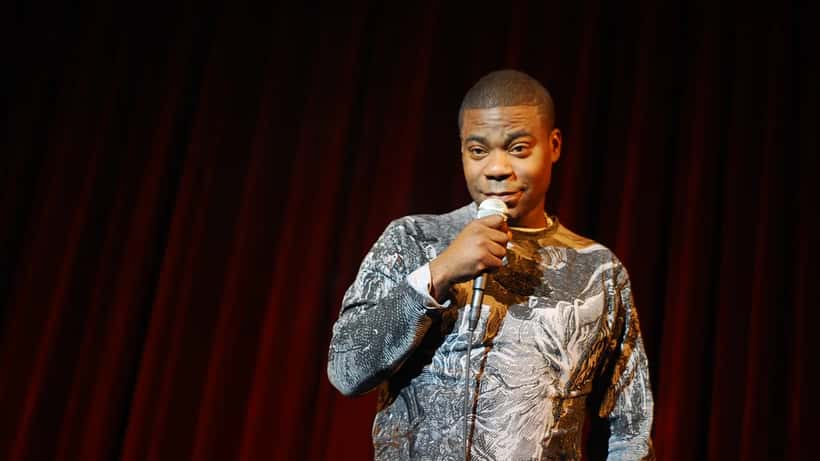
On June 10, 2026, comedian Tracy Morgan sparked widespread outrage after declaring "I can't stand teachers" in a candid Variety Actors on Actors interview alongside SNL cast member Marcello Hernández. Within hours, educators, unions, and parents had flooded social media demanding accountability. By June 11, the story was trending nationally. But behind the social media storm lies a sharper legal question: when a public figure makes sweeping negative comments about an entire profession, does defamation law apply?
The short answer, according to civil litigation attorneys, is almost certainly no — but understanding why reveals important principles about how free speech and defamation law interact in the United States.
What Tracy Morgan Actually Said — and Why Context Matters
Morgan, 57, who recently received the inaugural Flip Wilson Award at the 8th Annual AAFCA TV Honors for his contributions to comedic artistry, made the remark during an informal sit-down conversation. The comment was framed as a personal sentiment — "I can't stand teachers" — rather than a factual accusation of wrongdoing.
Legal experts consistently note that this distinction is everything. Defamation law protects individuals and identifiable groups from false statements of fact presented as true. It does not generally protect people or professions from negative opinions, however harshly expressed.
The Opinion Rule: Why "I Can't Stand X" Is Not Defamation
Under US law, a defamatory statement must meet four core elements: it must be a false statement of fact (not opinion), it must be published or communicated to a third party, it must be about an identifiable person or group, and it must cause harm.
The statement "I can't stand teachers" fails immediately at the first element. It is plainly a statement of personal sentiment — an expression of dislike — not a factual claim about specific conduct. No reasonable listener would interpret it as, for example, "teachers are criminals" or "teachers at Jefferson Elementary committed fraud."
The US Supreme Court addressed this boundary directly in Milkovich v. Lorain Journal Co. (1990), ruling that pure expressions of opinion that cannot be reasonably interpreted as stating actual facts enjoy strong First Amendment protection. Courts have consistently held that hyperbolic or rhetorical expressions of displeasure — the kind often found in comedy, entertainment interviews, and social commentary — fall squarely outside the scope of actionable defamation.
As the First Amendment states, Congress shall make no law abridging freedom of speech. This principle extends to speech that offends, shocks, or angers — including speech about professions, institutions, or social groups.
Can an Entire Profession Sue for Defamation?
This question comes up more frequently than many people realize — particularly after celebrity provocations. The legal doctrine of "group libel" allows for defamation claims on behalf of groups, but courts impose significant constraints.
When a group is large and diffuse — like "teachers," "lawyers," or "nurses" — courts have been extremely reluctant to recognize defamation claims. The reasoning: if a statement cannot be reasonably understood as referring to any particular individual within the group, no specific person has suffered the kind of reputational harm that defamation law is designed to remedy.
For a group defamation claim to have any viability, courts typically require: a small, clearly defined group; a statement that necessarily implicates each member of the group; and demonstrated reputational or economic harm to identifiable individuals.
The United States has approximately 3.5 million K-12 teachers, according to the National Center for Education Statistics. No court would likely certify a defamation claim on behalf of such a large and diverse group based on one comedian's expression of personal dislike.
What About Individual Teachers?
Could a specific teacher whose professional reputation was damaged by Morgan's comments bring a claim? This scenario is theoretically possible but faces steep hurdles.
The individual would need to show that listeners would understand Morgan's statement as specifically referring to them — difficult when the comment was generic. They would also need to demonstrate actual damage to their professional standing, finances, or community relationships directly caused by the statement.
In states like California and New York, where strong anti-SLAPP (Strategic Lawsuit Against Public Participation) statutes exist, bringing a defamation suit over a celebrity opinion expressed in a public forum could expose the plaintiff to an immediate motion to dismiss and potential attorney fee awards against them.
When Does Celebrity Speech Become a Legal Problem?
While "I can't stand teachers" is almost certainly protected speech, there are scenarios in which celebrity commentary on professions can create legal liability:
False factual statements: If Morgan had stated "the teachers at [specific school] are embezzling from students," that is a factual claim — not opinion — and would be actionable if false.
Employer pressure: If an employer took adverse action against a teacher because of Morgan's comments — demoting or firing them based on public sentiment — employment discrimination attorneys note that the situation could implicate labor law protections.
Targeted harassment: If the comment was directed at a named individual teacher rather than the profession generally, the analysis shifts significantly toward actionable defamation.
Tortious interference: In unusual circumstances, a public figure's coordinated campaign to damage a specific professional's reputation could support claims beyond defamation.
Should Teachers or Educators Take Legal Action?
The vast majority of employment and media lawyers agree that pursuing a defamation claim over Morgan's comment would face nearly insurmountable obstacles. The statement is opinion, the group is too large, and the First Amendment protection is robust.
However, the outrage response to Morgan's comments touches on a genuine issue: when public figures use their platforms to demean professions, the cultural and reputational effects are real — even when legal remedies are limited.
Teachers and educational professionals who believe they have faced tangible professional harm — not just offense — as a result of targeted negative publicity should consult with an employment attorney or defamation specialist. An attorney can assess whether any specific facts in a given situation support a claim that generic commentary would not.
ExpertZoom connects you with experienced lawyers who can evaluate your situation and provide clear guidance on whether — and how — to respond when public speech affects your professional life.
This article provides general legal information and does not constitute legal advice. For guidance specific to your situation, consult a qualified attorney.
