 Davis Caesar
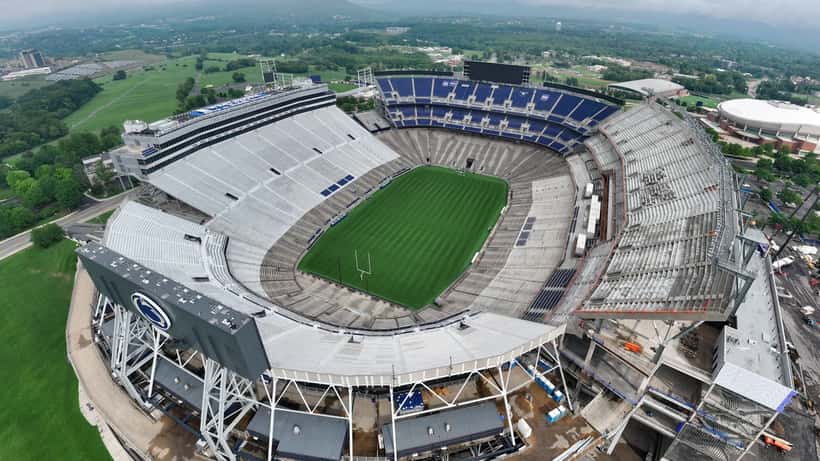
Today at Beaver Stadium in State College, Pennsylvania, the Wisconsin Badgers open Big Ten play as 10-point underdogs against No. 13 Penn State — a program that has won the last six meetings in this series and ranks third nationally in points allowed per game under first-year head coach Matt Campbell. Wisconsin arrives at 2–1; Penn State enters the game 3–0. What happens on the field will dominate the Saturday news cycle. What happens in the contracts these athletes signed before the season began may define their financial lives long after the final whistle.
The News: Big Ten Football Is Now a $24 Million Business Per Roster
The 2026 season is the second year of full revenue sharing following the landmark House v. NCAA settlement. Big Ten schools are now permitted to share up to $20.5 million per school per year directly with their athletes. When combined with third-party NIL deals, total player compensation at Penn State and Wisconsin reaches between $32 million and $42 million per program for the 2026–27 academic year, according to data tracked by NIL industry analysts.
Football accounts for the overwhelming majority of this spend. The median Big Ten football roster now carries approximately:
- $15 million in direct revenue-sharing payments
- $9 million in third-party NIL deals
- $24 million in total annual player compensation per school
These are extraordinary figures for a system that operated on a strict amateur model less than five years ago. But according to attorneys who have reviewed Big Ten revenue-sharing agreements, the contracts governing this money contain terms that would be unacceptable in any standard employment relationship — and that many players sign without independent legal counsel.
Expert Analysis: What Lawyers Are Warning About These Contracts
Sports attorneys who have reviewed Big Ten revenue-sharing structures identify a consistent pattern of one-sided terms.
"The fundamental problem is asymmetry," one attorney specializing in athlete representation has noted. "The school holds almost every card. They can adjust your pay. They can terminate the contract at their discretion. The athlete has no reciprocal right to terminate. It reads less like an employment agreement and more like a sponsorship deal where only one side bears real risk."
Legal analysts at McDonald Hopkins, who have studied NIL contract structures across major conferences, flagged several recurring provisions in their review: schools retain a continuous right to modify NIL compensation; contracts do not guarantee pay for athletes; athletes can be required to reimburse the school if they leave; and schools hold the unilateral right to terminate while athletes do not.
These terms are not just unfavorable — they are potentially unenforceable under consumer protection law in certain states. Both Wisconsin and Pennsylvania have consumer protection statutes that restrict contracts of adhesion in situations where one party lacks meaningful ability to negotiate. Whether college NIL agreements fall within these protections has not yet been definitively resolved by state courts.
The situation is growing more legally fraught as transfer disputes work their way through the courts. Duke and Cincinnati have each filed lawsuits in 2026 demanding that quarterbacks repay damages after entering the transfer portal, alleging breach of revenue-sharing contracts. Courts are now being asked to determine whether liquidated damages clauses accurately reflect a school's actual loss when a player transfers — a question with enormous implications for every athlete in the Big Ten.
For players navigating these questions, consulting a qualified sports attorney is the first step. Expert Zoom connects athletes and families with specialized attorneys who handle NIL and athlete contract disputes.
Concrete Case: The $240,000 Transfer Portal Trap
A scenario playing out across Big Ten campuses in 2026 illustrates the stakes clearly.
A starting linebacker at a Power Four program signs a two-year revenue-sharing agreement worth $240,000 — $120,000 per year, disbursed in monthly installments. Midway through his sophomore season, following a partial meniscus tear sustained in a conference game, he enters the transfer portal to pursue a program closer to home and more suited to his recovery timeline.
Under current standard Big Ten contract structures, here is what he faces:
His agreement contains a liquidated damages clause stating that any player who enters the transfer portal before the term expires owes the school 50% of the remaining contract value.
At the point of his transfer request, he has completed 14 months of a 24-month contract and received $140,000 in payments. His remaining contract value is $100,000. His calculated liquidated damages obligation: $50,000, due within 90 days.
His knee injury does not automatically constitute a valid exit. Unless his contract includes an explicit medical hardship provision — and most current Big Ten agreements do not, according to athlete advocates — the financial obligation persists regardless of the medical circumstances that prompted his decision.
The if/then logic every athlete should understand before signing:
- If you enter the transfer portal before your revenue-sharing term expires, then you may owe your school a financial penalty equal to 25–50% of the remaining contract value.
- If you sustain an injury that alters your athletic participation, then your contract may still bind you to performance milestones and reimbursement clauses unless a medical exit provision was negotiated upfront.
- If a dispute arises, then most Big Ten revenue-sharing contracts include binding arbitration clauses, waiving your right to a jury trial in a venue where the school holds significant institutional weight.
For this linebacker, a $500 consultation with a sports attorney before signing could have negotiated an injury exit provision and a reduced liquidated damages cap of 15% rather than 50% — cutting his maximum financial exposure from $50,000 to $15,000, a $35,000 difference for a single hour of legal advice.
Why Wisconsin and Penn State Illustrate the Broader Problem
Both programs on the field today represent different points on the NIL investment spectrum — and both illustrate why this legal framework matters.
Penn State, now led by Matt Campbell in his first season at the helm after building Iowa State into a Big 12 contender, has adopted one of the more aggressive NIL recruiting profiles in the Big Ten. The Nittany Lions' three-win record entering this game reflects a roster assembled with significant financial commitments. Penn State's contract structures have drawn scrutiny from legal observers concerned about the pace at which multi-year agreements are being offered to 17- and 18-year-old recruits.
Wisconsin has historically relied on player development over high-dollar NIL recruiting. But the landscape has shifted. The Badgers increased revenue-sharing commitments substantially for the 2026–27 year to remain competitive, meaning players on both rosters are operating under similar legal frameworks — and similar risks.
Both programs represent a broader reality: thousands of college athletes across the country are party to multi-year financial agreements prepared by university legal teams, signed under recruiting-deadline pressure, and rarely reviewed by independent counsel before execution.
Similar legal dynamics have emerged in other major conference matchups this season. The Wyoming vs. Colorado State transfer portal case highlighted comparable contract disputes, while earlier Big Ten competition raised the same NIL questions addressed in Eastern Illinois vs. Minnesota at the 2026 season kickoff.
Practical Steps: What Athletes and Families Should Do Now
The current environment in college athletics demands that players approach NIL negotiations with the rigor of a small business owner entering a multi-year commercial agreement.
Before signing any revenue-sharing agreement above $50,000:
- Request the full contract at least 72 hours before any signing deadline
- Confirm whether the contract contains a medical hardship exit provision
- Identify the exact liquidated damages formula — both the cap percentage and the calculation method
- Clarify whether the arbitration clause specifies a neutral, independent arbitration forum
- Consult an attorney who specializes in NIL and athlete contracts before the deadline, not after
During the contract term:
- Document all injuries and training staff communications in writing
- Retain copies of all financial statements and payment records
- Do not enter the transfer portal without first reviewing contractual obligations with counsel
The FTC's endorsement guidelines apply to many NIL arrangements and provide federal disclosure requirements that some current college contracts fail to address — another area where independent legal review adds tangible value.
The Stakes Beyond Saturday's Score
Whatever happens on the scoreboard at Beaver Stadium today, the athletes who play will walk off the field carrying the weight of contracts that may govern their professional futures for years. Penn State's 10-point favorite status reflects a superior roster — one built, in part, with commitments that deserve the same legal scrutiny as any professional sports deal.
Until federal legislation or definitive court rulings establish clearer protections for college athletes, independent legal expertise remains the most reliable safeguard available. An hour with the right attorney, before the ink dries on any revenue-sharing agreement, is worth more than any NIL consulting firm or compliance seminar.
If you are a college athlete, the parent of a recruit, or an advisor to someone navigating Big Ten NIL offers, connect with an experienced attorney through Expert Zoom's network — before the next contract deadline arrives.
This article is informational only and does not constitute legal advice. For questions specific to your NIL agreement or athlete contract rights, consult a licensed attorney in your state.
