 Charles Jackson
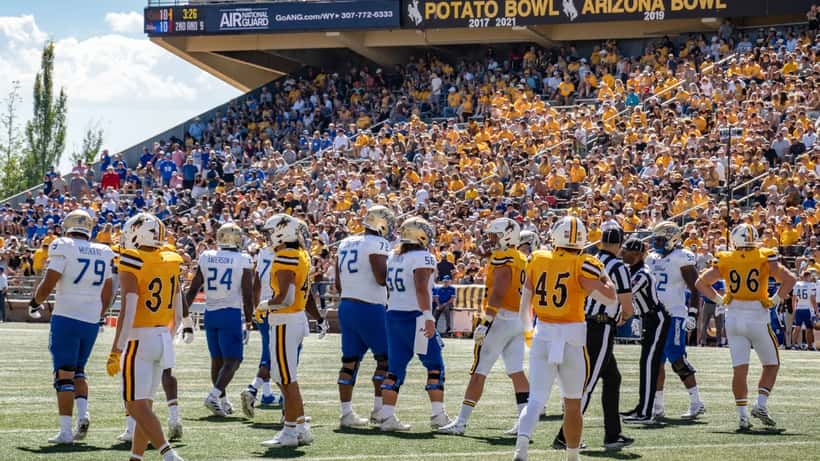
The Border War rivalry between Wyoming and Colorado State kicks off the 2026 college football season today, September 5, at Canvas Stadium in Fort Collins — but behind the on-field drama lies a legal landscape that could define the careers of dozens of players on both rosters. With Wyoming arriving after a 4-8 campaign and Colorado State after a 2-10 season, both programs rebuilt aggressively through the transfer portal. That choice comes with consequences most athletes never see coming.
A Season Built on the Transfer Portal
Wyoming entered 2026 with transfer quarterback Tyler Hughes from William & Mary leading a retooled offense. Colorado State arrived at the opener with one of the most portal-heavy rosters in the Mountain West — according to pregame reports, nearly the entire starting lineup consists of players who were not on the roster a year ago.
The two programs are not an outlier. More than 4,500 Division I scholarship players entered the transfer portal in a single window during the 2025-26 cycle, representing roughly 25 to 30 percent of all scholarship athletes in college football. The mass movement of talent from program to program has transformed how rosters are built — but it has also introduced a category of legal risk that most athletes, many of them teenagers, are entirely unprepared to handle.
When Wyoming and Colorado State take the field today, the agreements that assembled those rosters — verbal promises, scholarship addenda, NIL side letters, and exit clauses — are part of the story, even if they stay off the scoreboard.
The Legal Minefield Transfer Athletes Are Navigating in 2026
The transfer portal was designed to give athletes freedom. In practice, it has created an environment where the pace of recruiting — often just days between offer and commitment — leaves little room for legal review.
The highest-profile cautionary tale is the Jaden Rashada case: the former Florida quarterback sued after an alleged $13.85 million NIL promise collapsed before he ever played a game. Then came the Cincinnati lawsuit against quarterback Brendan Sorsby, who transferred to Texas Tech despite an exit clause in his agreement — the university sued him for $1 million in liquidated damages. The Sorsby case, covered in detail at Expert Zoom, became a landmark moment in how courts view the enforceability of college athlete contracts.
What made both cases significant was not just the dollar amounts — it was the realization that college athletes are now operating in a commercial environment where institutional legal teams draft the contracts, and the athletes sign them with no independent review.
According to analysis of 2026 portal activity from sports law practitioners, fewer than 12 percent of portal transfers involve formal legal review of the scholarship agreement before signing. That gap is where most disputes begin.
What the House Settlement Changed — and What It Did Not Fix
The House v. NCAA settlement, which required the NCAA and its major conferences to pay nearly $2.8 billion in back damages to athletes who competed between 2016 and the present, fundamentally changed the financial structure of college sports. Schools can now directly compensate student-athletes for their NIL use up to a capped annual amount. Transfer portal windows have been condensed to designated 15-day periods. Federal courts in Colorado and Louisiana granted certain players from the class of 2022 a fifth year of eligibility, with the condition that they re-enter the portal to find a new program.
What the settlement did not resolve is the legal status of verbal promises made during recruiting — and that omission is precisely where most transfer portal disputes live. According to the NCAA's official transfer rules and eligibility guidelines, an athlete who enters the portal retains scholarship funding at the original institution through the end of the current academic year. But once enrolled at a new school, financial aid is fully dependent on the new institution's written agreement — not on anything said in a phone call or a recruiting visit. The NCAA also introduced new "ghost transfer" rules in February 2026 that automatically suspend head coaches for 50 percent of a season and impose fines worth 20 percent of a sport's budget if a program allows a transfer athlete to participate before they are officially entered in the portal — a rule designed to protect athletes, but one that can also complicate the already-compressed recruiting timeline.
Playing time promises, position guarantees, and depth chart commitments are almost never included in signed documents. Coaches who made those promises during recruitment may have left for other jobs by the time camp opens. The athlete is left holding a scholarship — but not the role they were recruited to fill.
Concrete Case: When the Promise and the Paper Don't Match
Consider a scenario that mirrors dozens of real portal transfers each year — including many on the rosters of teams like Wyoming and Colorado State ahead of today's game.
A defensive back from a Sun Belt program enters the transfer portal in January 2026 after his head coach resigns. He fields offers from seven programs in the first 72 hours. A Mountain West school offers a full scholarship and a verbal guarantee of immediate starting status at cornerback. The recruiting coordinator follows up with an email saying the program sees him as "a day-one starter." He commits within four days and signs the financial aid agreement the following week. The email and verbal assurance are not referenced in any signed document.
When he arrives for fall camp in August, the staff has added two cornerbacks from a subsequent portal window. He is listed as a backup entering the season opener.
If/then analysis: If the "day-one starter" language exists only in a recruiting email and was never incorporated into a letter of intent, athletic financial aid agreement, or separate addendum, it is generally unenforceable as a standalone contractual term. Scholarship agreements govern financial aid — not role assignments. However, if the athlete can demonstrate that he detrimentally relied on the promise (declined comparable offers from other programs based specifically on that assurance), some jurisdictions recognize a promissory estoppel claim even without a signed contract. The strength of the claim depends significantly on the wording of the recruiting email, whether it was sent by a current staff member, and whether institutional stationery or email domains were used.
A sports attorney reviewing the situation could assess whether promissory estoppel applies under state law (this varies sharply: California and Texas treat reliance-based claims very differently), negotiate a resolution with the athletic department before litigation is filed, or counsel the athlete on re-entering the transfer portal if no resolution is possible — before a portal window closes.
The cost of that review, even at a premium hourly rate, is typically a fraction of what an unrepresented athlete loses by accepting an unfavorable situation without knowing their options.
What Both Teams' Rosters Tell Us About the 2026 Landscape
Wyoming's rebuild around Hughes and Colorado State's wholesale roster turnover reflect a broader shift in how Mountain West programs compete for talent. Programs that cannot offer Power Four resources are competing on the margin — faster responses, more personalized recruiting, and promises that occasionally outpace what can realistically be guaranteed.
That dynamic creates pressure on athletes to commit quickly, accept verbal assurances they cannot verify, and sign agreements they have not read in full. Courts in 2026 are beginning to see the downstream consequences: eligibility disputes, contract litigation, and athletes who transferred expecting one situation and arrived to find another.
The condensed portal windows — now just 15 days — make independent legal review harder, not easier. An athlete has less than two weeks to evaluate multiple offers, visit programs if possible, and sign agreements. Most do not have an attorney on retainer. Many do not know one.
Steps Athletes Can Take Before the Next Portal Window Opens
Sports law practitioners who advise college athletes on transfer decisions in 2026 identify four practical steps that reduce legal risk substantially:
Get every commitment in writing. Scholarship amounts, annual renewal conditions, academic accommodations, and NIL framework agreements should all appear in signed documents before a commitment becomes binding. Any coach who resists putting a promise in writing is a warning sign.
Read exit clauses before signing. The Sorsby case established that liquidated damages clauses are enforceable in multiple jurisdictions. An athlete who signs a one-year agreement with a $500,000 exit fee and then finds a better opportunity cannot simply walk away without financial exposure.
Understand the portal window calendar. Missing a window by one day can cost a full year of eligibility under current NCAA rules. The 15-day windows are fixed and have no grace period exceptions for most athletes.
Consult a lawyer before committing. A one-hour consultation with a sports attorney — available through platforms like Expert Zoom — can identify red flags in scholarship agreements before they become lawsuits. For an agreement worth a full year of education and, in many cases, an athlete's professional future, that review is not optional.
The Border War between Wyoming and Colorado State kicks off at 6 p.m. ET today on USA Sports, with Colorado State favored by 3 to 3.5 points in front of a home crowd at Canvas Stadium. For the players who took the portal to get there, the legal decisions they made in January may matter just as much as what happens in the fourth quarter.
This article contains general legal information about college athlete rights and the NCAA transfer portal framework. It is not intended as legal advice. Athletes with specific eligibility or contract disputes should consult a licensed attorney in their state.
