 David Miller
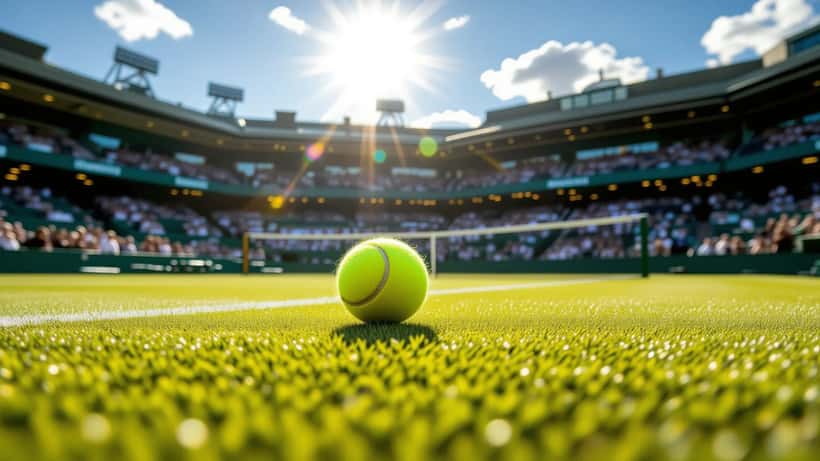
The grass courts of the All England Club are once again the center of the tennis universe as Wimbledon 2026 approaches its championship weekend. With the draws narrowed to the final four in both the men’s and women’s singles, fans and analysts are asking the same question: which player has the physical, tactical, and mental edge to lift the trophy on Centre Court? This year’s tournament has already delivered upsets, marathon five-setters, and a record prize purse that underscores how much professional tennis has grown as a global business.
For anyone trying to make sense of the chaos, the final days of Wimbledon are best understood through an expert lens. Surface specialists, data scientists, physiotherapists, and sports-law professionals each see different signals in the same match. That multiplicity of perspective is what makes major finals so compelling—and why platforms that connect everyday fans with verified specialists have become a quiet part of the modern sports conversation.
The 2026 draw and the road to the final
Wimbledon 2026 began with the usual uncertainty that defines grass-court tennis. Lower bounces, faster rallies, and volatile weather mean that even top seeds can look vulnerable in the opening rounds. By the second week, however, the field usually separates into three groups: the established grass-court specialists, the clay-court converts adjusting their timing, and the fearless juniors using the surface as a springboard.
This year, the men’s side has been shaped by serve-and-volley revivals and aggressive return patterns. The women’s draw has featured longer baseline exchanges than in recent seasons, a trend that analysts trace to heavier balls and slightly slower court conditions. Anyone planning to watch the finals should read a reliable Wimbledon 2026 schedule guide first, because broadcast windows and court assignments can shift quickly due to rain or five-set marathons.
The prize money has also set a new benchmark. Wimbledon’s total purse for 2026 has climbed above £64 million, with the singles champions each taking home more than £3 million. That figure is not just a headline; it reshapes incentives across the sport. A deeper look at the Wimbledon 2026 prize pool breakdown shows how early-round losers now receive a far larger share than they did a decade ago, a change driven partly by player-association negotiations and partly by the tournament’s expanding media rights.
What experts watch in a final
Tennis finals are rarely won on talent alone. The margins are too thin. Sports-science consultants emphasize first-serve percentage under pressure, the number of short points converted, and how quickly a player recovers between long games. A player who looks explosive in the semifinal can look flat two days later if their recovery protocols were not tailored to grass-court stop-and-start movement.
Tactical analysts focus on patterns. Does the favorite adjust their return position against a big server? Does the underdog have a reliable plan B when their primary weapon misfires? In the women’s final, the ability to redirect pace on a low slice has repeatedly decided close sets. In the men’s final, tie-break performance and second-serve return points often tell the story before the final set is played.
Then there is the mental side. Performance psychologists describe Centre Court on final day as a unique environment: no music, no jumbotron distractions, and a crowd that rewards grace under pressure. Players who treat the occasion as just another match sometimes perform better than those who build it into a career-defining moment. Experience helps, but it is not a guarantee.
Rising names and breakout stories
Every Wimbledon introduces at least one player who suddenly belongs in the conversation. This year, British hopefuls have once again captured local attention, and one rising star in particular has shown how a junior program focused on movement can accelerate a career. His run to the second week has drawn comparisons to previous home favorites, even though his team has tried to keep expectations measured. You can follow the backstory in this profile of Arthur Fery: rising British tennis star.
Breakout performances matter beyond the trophy. They affect sponsorship negotiations, ranking points, and even tax-residency decisions for young athletes. Wealth managers who specialize in sports careers often say that a single deep run at a Grand Slam can change a player’s lifetime earnings trajectory—provided the financial planning keeps pace with the sudden income.
The business and legal backdrop
Behind the forehands and backhands, Wimbledon is also a case study in sports governance. Broadcasting agreements, image-rights contracts, and anti-corruption protocols all come under scrutiny during a high-visibility final. For players and their agents, the two weeks of the tournament represent a compressed window of legal and commercial decisions that can shape the next twelve months.
Injury disputes are another undercurrent. With the ATP and WTA calendars under pressure to reduce player load, any high-profile withdrawal at a major tournament reignites debate about scheduling and medical accountability. Teams now routinely consult independent medical experts before deciding whether a player should compete, a practice that protects both health and contract value.
Data rights have also become a sensitive topic. Real-time statistics generated during matches are valuable to betting companies, broadcasters, and fantasy platforms. Who owns those data streams, and how they are licensed, is a growing area of sports law. Wimbledon’s status as an independent event gives it more flexibility than tour-owned tournaments, but it also means its legal precedents are watched closely.
How to follow the finals like a specialist
You do not need a coaching badge to appreciate the finals more deeply. Start by focusing on one or two small details instead of the overall scoreline. Watch where each player stands to receive serve. Notice how often they change direction on the run. Count how many forehand winners come from inside the baseline versus behind it. These micro-patterns reveal who is controlling the match even when the games are tight.
If you are wagering, investing, or advising an athlete, the same discipline applies. Identify the variables you understand, ignore the noise, and update your view as new evidence arrives. Sports markets, like financial markets, punish overconfidence.
For fans who want expert interpretation without spending years in the sport, targeted consultations can bridge the gap. A conversation with a tennis analyst, a physiotherapist, or a sports lawyer can turn a passive viewing experience into an informed one. That is the broader lesson Wimbledon 2026 offers: the closer you get to specialized knowledge, the more the sport reveals.
Looking ahead
By Sunday evening, two champions will hold trophies and deliver speeches that mention family, team, and the honor of the tournament. The rest of the field will board flights to North American hard-court events, already thinking about the next major. But the narratives established at Wimbledon 2026 will linger. Sponsors will sign new deals, rankings will shift, and young players will return to practice courts with fresh evidence that breakthroughs are possible.
The 2026 finals are more than a sporting event. They are a convergence of athletic performance, commercial strategy, medical science, and legal architecture. Whether you are watching for entertainment, analysis, or professional insight, the closing days at SW19 reward those who look beneath the surface.
