 Elizabeth Chen
Utah Fire Map 2026: Protecting Your Lungs When Wildfire Smoke Drifts Into the Wasatch Front
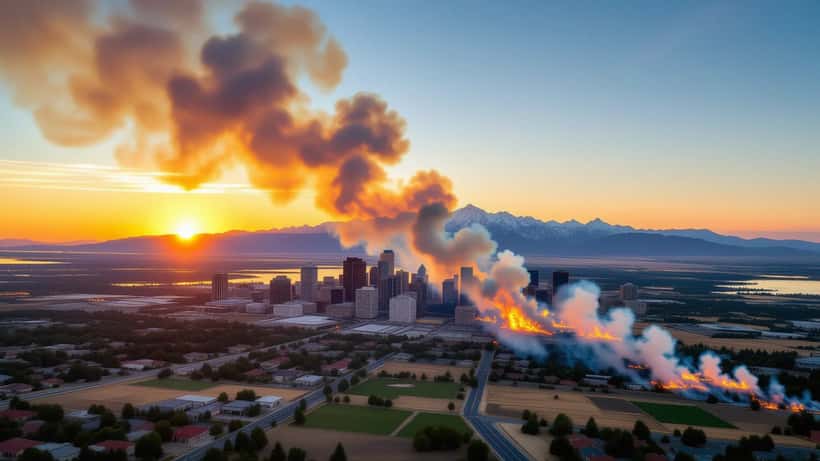
As wildfire season intensifies across the American West, the Utah fire map for 2026 is lighting up earlier than many residents expected. Blazes in southern Utah, Nevada, and Arizona are sending plumes of fine particulate matter northward, and Salt Lake City, Provo, and Ogden are already seeing air quality alerts spike into the unhealthy range. For families, outdoor workers, and anyone with asthma or heart disease, the question is no longer just "where is the fire?"—it is "what does this smoke mean for my health, and when should I talk to a doctor?"
This is where the Utah fire map becomes more than a tracking tool. Used wisely, it is a decision-making dashboard that helps you decide whether to reschedule a hike, keep children indoors, or book a telehealth visit before symptoms worsen.
What the Utah fire map is showing in 2026
State fire managers and the National Interagency Fire Center update incident mapping daily. In 2026, the dominant pattern is early-season ignition in dry grasslands and pinyon-juniper zones, followed by wind-driven transport of smoke into the Wasatch Front urban corridor. The Utah fire map now overlays real-time air quality monitors from the Utah Division of Air Quality, so residents can see both the fire perimeter and the resulting pollution plume on one screen.
That integration matters because smoke exposure is not limited to people living next to a fire. Fine particulate matter, known as PM2.5, can travel hundreds of miles. During major 2026 events, concentrations in the Salt Lake Valley have exceeded 100 micrograms per cubic meter—well above the 24-hour federal standard of 35. At those levels, even healthy adults may experience throat irritation, coughing, and shortness of breath.
Health effects of wildfire smoke: a spectrum
Wildfire smoke contains a mix of gases and microscopic particles. The smallest particles, PM2.5, are the biggest concern because they penetrate deep into the lungs and can enter the bloodstream. Short-term effects include:
- Burning eyes, runny nose, and scratchy throat
- Chest tightness and wheezing
- Headaches and fatigue
- Exacerbation of asthma and chronic obstructive pulmonary disease (COPD)
People with pre-existing lung or heart disease, older adults, pregnant individuals, and young children face the highest risk. Recent research also links repeated wildfire smoke exposure to increased emergency room visits for heart attacks and strokes, which is why cardiologists now pay close attention to multi-day air quality alerts.
When to move from self-care to expert consultation
Most healthy adults can manage mild smoke irritation by staying indoors, closing windows, and using a portable air purifier. But certain symptoms should prompt a call to a health professional:
- Worsening shortness of breath or chest pain
- Persistent cough lasting more than a few days after air quality improves
- Asthma rescue inhaler use more than twice a week
- New confusion, dizziness, or palpitations during heavy smoke
On an expert consultation marketplace, you can connect with pulmonologists, allergists, cardiologists, or primary care clinicians who understand regional wildfire patterns. A quick video consultation can help you interpret your symptoms, adjust medications, and decide whether you need in-person testing such as spirometry or a chest X-ray.
Practical steps Utah residents should take now
Start your day by checking both the Utah fire map and the AirNow.gov forecast. If the air quality index (AQI) is orange or red, reduce outdoor exertion. If you must work outside, an N95 respirator provides meaningful protection against PM2.5, unlike cloth or surgical masks.
Inside the home, create a cleaner air space. Run a HEPA air purifier in the room where you spend the most time, keep windows and doors closed, and avoid activities that add indoor pollution such as frying food, burning candles, or using wood-burning stoves. If you have central HVAC, set the system to recirculate and upgrade to a MERV-13 filter if the unit can handle it.
Do not forget pets. Dogs and cats can also suffer from smoke irritation, so keep outdoor time brief and watch for coughing, lethargy, or discharge from the eyes and nose. Veterinarians on the platform can advise whether a clinic visit is warranted.
Insurance, housing, and legal angles
Smoke damage can trigger disputes with homeowners insurance, especially when ash infiltrates a home or forces temporary relocation. If you are unsure what your policy covers, a legal or insurance expert can review your declaration page and guide you through the claims process. You can read more about the financial side of fire events in our related coverage on Salt Lake City fire 2026: what homeowners must know and State Farm denied your claim? What every US homeowner should know.
Looking ahead
The 2026 Utah fire map will continue to evolve with the weather. Drought, heat, and wind can turn a small ignition into a regional air-quality emergency within 48 hours. The best defense is layered: monitor the map, protect your indoor air, know your personal risk factors, and have a trusted expert available when symptoms or paperwork become too complex to handle alone.
By treating wildfire season as a health-planning season, Utah residents can breathe easier—even when the sky looks hazy.
