 Davis Caesar
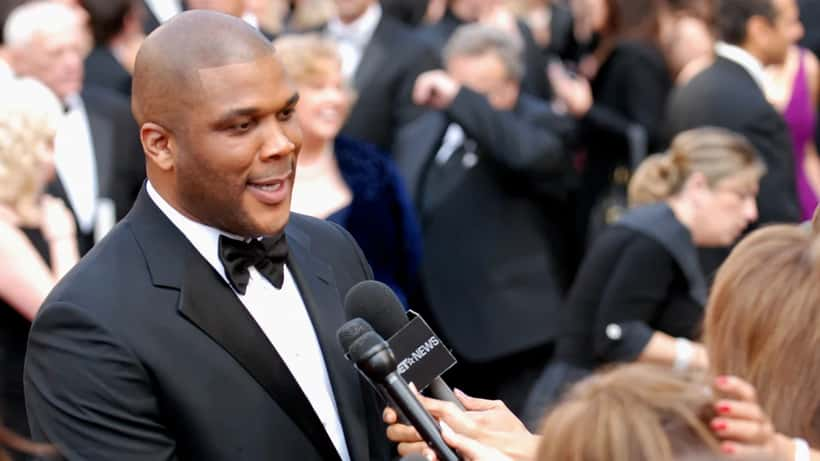
When Paramount Skydance announced it was acquiring Tyler Perry's 25% minority stake in BET+ and winding down the streaming service in mid-2026, the entertainment industry paused. Not because of the dollar amount — the exact terms remain undisclosed — but because of what the deal exposes about a risk every content creator and minority investor faces when building a streaming partnership: what happens to your rights when the platform disappears?
BET+ is now formally shutting down after seven years, its library migrating to Paramount+. Perry walks away with capital and a continuing creative relationship. Most independent creators in similar equity arrangements are not nearly as well-positioned — and entertainment lawyers say the gap comes down to contract language written years before the shutdown was imaginable.
How a $0 Equity Deal Became a Platform-Wide Acquisition
BET+ launched in September 2019 with Tyler Perry as a founding minority equity holder. In a 2019 production deal, Paramount granted Perry a 25% stake in the streaming service in exchange for an exclusive content pipeline from Radical Studios, his production company. For seven years, BET+ housed roughly 1,000 hours of original programming — All the Queen's Men, Zatima, The Ms. Pat Show, and dozens of other titles that built the platform's subscriber base.
Beginning in June 2026, Paramount began migrating that entire library to Paramount+. The full shutdown of BET+ completed by mid-August 2026. For subscribers, the transition was mostly frictionless — a platform rebrand with a new login screen. For equity holders and content producers, it triggered a cascade of legal and financial questions that rarely surface in public deal announcements.
Industry analysts estimate Perry's buyout at tens of millions of dollars, though precise figures were not disclosed. Perry negotiated a continued content partnership with BET, and BET's FAST (Free Ad-Supported Streaming TV) channels dedicated to his series will remain live — a detail that hints at the sophistication of his original deal terms. As the Hollywood Reporter noted, Perry appears to have retained meaningful ancillary monetization rights even as his equity stake dissolved.
The Minority Shareholder Problem in Streaming
When a streaming platform is acquired or wound down, minority equity holders rarely have veto power over the transaction. This is the structural reality of holding 25% — or 10%, or 5% — of a venture controlled by a media conglomerate. The majority shareholder dictates terms, and minority holders either accept the buyout or face a difficult legal fight.
Most streaming equity deals include drag-along clauses: if the controlling shareholder sells or restructures above a certain ownership threshold, minority holders can be compelled to sell their stakes at the same price per share. This protects acquirers from holdout minority investors but can result in dramatic valuation gaps between the paper value of a minority stake at signing and its realized exit value when the platform changes course.
For content creators who received equity in lieu of higher production fees, this dynamic is particularly painful. A 5% stake valued at $3 million at signing might yield $900,000 at exit if the platform's valuation has declined — a 70% haircut on what the creator expected when they agreed to lower their upfront rates.
Perry's outcome appears to have been more favorable, which entertainment lawyers attribute to two factors: his production deal predated the streamer wars consolidation, giving him more negotiating leverage, and his content formed such a substantial share of BET+'s identity that Paramount needed him at the table for any deal to work cleanly.
What Entertainment Lawyers Say About Platform-Collapse Risk
Entertainment attorneys increasingly flag what they call "platform dependency clauses" as among the most underexamined risks in creator deals. Two separate agreements typically govern an arrangement like Perry's: a production agreement and an equity participation agreement. When a platform shuts down, both need to be bulletproof.
Under US copyright law, original audiovisual works vest automatically in their creator at the moment of fixation — unless a valid work-for-hire agreement transfers those rights to a third party. According to the US Copyright Office, the work-for-hire doctrine requires either that the work be created by an employee within the scope of employment, or that the parties explicitly agree in writing that the work is a "work made for hire" in one of nine specified categories. Independent production studios — like Perry's Radical Studios — typically do not qualify under either prong, which means their content IP doesn't automatically transfer.
This distinction matters enormously when a platform shuts down: if Perry licensed his content to BET+, those rights potentially revert at the end of the license term or upon platform closure, depending on how the agreement was written. If he assigned them outright, Paramount now controls the library indefinitely. The ongoing FAST channel revenue suggests Perry retained participatory rights in perpetuity — the hallmark of a license, not an assignment.
Attorneys advise three specific clauses for any creator negotiating a streaming deal with an equity component:
Platform sunset provisions: What happens to content access if the service ceases operation or is acquired? A well-drafted sunset clause specifies a reversion timeline — typically 180 days from shutdown — after which content rights return to the creator.
Reversion triggers: Beyond platform closure, these clauses define other conditions under which IP reverts: failure to distribute the content within a set period, breach of payment obligations, or failure to meet subscriber minimums.
Equity drag-along floor: Rather than being compelled to accept whatever per-share price the majority negotiates, a drag-along floor sets a minimum buyout value below which the minority holder can refuse the transaction and seek independent valuation.
A Concrete Case: When Your Streaming Deal Disappears
Consider a scenario playing out across the independent content space in 2026.
A documentary filmmaker signs a three-year exclusive deal with a mid-tier streaming platform in January 2024. In exchange for exclusive US streaming rights to four documentary series, she receives a 5% equity stake in the platform, valued at $2.5 million at signing. Her contract includes a standard platform-use license — not an assignment — covering US territory.
By spring 2026, the platform is acquired by a larger media conglomerate. The acquirer triggers the drag-along clause: because they're buying 82% of the platform's equity, they compel all minority holders to sell at the same per-share price as the controlling shareholders. Her stake is bought out for $750,000 — a 70% loss from the $2.5 million paper valuation, because the platform's subscriber growth stalled.
If her license agreement was written as exclusive, platform-specific, and non-transferable, the acquisition likely constitutes a change-of-control event. Depending on the language, she may have grounds to demand renegotiation of royalty terms before her four series migrate to the acquirer's platform — potentially worth $200,000 to $400,000 in additional streaming fees over the remaining license term.
If, however, her agreement included a standard "successors and assigns" clause, the acquirer steps automatically into the platform's shoes. Her content is now hosted on the new platform for the remainder of the license term, at the original — and now below-market — royalty rate, with no renegotiation right.
The difference between these two outcomes hinges on a single clause that an entertainment lawyer would have flagged before the contract was signed. Given the number of streaming consolidations already announced in 2026, this scenario is no longer hypothetical for a growing cohort of independent creators.
What Creators Should Do Before the Next Streaming Deal
Tyler Perry's BET+ exit was handled by a team of entertainment attorneys and business managers built over decades in the industry. The legal infrastructure surrounding his deals is precisely what allowed him to exit with ongoing creative revenue rather than a clean break. Most independent creators don't have that infrastructure — but the same protections are available at every deal size.
Before signing any streaming or network agreement that includes equity or exclusive content rights, an entertainment lawyer can help you secure:
- A platform sunset clause specifying that content rights revert to you within 180 days if the service ceases operation, is acquired, or fails to maintain active distribution
- A drag-along floor valuation preventing a majority shareholder from forcing a minority buyout below a defined minimum per-share price
- A copyright retention provision explicitly separating the underlying IP from the content license — ensuring your production entity retains ownership even as the platform receives exclusive streaming access
- Ancillary rights carve-outs covering FAST channels, syndication, foreign distribution, and physical media, which can generate ongoing revenue even after a primary platform shuts down
- A most-favored-nation clause in production fees, ensuring you are not paid below market rate in exchange for equity that may never materialize
The BET+ shutdown is a visible, high-profile lesson in what professional legal representation can preserve at the negotiating table. The window to build those protections is before you sign — not after the platform announces it's folding into a competitor's library.
For context on how IP rights play out in similar high-stakes entertainment deals, see our earlier analysis of Tarantino's screenplay licensing arrangement with Netflix — another case where ownership structure determined who controls the creative work long-term.
This article is for informational purposes only and does not constitute legal advice. Entertainment contract law varies by jurisdiction and deal structure. Consult a qualified entertainment lawyer before signing any agreement that includes equity participation or exclusive content rights.
format_used: Expert reaction
