 David Carter
Tornado warnings issued across Minnesota, Iowa, Wisconsin, Michigan, and Illinois this April have left thousands of homeowners scrambling to assess damage after one of the most active spring tornado seasons in years. An EF-1 tornado hit Van Buren Township, Michigan on April 4 with 100 mph peak winds, destroying barns and snapping trees across a 3.25-mile path — and that was just one of at least 13 confirmed twisters across three states in a single April 2, 2026 outbreak.
What the 2026 Tornado Season Looks Like So Far
The National Weather Service and NOAA's Storm Prediction Center confirmed a tornado watch through southern Minnesota, northern Iowa, and western Wisconsin on April 13, 2026, with baseball- to egg-sized hail accompanying the storms. Michigan, Illinois, and Indiana also saw significant activity earlier in the month, with peak wind gusts of 69 mph recorded at Chicago Midway Airport on April 2.
According to historical averages tracked by the Storm Prediction Center, April typically produces around 182 tornadoes nationwide — and 2026 is tracking above average, with activity spreading northward and westward across the Midwest and Great Plains. As of mid-April, Severe Weather Awareness Weeks were active in both Minnesota and Wisconsin, signaling continued elevated risk through the end of the month.
The question for many homeowners isn't just "did my house survive?" — it's "how do I know if it's safe to go back inside?"
The Hidden Damage Tornadoes Leave Behind
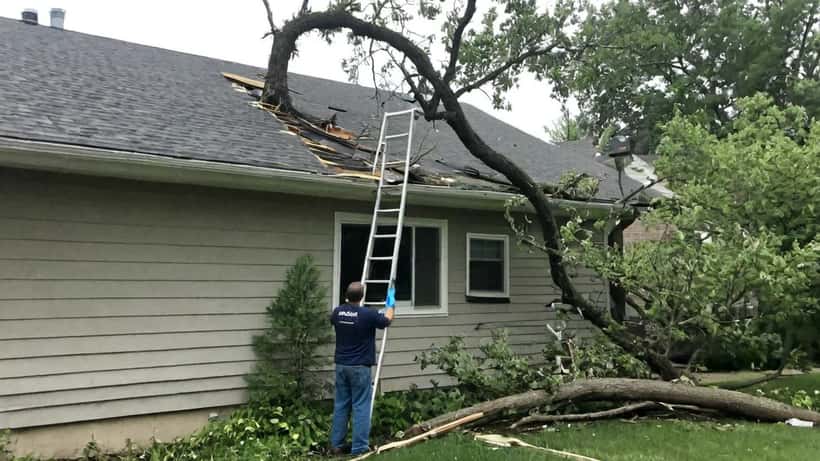
A home can look intact on the outside and still be structurally compromised. Tornado-force winds create pressure differentials that can lift and reseat roof sections, crack load-bearing walls without visible exterior signs, and compromise foundation anchoring without any obvious surface damage.
Homeowners often make the mistake of checking windows and siding, then concluding the house is fine. But the real danger zones are in the attic, crawl space, and at the roofline connection points. The roof-to-wall connection is one of the most critical structural elements, and it's one of the first things to weaken under severe wind load — often invisibly.
Here are the warning signs that should trigger immediate caution before re-entering or declaring a home safe:
- Doors or windows that no longer open or close properly — a sign of structural shifting
- Cracks in drywall that run diagonally at 45-degree angles from window and door corners — different from settlement cracks, these indicate shear stress
- Chimney damage, even minor spalling or mortar loss — chimneys are one of the heaviest unsupported elements and among the first to fail
- Visible daylight in the attic around eave or ridge connections
- A musty or gas smell — tornado debris can rupture gas lines or create moisture intrusion paths
When to Call a Structural Engineer — Not Just a Contractor
This is where many homeowners lose thousands of dollars. In the days and weeks after a major tornado event, the demand for contractors spikes dramatically. Legitimate contractors are booked solid, which creates a vacuum filled by storm-chasing scammers who offer fast bids, demand large cash deposits upfront, and disappear before completing the work.
According to the Federal Trade Commission, disaster-related contractor fraud is one of the top consumer complaints following major weather events. Homeowners in affected areas reported losses averaging $3,800 per fraudulent contractor encounter after 2024's tornado season.
The correct sequence after a tornado warning or confirmed storm impact is:
- Document everything with photos and video before touching anything — your insurance claim starts here
- Contact your insurance company to open a claim before authorizing any work — emergency tarping and board-up services are typically covered
- Request a structural engineer assessment for anything beyond cosmetic damage — not a contractor, an engineer. Engineers have professional liability and sign off on structural safety
- Vet contractors through your state's licensing board — most states have online lookup tools to verify license and insurance status
A licensed home improvement contractor or craftsman who specializes in post-storm restoration will coordinate with your adjuster and pull the required building permits. Unpermitted repair work can void future insurance coverage and create problems when you sell the house.
Insurance Adjuster vs. Independent Adjuster: Who's on Your Side?
Most homeowners don't realize that the adjuster sent by their insurance company is working for the insurer — not for them. A public adjuster, by contrast, is a licensed professional who works on your behalf to maximize a legitimate claim. In complex structural damage cases — like tornado damage that affects the roof system, foundation, and walls simultaneously — a public adjuster can identify damage categories that an insurance company's adjuster might undervalue or miss entirely.
States like Minnesota, Illinois, and Michigan all license public adjusters and regulate their fees, which are typically a percentage of the final settlement. For large claims, this often pays for itself several times over. According to the Federal Emergency Management Agency (FEMA), homeowners who document damage thoroughly and engage professional help consistently receive higher settlements than those who accept a first offer.
Getting Your Home Ready Before the Next Warning
Tornado season runs through late May and into early June for the Midwest and Plains states. If your home has older roofing, outdated attic bracing, or was built before 2000, you may not meet current residential wind resistance codes — even if you've never filed a claim.
A proactive structural assessment by a qualified craftsman or building inspector can identify retrofitting opportunities: hurricane straps to secure roof framing, improved attic brace connections, reinforced garage doors (a common weak point in residential wind damage), and impact-resistant roofing materials.
These upgrades are not just about safety — many insurers offer premium discounts for homes with documented wind-mitigation improvements. In Florida and Texas, wind mitigation inspections can reduce insurance premiums by 20-30%, a model increasingly being adopted in Midwestern states as tornado frequency and insured loss totals rise.
What to Do Right Now
If you're in an area under or recently released from a tornado watch or warning:
- Do not enter a damaged structure until a qualified professional clears it
- Photograph all damage from the exterior before any cleanup or tarping
- Call your insurer and open a claim — do this before hiring any contractor
- Find a vetted craftsman or structural specialist through a verified platform
A qualified home improvement professional can conduct a proper post-storm assessment, coordinate with your insurance adjuster, and ensure any repair work is permitted and done to current building codes — protecting both your safety and your property's value.
Don't wait for the next warning. Spring 2026 is already shaping up as an active tornado season, and the time to understand your home's vulnerabilities is before the next cell forms.
Disclaimer: This article provides general information for educational purposes. For specific assessments of structural damage or insurance claims, always consult a licensed contractor, structural engineer, or public adjuster in your state.
