 Lucas Price
Tornado warnings blanketed Iowa, Pennsylvania, Oklahoma, Michigan, and Arkansas in the first days of April 2026, with more than 30 confirmed tornadoes touching down across the Midwest and South. Over 600 buildings were reported damaged, and at least 8 people died across the outbreak — a brutal reminder that tornado season has officially arrived. If your area received a warning, even if no tornado hit nearby, your home may have sustained damage you haven't noticed yet.
What happened this week
The National Weather Service issued tornado warnings for Washington, Johnson, and Cedar Counties in Iowa on April 2, as a line of strong storms pushed through the region with large hail and dangerous winds. In Pennsylvania, warnings covered Allegheny and Westmoreland counties. Further south, confirmed EF2 and EF3 tornadoes struck the Three Rivers area in Michigan and communities north of Tulsa, Oklahoma. A long-track EF3 moved through Kankakee and Aroma Park in Illinois before crossing into Indiana.
April marks the start of peak tornado season in the United States, with the greatest activity concentrated in the Mississippi River Valley corridor and the traditional "Tornado Alley" states. According to the Storm Prediction Center (NOAA), April through June typically accounts for more than 50% of annual tornado activity, with the highest frequency shifting northward through the season.
Why tornado warnings matter even without a direct hit
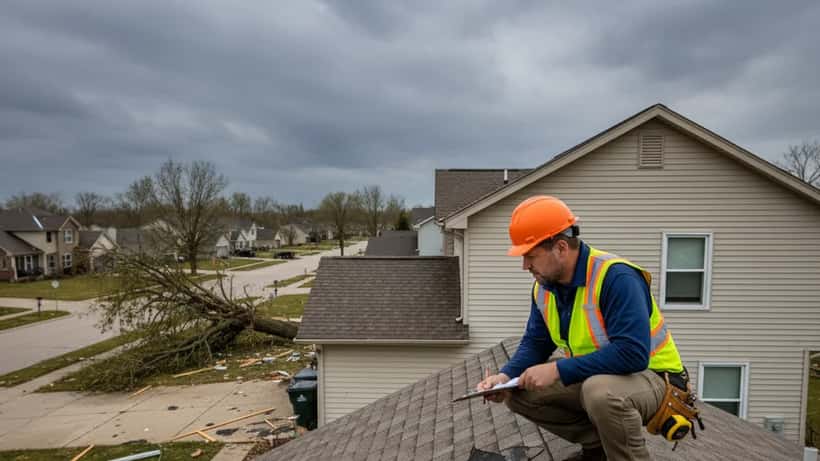
A common mistake homeowners make is assuming that if a tornado didn't directly strike their property, there's nothing to worry about. That's not accurate. Tornadic storms produce damaging straight-line winds well beyond the funnel path, large hail capable of cracking roof shingles and skylights, and sudden pressure changes that can shift structural elements without creating visible exterior damage.
After the April 2026 outbreak, insurance adjusters and contractors in affected states reported a surge in inspection requests — many from homes that had no visible damage but were found to have compromised roofing underlayment, cracked ridge beams, or damaged attic ventilation. Left unchecked, these issues can lead to significant water intrusion during the next rain event.
The post-warning home inspection checklist
Before calling a contractor, do a quick visual sweep of your property. Look for:
Exterior:
- Shingles that are missing, lifted, or show impact marks from hail
- Dents or cracks in siding, aluminum trim, gutters, or downspouts
- Broken windows or cracked frames — even hairline cracks can allow moisture in
- Fencing, outbuildings, or detached garages that have shifted or collapsed
- Trees or large branches that have fallen against the house or roof
Interior (attic and upper floors):
- Daylight visible through the roof deck — a red flag requiring immediate attention
- Fresh water stains on ceilings or insulation
- Cracked drywall near corners, ridge lines, or load-bearing walls
- Doors or windows that suddenly stick or won't close properly — a sign of structural shifting
Utility and mechanical:
- Gas line connections and outdoor meters for any physical damage or unusual odors
- HVAC unit and condenser coils for hail impact (dented fins reduce efficiency by 20-40%)
- Outdoor electrical panels or disconnect boxes for moisture intrusion
If you spot any of these signs — or if you're simply not sure — a professional inspection by a licensed contractor is strongly recommended.
When to call a contractor immediately
Some damage requires professional assessment without delay:
Roof damage: Missing shingles or visible holes should be addressed within 24-48 hours to prevent water intrusion. In storm season, water in the attic can create mold within 48-72 hours. A licensed roofing contractor can tarp exposed sections immediately while completing a full inspection.
Structural concerns: Cracks in load-bearing walls, shifted foundations, or doors and windows that no longer operate properly can indicate structural movement. A structural engineer or experienced general contractor should evaluate these before you resume normal use of the space.
Hail to HVAC and solar: Hail damage to air conditioning units, heat pumps, or solar panels may not be immediately apparent but can reduce efficiency or void manufacturer warranties. A mechanical contractor or solar technician should inspect these systems if hail was reported in your area.
Don't wait for visible water damage
According to storm damage data compiled by NOAA, the gap between when tornado-related structural damage occurs and when it becomes visibly apparent inside a home averages 4 to 12 weeks — often coinciding with the next significant rain event. By that point, what started as a minor shingle gap can become a $15,000 ceiling replacement.
Filing an insurance claim is easier and more successful when the connection between storm event and damage can be documented with a professional inspection report. Most reputable contractors will provide a written assessment that specifies the type of damage, its probable cause, and estimated repair costs — exactly what insurers need.
The flash flood warnings already issued across the U.S. this April have also shown that storm damage from this season is cumulative — what survives one event may fail in the next. Home contractors on ExpertZoom can assess your property's readiness for the full severity of the 2026 spring storm season and help you prioritize repairs before the next round of weather arrives.
