 Joseph Wallace
Storm Fern swept across more than 30 states in late January 2026, generating between $5 billion and $6.7 billion in insured losses — one of the costliest winter storms since 1950. In March 2026, the Better Business Bureau of Central Georgia issued a public warning: in the weeks following any major storm, door-to-door contractors descend on affected neighborhoods, and many of them are scammers. Here is how to protect yourself.
The storm chaser problem: what's happening across the US in 2026
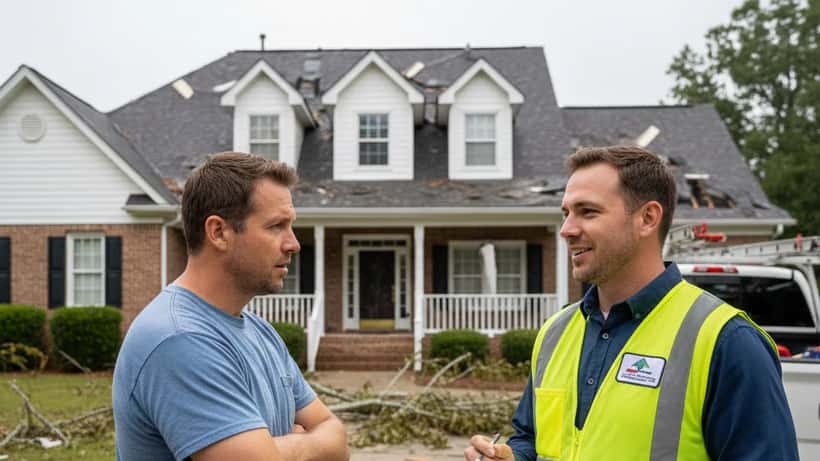
After every significant storm — whether it's hail in Texas, tornadoes in the Midwest, or ice storms in the Northeast — a predictable pattern plays out. Within 24 to 48 hours, out-of-state contractors arrive in affected ZIP codes, knocking on doors and offering "free inspections." These are known in the industry as storm chasers, and while some are legitimate, many operate with one objective: to extract a large upfront deposit and disappear.
In March 2026, the BBB formally warned residents in Middle Georgia to exercise caution when hiring contractors following recent storm activity. Complaints filed with the BBB about home repair contractors spike sharply in the weeks after significant weather events, with fraud losses per victim averaging several thousand dollars.
The Federal Trade Commission has documented the core pattern: homeowners rush into agreements, pay deposits of 30-50% upfront to "secure materials," and then watch the contractor either disappear entirely or perform substandard work that fails inspection. In some cases, victims have paid multiple contractors for the same job after the first abandoned it.
Red flags: how to spot a scam contractor
The difference between a legitimate restoration company and a storm chaser often comes down to behavior, not appearance. Watch for these warning signs:
Unsolicited door-to-door approach: Legitimate companies don't need to knock on doors after storms. If someone shows up uninvited claiming to have spotted damage, treat it as a red flag.
Pressure to "sign today": Any contractor who creates urgency — claiming limited availability, rising material costs, or that your neighbors have already signed — is using high-pressure sales tactics that legitimate professionals don't need.
Unusually low bids: If one estimate is dramatically lower than others, the contractor likely plans to cut corners, use substandard materials, or pad the bill with "discovered damage" mid-project.
Requests for large cash deposits: A professional contractor will typically ask for 10-20% upfront, not 50% or more. Requests for full payment before work begins are a near-certain scam indicator.
No verifiable credentials: Ask for a physical business address (not just a cell number), a contractor license number, and proof of general liability and workers' compensation insurance. Verify these independently — the license number should be checkable through your state contractor licensing board.
Vague written estimates: Any legitimate contractor provides a detailed written contract before work begins. Estimates that list broad categories without itemized costs are designed to allow later charges you can't dispute.
What legitimate storm restoration companies do differently
Reputable home improvement contractors behave predictably. They provide written, itemized estimates within 48 hours. They are licensed and insured in your state, not just their home state. They don't demand full payment upfront. They provide references from completed projects in your area. And they communicate proactively about timelines and any complications.
A legitimate contractor will also work with your insurance company directly if needed. Storm damage restoration often involves insurance claims, and experienced contractors have established relationships with adjusters and understand the documentation requirements. A contractor who discourages you from involving your insurer — or who asks you to sign over insurance benefits to them — is a warning sign worth taking seriously.
Verifying a contractor before you sign
Before signing any contract, take these steps:
Check the BBB: Search for the company at bbb.org. Look at their complaint history, not just their rating — a company with a B+ rating and 40 unresolved complaints is more concerning than one with a B and none.
Verify their state contractor license: Every state maintains a public database. In Georgia, use the Secretary of State's Professional Licensing Board. In California, it's the CSLB. In Texas, the TDLR. Search the contractor's name or license number and confirm it's active and not disciplined.
Get at least three written estimates: For jobs over $2,000, three estimates is standard practice and helps you identify outliers — both inflated and suspiciously low.
Ask for local references: A contractor who has operated in your area for more than one season should be able to provide three local homeowners who will take your call.
Never pay in full upfront: Use a payment schedule tied to project milestones. Final payment should be contingent on passing a final inspection.
When to call a home improvement expert on Expert Zoom
Not every storm damage scenario involves outright fraud. Sometimes homeowners face legitimate but complex questions: Which repairs need a permit? What structural damage requires an engineer's assessment rather than a contractor's? How do you navigate a dispute with an insurance adjuster over the scope of covered damage?
A home improvement specialist on Expert Zoom can walk you through these questions in a 30-minute consultation, helping you understand what to ask, what to document, and what your rights are before you sign anything. For complex storm damage involving structural issues, roofing systems, or insurance disputes, getting expert guidance before committing to a contractor is the single most effective way to protect your home and your wallet.
According to the Federal Trade Commission consumer guidance, homeowners should always verify contractor credentials independently and never let urgency pressure them into skipping due diligence — no matter how severe the damage looks.
