 Carl Graham
New 3D scans of the Titanic wreck, released in May 2026, have captured the internet's imagination — and reignited a serious legal question that has never been fully resolved: who actually owns the Titanic?
The answer involves more than history. It touches on international maritime law, competing national legislation, salvage rights, and the rights of victims' families. As forensic researchers and technology companies push further into the deep-sea frontier, understanding who controls these wrecks matters more than ever.
What the New 3D Scans Revealed
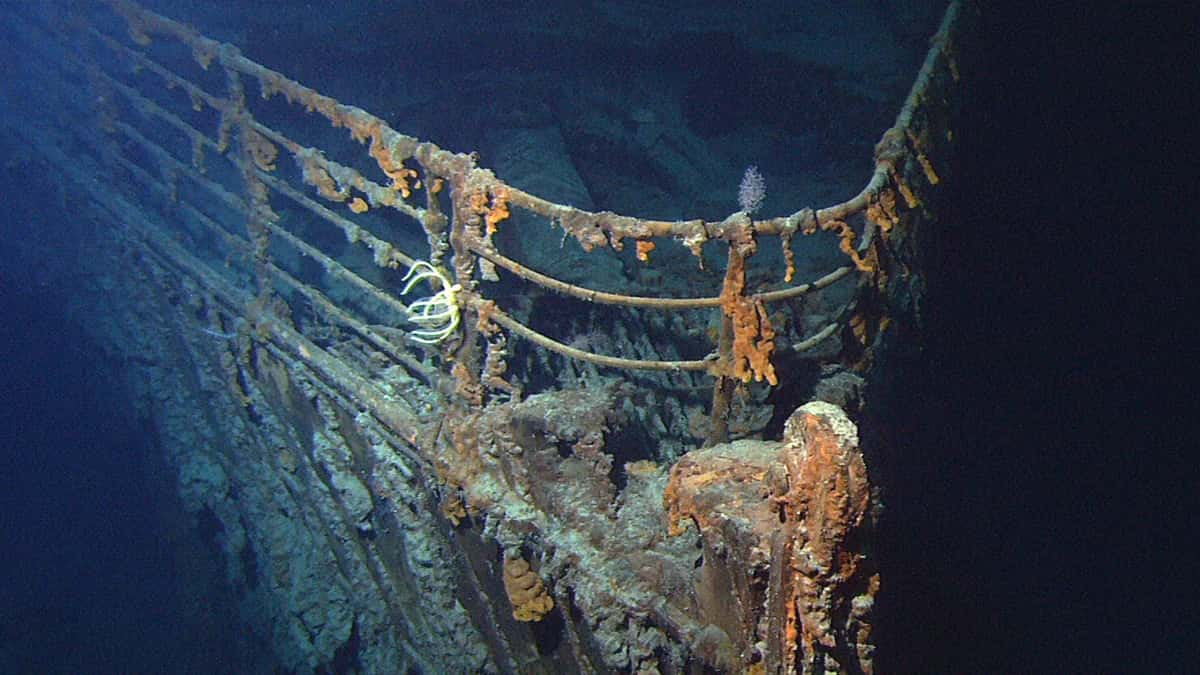
In early May 2026, a team of researchers published high-resolution 3D scans of the Titanic debris field, spread across roughly 15 miles of the North Atlantic Ocean floor at a depth of about 3,800 meters. The scans show delicate porcelain tableware, personal belongings, and massive hull sections in extraordinary detail — the clearest picture yet of how the ship broke apart over 114 years.
Historian Tim Maltin's separate six-year forensic study, released in mid-May 2026, also challenged popular myths about the night of the sinking, suggesting that unusual atmospheric conditions — specifically a phenomenon called super refraction — made icebergs far harder to spot than previously believed.
Together, these developments have brought Titanic back into global conversation. But with renewed attention comes renewed debate over who has the right to explore, document, and potentially recover artifacts from the wreck site.
Who Legally Owns the Titanic?
Legally, the situation is complicated — and deliberately so.
The Titanic sank in international waters. Under the United Nations Convention on the Law of the Sea (UNCLOS), no single country exercises sovereignty over the deep seabed beyond any nation's exclusive economic zone. That creates a legal gray zone where ownership claims are layered and contested.
RMS Titanic Inc. (a subsidiary of Premier Exhibitions) holds the legally recognized salvor-in-possession status in the United States, granted by a U.S. federal court in 1994. This status gives the company exclusive rights to recover artifacts from the wreck under U.S. law — and it has recovered more than 5,000 objects over the decades.
However, the R.M.S. Titanic Maritime Memorial Act of 1986 declared the site a maritime memorial and directed the United States government to seek international agreements to protect the wreck. The resulting 2001 UNESCO Convention on the Protection of the Underwater Cultural Heritage (ratified by over 60 countries, though not the U.S.) treats wrecks more than 100 years old as protected underwater cultural heritage — potentially removing them from traditional salvage law altogether.
This is the legal tension that maritime lawyers deal with when clients ask about deep-sea expedition rights, artifact ownership, or commercial dives on historic wrecks.
Why This Matters Beyond the Titanic
The Titanic is the most famous example, but it is not the only one. The world's ocean floors contain hundreds of thousands of historic wrecks — from ancient Greek amphorae carriers to World War II naval vessels to Cold War submarines. As 3D scanning, autonomous underwater vehicles, and AI-assisted mapping make these wrecks increasingly accessible, the legal questions multiply.
Consider the following scenarios a maritime attorney might encounter today:
Artifact recovery disputes: A salvage company recovers coins from an 18th-century shipwreck in international waters. Three countries claim the ship was theirs. Who prevails? This requires navigating UNCLOS, bilateral treaties, and the domestic laws of wherever the artifacts are brought to shore.
Insurance for deep-sea expeditions: After the catastrophic 2023 OceanGate Titan implosion — which killed five people on a private Titanic dive — deep-sea expedition insurers dramatically tightened their terms. What liability waivers are enforceable? What duty of care applies in international waters? These are live questions for anyone operating submersibles for tourism or research.
Cultural heritage vs. private salvage: European courts and the UNESCO Convention increasingly treat historic wrecks as shared human heritage rather than unclaimed property. A salvage company operating under U.S. salvor-in-possession rights may find its recovered artifacts seized at foreign ports or declared national property by other jurisdictions.
Victims' family rights: The Titanic carried more than 1,500 people who died. Their descendants have argued — sometimes in court — that the wreck is effectively a gravesite and should be treated with the legal protections accorded to human remains. Several U.S. court rulings have partially accepted this view, limiting certain types of artifact recovery.
The 3D Scanning Controversy
Even non-invasive documentation like the new 3D scans is not legally straightforward. Creating a detailed commercial 3D model of the Titanic raises questions about:
- Intellectual property: Who owns the scan data? The company that created it, or is it public domain because the underlying wreck cannot be copyrighted?
- Access rights: The oceans are international, but exclusive contracts and court orders may restrict who can operate at or near specific wreck sites.
- Commercial use: Using scans in a VR exhibit (like the one opening at the Great Lakes Science Center in Cleveland in May 2026) may require licensing arrangements with the recognized salvage rights holder.
These are not hypothetical disputes. They are the kinds of questions that maritime lawyers, intellectual property attorneys, and estate planners are already fielding as underwater technology advances.
What Should You Do If You're Involved in a Maritime or Heritage Dispute?
If you are an investor, technology company, researcher, or heir involved in any aspect of deep-sea exploration or historic maritime property, the legal landscape is complex enough to require professional guidance. A maritime attorney or estate lawyer with international experience can help you:
- Assess whether a planned expedition or recovery operation complies with domestic and international law
- Evaluate the enforceability of salvage contracts across multiple jurisdictions
- Understand your potential liability if something goes wrong (as the OceanGate case demonstrated)
- Navigate customs, import, and cultural property laws when bringing artifacts into any country
- Structure intellectual property rights around scan data, documentary footage, or research
The Titanic has been on the ocean floor for more than a century. The legal frameworks governing its future are still being written — and they will determine who profits, who is protected, and who is held accountable as technology brings us ever closer to the deep.
According to NOAA, the R.M.S. Titanic Maritime Memorial Act directs the U.S. government to protect the wreck site and minimize disturbance to any human remains. That mandate is at the center of every new legal challenge around the site. You can read more at the NOAA Ocean Service's official Titanic resource page.
If you are navigating a complex maritime, salvage, or cultural heritage legal question, a qualified maritime attorney can provide the expert guidance you need. Expert Zoom connects you with vetted legal professionals who specialize in exactly these kinds of cross-border, multi-jurisdictional challenges.
