 Charles Jackson
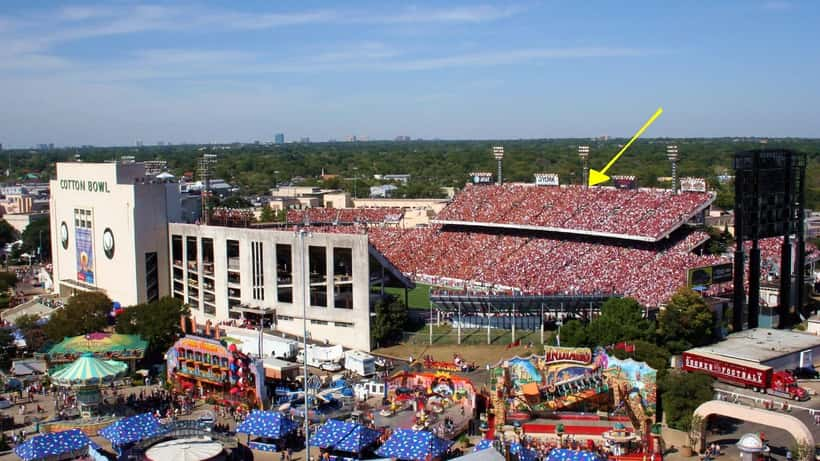
When the No. 1-ranked Texas Longhorns (4-0) face a struggling Oklahoma Sooners squad (2-2) at the Cotton Bowl on October 10, 2026, more than a century-old rivalry will be on the line. For roughly 85 players on both rosters who currently hold active Name, Image, and Likeness agreements, something else will be at stake too: their legal exposure under deals worth anywhere from $5,000 to several million dollars.
The 2026 Red River Showdown arrives as the most financially consequential version of this game in history. Schools can now pay athletes up to $20.5 million per year in direct revenue sharing — a threshold that went live July 1, 2026, following the final approval of the House v. NCAA settlement. Texas and Oklahoma are two of the loudest programs in the SEC. Their athletes carry some of the most valuable NIL portfolios in college football. And tomorrow's nationally televised game, with ESPN FPI giving Texas a 75.6 percent win probability, will expose every one of those deals to maximum public scrutiny.
$20.5 Million: The New Floor That Changed Everything
The House v. NCAA settlement, distributing roughly $2.8 billion in back damages across college athletics, didn't just unlock direct school-to-athlete payments. It rewired the entire NIL ecosystem.
Before July 1, 2026, most revenue-sharing agreements were routed through collectives — third-party fundraising groups that operated in legal gray zones. After July 1, power-conference programs like Texas and Oklahoma can pay athletes directly up to $20.5 million per year, per program. According to reporting from Front Office Sports (September 3, 2026), several SEC schools immediately began structuring deals that blended school-paid revenue-sharing contracts with separate brand-sponsored NIL endorsements.
That creates a dual-contract environment. An athlete at Texas might hold a school-revenue-sharing agreement for $300,000 annually and a separate Dr. Pepper endorsement worth another $150,000. The two documents have different legal terms, different performance expectations, and — critically — different rules about what happens when things go wrong.
Texas enacted its own state NIL statute effective July 1, 2026, joining Alabama, Florida, Georgia, Mississippi, New Mexico, and Tennessee in giving athletes explicit legal standing to challenge NIL restrictions. Oklahoma athletes operate under a different legal framework: no equivalent state statute, meaning federal common law and their individual contract language govern most disputes.
What the Data Shows: NIL Risk in a High-Visibility Game
The Red River Showdown is one of the top three most-watched regular-season college football games in the country. Saturday's game draws an average of 9.2 million viewers. For athletes with active NIL endorsements, that audience amplifies both opportunity and consequence.
A few key figures that explain the current landscape:
- $20.5M — maximum annual direct school payment per program under the House settlement
- $2.8B — total backpay distribution across the settlement class
- 85% — estimated share of SEC starting roster players who hold at least one active NIL deal, per industry estimates
- $150,000–$300,000 — median NIL deal value for a starting Power Five skill-position player in 2026 (per industry newsletters tracking NIL market data)
- H.R. 9137 — the Protect College Sports Act, introduced June 4, 2026, which would federally bar institutions from blocking athletes' NIL rights
The federal bill has stalled in committee, meaning athletes still depend on state laws and individual contracts for protection. In Texas, that's relatively strong. In Oklahoma, it's far more fragmented.
The Legal Trap No One Explains Before Signing
The NCAA's official policy prohibits NIL compensation tied directly to specific athletic performance — you cannot legally receive a bonus for throwing three touchdowns or rushing for 150 yards. That much is clear.
What's less clear — and what most college athletes learn too late — is the difference between a performance bonus and a performance clause.
A performance bonus pays you more when you succeed. These are banned under current NCAA rules. But a performance clause changes your deal terms when visibility drops: fewer starts, lower snap counts, a transfer, a losing season. These are legal under current rules and are increasingly common in 2026 NIL contracts, according to industry sources tracking the market.
The Washington quarterback situation, widely reported in 2026, illustrates the stakes: a quarterback signed a reported $4–6 million deal for the year, then entered the transfer portal days later. His program argued the contract prohibited him from transferring and barred other schools from using his NIL rights. The case is still being resolved, but it exposed a clause type that most athletes — and even some of their advisors — hadn't anticipated.
If a player with an active NIL agreement has a bad game Saturday at the Cotton Bowl and loses a starting position the following week, the endorsement deal doesn't automatically adjust. But if the contract includes a "starting player" representation or a minimum-appearance clause, the athlete could be in breach — without ever realizing they accepted that term.
Concrete Case: The Starting Running Back and the Blowout
Consider a hypothetical that is more common than most people realize in 2026.
A starting running back at Oklahoma — let's call him Jordan — signed a $95,000 annual NIL deal with a Dallas-area auto dealership in August 2026. The deal included a clause stipulating that Jordan would remain "a primary contributor in all regular season games," defined in the contract as "appearing in 70% or more of offensive snaps per game."
Oklahoma enters Saturday as 8.5-point underdogs. Texas has a 75.6% win probability per ESPN FPI. Suppose the game goes badly: Oklahoma trails 28–3 by halftime. The coaching staff reduces Jordan's snap count to protect him in a lopsided game — he finishes at 44% of snaps.
Under the clause above, Jordan is technically in breach of his endorsement agreement after one game. He may not receive his November payment of $7,916 (one-twelfth of his annual deal). If the dealership terminates the contract, they may also seek to recover previously paid months.
The dollar difference is not catastrophic on its own. But Jordan's school revenue-sharing contract — worth $210,000 annually — contains a cross-reference to his "NIL compliance status." A breach of a third-party endorsement deal, if it creates a dispute that generates public attention, could trigger a compliance review.
If Jordan had consulted a sports attorney before signing in August, that review would have taken approximately 90 minutes and cost between $350 and $700. The specific clause — "primary contributor in all regular season games" — is the kind of term that disappears in a dense contract but resurfaces on the worst possible day. An attorney familiar with Texas and Oklahoma NIL law would have flagged it immediately and negotiated for a narrower definition: minimum season average rather than per-game appearance.
The $350–700 consultation cost versus $7,916 in withheld pay — plus the compliance review risk to a $210,000 school deal — is the clearest possible financial argument for legal review before signing any NIL document.
The Protect College Sports Act: What Changes If It Passes
H.R. 9137, introduced in the 119th Congress on June 4, 2026, would federally bar institutions, conferences, and associations from restricting athletes' NIL agreements, subject to limits, and would guarantee one transfer without eligibility loss. The bill is currently at the introduction stage and has not advanced to committee markup.
If the bill passes, some of the current contract risks shift. Schools would have fewer tools to block transfers triggered by NIL disputes. But the bill does not regulate what brand sponsors can include in private endorsement deals. Performance clauses, appearance minimums, and geographic exclusivity terms would remain the province of private contract law — meaning the underlying legal exposure for athletes like Jordan does not disappear with federal legislation.
Texas athletes have relatively stronger standing today under their state statute. Oklahoma athletes and those from the 43 states without specific NIL legislation are navigating a patchwork of contract law, NCAA policy, and case-by-case institutional enforcement.
What to Do Before the Next Big Game
For any college athlete currently holding an NIL deal — or about to sign one as a result of tomorrow's visibility — the practical steps are straightforward.
Read every clause, not just the payment schedule. Pay particular attention to any language describing your playing status, transfer rights, exclusivity, or disclosure obligations. The FTC's guidance on endorsement obligations also applies to college athletes: failure to disclose NIL relationships during public appearances creates separate regulatory exposure.
If you're a starting player at a Power Five program and hold deals worth more than $50,000 annually — or a school revenue-sharing agreement worth any amount — the cost of a one-time legal review is almost certainly less than the value of the risk it reduces. For athletes at Texas and Oklahoma, where the deal sizes are among the highest in the country, that review isn't optional. It's table stakes for playing in a $20.5M era.
Sports law attorneys who specialize in NIL agreements can review a standard deal in under two hours. The questions they flag — snap count minimums, transfer penalties, cross-default clauses, disclosure requirements — are the exact questions that won't be answered by your coach, your AD, or your collective representative. They're answered by someone who has read hundreds of these contracts and knows exactly where the traps are buried.
For more on how NIL contract structures have evolved in the SEC since the House settlement, see the earlier coverage of what the $20.5M revolution means for college athletes.
YMYL disclosure: This article contains general legal and financial information. It is not legal advice. Athletes should consult a licensed attorney familiar with their state's NIL laws before signing any endorsement or revenue-sharing agreement.
