 Laura Clark
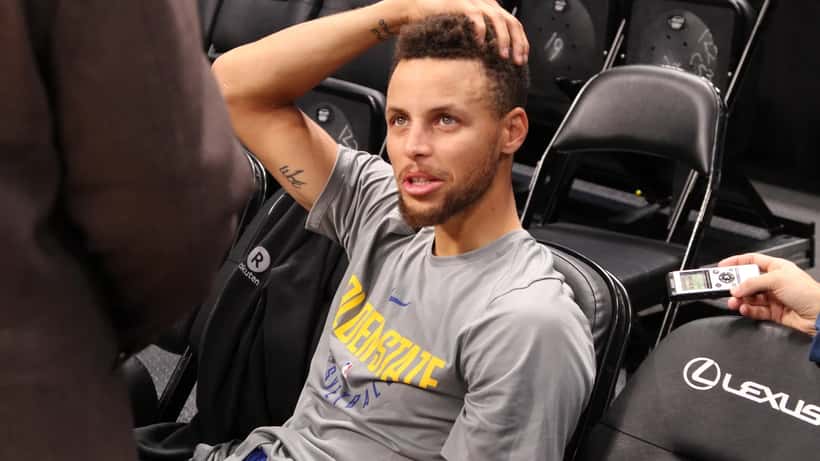
On April 16, 2026, Steph Curry walked onto the court for the Golden State Warriors' play-in game against the Los Angeles Clippers. He had missed 27 games since January, including the NBA All-Star Game, with a knee condition his own medical team described as "unpredictable." He scored 35 points and led a comeback from 13 points down with under 10 minutes to play.
Curry is 38 years old. The condition that sidelined him — patellofemoral pain syndrome, a chronic inflammation of the cartilage beneath the kneecap — is the single most common cause of missed games in the NBA, and one of the most stubborn to resolve at the professional level. His return performance was remarkable. But for the millions of recreational athletes and aging sports enthusiasts watching, his rehabilitation story carries a medical lesson that goes beyond highlight reels.
What Patellofemoral Syndrome Actually Is
Patellofemoral pain syndrome (PFPS) affects the cartilage between the kneecap (patella) and the thigh bone (femur). The kneecap tracks in a groove during movement, and when the cartilage is inflamed or the tracking is disrupted by muscle imbalance, overuse, or biomechanical issues, the result is pain that ranges from dull aching under the kneecap to sharp discomfort during stairs, squats, or high-impact movement.
Among NBA athletes, knee conditions — including PFPS — account for a significant share of missed playing time. A peer-reviewed study published in the National Institutes of Health's public database found that knee soreness, inflammation, and associated overuse injuries represent the leading single category of NBA injury burden over a multi-year period. The challenge is that PFPS is classified as a refractory condition — it is not self-limiting, meaning it does not simply resolve with rest. Left unmanaged, it is a known precursor to patellofemoral osteoarthritis.
Curry himself described the recovery as unlike anything in his career. When he tried to return earlier, the knee reacted in ways his medical team could not reliably predict. "There's no structural issue," he told reporters in April 2026. "But there's a new normal I have to figure out."
Why Age Changes the Equation
The "new normal" Curry described is medically significant. At 38, the tissue around the patellofemoral joint has lower regenerative capacity than at 28. The proteoglycans in cartilage — the molecules that give it its shock-absorbing properties — thin gradually with age and cumulative loading. For elite athletes who have trained and competed at high intensity for two decades, this process can be accelerated.
According to research available through the National Institute of Arthritis and Musculoskeletal and Skin Diseases (NIAMS), sports injuries in older athletes require individualized rehabilitation protocols that account for both the specific injury and the athlete's age-related tissue changes. The same condition in a 22-year-old and a 38-year-old involves different healing timelines, different exercise progressions, and different long-term management strategies.
This is precisely why Curry's knee did not respond to the initial timeline his team projected. It is also why self-managed rest — the instinctive response most amateur athletes reach for — is rarely sufficient for patellofemoral syndrome in people over 35.
The Load Management Debate
Curry's situation also reignited a debate that has been running through the NBA for years: how much playing time is too much for veteran athletes?
This is not the first time load management has been a flashpoint in NBA medical debates. As we explored when Allen Iverson criticized load management practices in the NBA, the tension between playing through discomfort and protecting long-term joint health is one the league has never fully resolved.
In the 2025–2026 season, the Warriors finished on a 5-15 skid, their worst full-season stretch since 2012. Curry averaged over 26 points per game despite missing 27 games — an extraordinary output rate. But the question his case raises for sports medicine professionals is whether that rate of exertion was appropriate for a knee already in a fragile state.
Research consistently shows that playing time above a threshold — roughly 26 minutes per game — correlates with meaningfully elevated injury risk, independent of age. For players approaching 40 with chronic overuse conditions, the calculation becomes harder. Load management — structured rest, reduced minutes, strategic scheduling — is not about protecting statistics. It is about managing tissue stress before symptoms appear, rather than after.
For recreational athletes, the lesson is more direct: the point at which chronic knee pain becomes an injury requiring professional evaluation is earlier than most people act on. The typical pattern is weeks or months of managing discomfort with ibuprofen and reduced activity, followed by a sudden worsening that requires more intensive intervention — and a longer recovery.
Recognizing When Rest Is Not Enough
The symptoms that distinguish patellofemoral syndrome from ordinary post-workout soreness include:
- Pain that persists more than 72 hours after exercise, rather than resolving
- Discomfort that begins during activity and increases as the session continues, rather than resolving with warm-up
- Pain when climbing stairs, sitting for extended periods with knees bent, or rising from a chair
- A grinding or clicking sensation under the kneecap during movement
If two or more of these are present for more than two to three weeks, the condition warrants evaluation by a sports medicine physician or orthopedic specialist. An imaging-guided assessment — to rule out structural damage and identify the specific biomechanical contributors — changes the treatment protocol in the majority of cases.
Steph Curry has access to one of the best sports medicine programs in professional sports. The fact that even his recovery was described as "unpredictable" is not a failure of his team — it is a reflection of how complex patellofemoral syndrome is at the tissue level. For the rest of us, without an NBA medical staff, getting ahead of those complications early is what expert consultation is designed to do.
Disclaimer: This article is for informational purposes only and does not constitute medical advice. Consult a qualified healthcare professional about any injury or health concern.
