 Elizabeth Chen
Allen Iverson Said "Don't Rest Me." Science Has a More Complicated Answer.
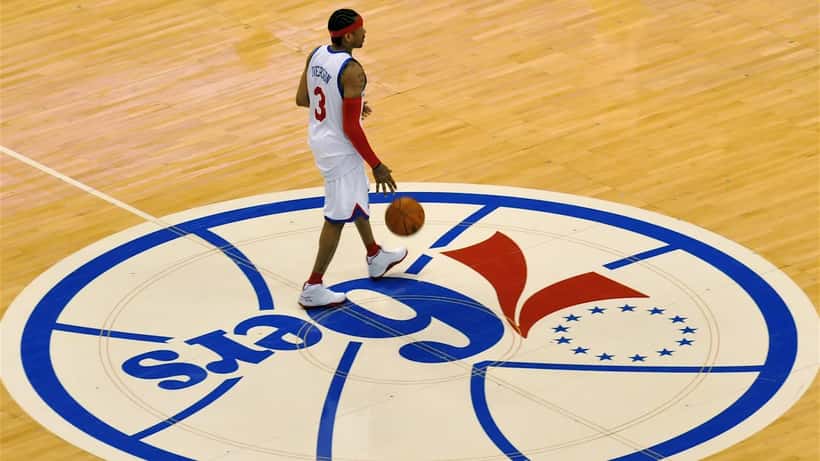
NBA Hall of Famer Allen Iverson ignited a familiar debate in April 2026 when he went public with his take on modern load management. "Don't rest me when we've got a game," Iverson said, pointing out the contrast between his era — 41.1 minutes per game, 914 career games, a playing style described as going to war every night — and today's practice of sitting star players to preserve their health.
Iverson's complaint resonated across social media and sports talk radio. He's not alone: coaches, media, and fans have been critical of load management for years. But the medical community has a more complicated relationship with the practice — and sports medicine doctors are divided on who's actually right.
What Iverson Represented — And Why It's Unsustainable
Allen Iverson averaged 26.7 points, 6.2 assists, and 2.2 steals per game across his 14-year career. He played through hip injuries, knee problems, and a level of physical contact that characterized the hand-check era of NBA defense. Teams literally hid his jersey to keep him from playing on rest days.
What Iverson's career also represents, according to sports medicine physicians, is a cautionary example of what elite physical output at that pace eventually costs. Iverson dealt with significant joint and mobility issues during his post-playing years — consequences that accumulate silently over seasons before becoming visible.
The question doctors ask isn't "should stars be tougher?" It's "what does the evidence actually say about preventing serious injury?"
What Load Management Actually Means
Load management is a sports science strategy that monitors cumulative physical stress on athletes and schedules deliberate rest before injury — not after. The idea emerged from research showing that athletes who experience sharp spikes in training workload relative to their recent baseline have significantly higher injury rates.
The concept is distinct from faking illness or being soft. In modern NBA training rooms, load management decisions are often informed by GPS tracking of movement during games, heart rate variability data, sleep quality logs, and muscle soreness assessments. The goal is to prevent an 82-game regular season — plus playoffs — from degrading an athlete's structural resilience to the point of rupture.
What the Research Actually Shows
Here is where the science becomes genuinely uncertain, and where honest doctors acknowledge the debate isn't settled.
An NBA-commissioned study by Drs. John DiFiori, Christina Mack, and Mackenzie Herzog — drawing on 10 years of league data — found no statistically significant link between scheduled rest days and a reduced risk of injury. Their analysis, shared with teams by the league office, suggested that other variables — previous injury history, prior surgeries, and age — were stronger predictors than managed rest.
In contrast, a 2024 analysis published in the journal Arthroscopy and indexed on PubMed argued that load management is essential for preventing season-ending injuries, finding a 75% reduction in injury risk associated with systematically managed workloads. The researchers emphasized that primary risk factors include minutes per game and cumulative late-season fatigue — exactly the conditions that load management targets.
A 2026 narrative review in Premier Science reinforced that it isn't just total load that matters but load spikes — sudden increases in acute stress relative to chronic baseline. An athlete who goes from 28 minutes per game to 42 minutes in a high-stakes playoff environment without progressive ramp-up faces significantly elevated injury risk.
The honest summary: strategic rest, applied correctly, likely reduces serious injury risk. But poorly implemented or used as a blanket excuse, it may simply frustrate fans and reduce competitive integrity without meaningful health benefit.
The NBA's Response: Financial Penalties
The NBA has heard the criticism. The league's Player Participation Policy (PPP), introduced in the 2023–24 season and enforced with escalating fines, prohibits teams from resting healthy star players during nationally televised games or in-season tournament matchups. Teams that violate the policy face financial penalties.
The policy reflects an implicit acknowledgment that load management, as practiced by some franchises, had gone beyond medical necessity into competitive disengagement. It also reveals the tension between what sports medicine recommends for long-term athlete health and what a professional sports league needs for commercial viability.
What This Means for the Rest of Us
The load management debate is often framed as an elite athlete problem. But the underlying principles directly apply to recreational athletes, weekend warriors, and anyone managing a physically demanding lifestyle.
Sports medicine physicians consistently identify three risk patterns in non-professional patients:
Doing too much too fast. The most common cause of recreational running injuries — shin splints, stress fractures, IT band syndrome — is increasing mileage or intensity too quickly without allowing the body to adapt. Structured progression prevents most of these injuries.
Playing through pain that warrants evaluation. Not all pain is Iverson-era toughness. Joint pain, persistent tenderness, swelling, or pain that changes gait or movement mechanics are signals worth evaluating by a specialist. Delaying diagnosis is almost always more costly than early intervention.
Ignoring recovery as part of the load. Sleep quality, nutrition, and deload weeks are not luxury additions to a training plan — they are the mechanism through which physical adaptation actually occurs.
For anyone dealing with persistent joint pain, recurring soft tissue injuries, or uncertainty about whether rest or activity is the right call, a consultation with a sports medicine physician provides a clinical assessment that neither Iverson's toughness-first philosophy nor a blanket rest day can replace.
ExpertZoom connects patients with licensed sports medicine and orthopedic specialists who can evaluate your specific situation. Read about how NBA-level load management thinking applies to everyday sports injuries — and find out when it's time to stop playing through it.
Medical disclaimer: This article is for informational purposes only and does not constitute medical advice. Consult a licensed healthcare professional regarding any medical condition or injury.
