 Sofía Fernández
A fresh wave of Southwest Airlines disruptions is dominating U.S. travel chatter in 2026, leaving passengers stranded at hubs from Baltimore to Chicago and wondering what compensation they are owed. While Southwest built its brand on no-frills reliability and free checked bags, this year’s operational turbulence has revived uncomfortable memories of the 2022 holiday meltdown that canceled more than 16,000 flights. Whether you are delayed two hours or grounded overnight, the rules that protect you are not as generous as many travelers assume, and the difference between a refund, a voucher, and real cash often depends on how well you document the disruption and push back.
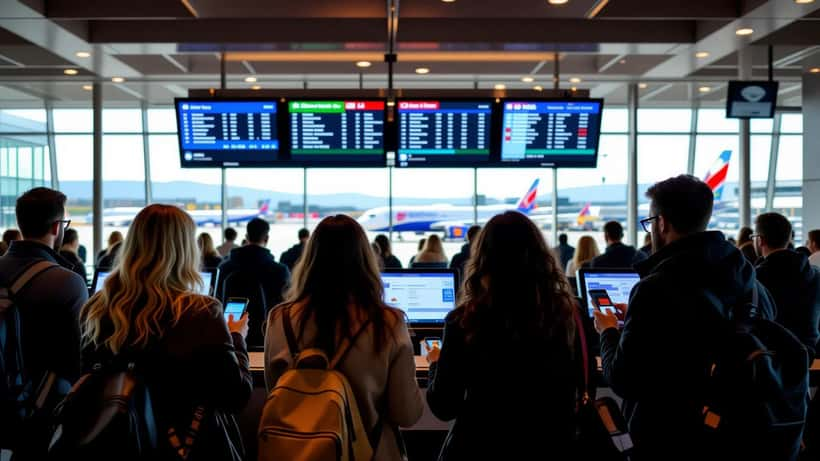
The current trouble traces back to a familiar mix of crew-scheduling gaps, summer thunderstorms, and a strained reservation system. On a single June day, Southwest accounted for dozens of cancellations and more than 50 delayed departures at Baltimore/Washington International alone. Knock-on effects rippled through Denver, Chicago Midway, and Dallas Love Field, the airline’s home base. Social-media feeds filled with images of passengers sleeping on floors and customer-service lines stretching past security. Southwest has acknowledged "operational challenges" and promised additional staffing and technology upgrades, but travelers continue to report last-minute schedule changes and inconsistent communication.
For anyone holding a Southwest ticket, the first thing to understand is that U.S. law still does not require airlines to pay cash compensation for domestic delays or cancellations the way the European Union does under EC 261. The Biden-era Department of Transportation proposed mandatory payouts of $200 to $755 for significant airline-caused delays, but that rule was withdrawn in late 2025. What remains is the FAA Reauthorization Act of 2024, which does give passengers a meaningful fallback: if Southwest cancels your flight or delays it substantially and you choose not to travel, you are entitled to a full, automatic, cash refund rather than a travel credit. The DOT defines a significant delay for domestic flights as three hours or more, and for international flights as six hours or more.
That refund right is powerful, but it is also narrower than it sounds. It applies when you decide not to take the trip at all. If you still fly, even hours late, the airline is not required to write you a check. Instead, you must rely on Southwest’s own customer-service plan, which is part of the voluntary commitments all major carriers filed with the DOT. Under that plan, Southwest promises to rebook you on the next available Southwest flight at no extra cost, provide meal vouchers for controllable delays of three hours or more, and cover hotel and ground transportation when an overnight delay is the airline’s fault. The key word is "controllable." Weather and air-traffic-control issues do not trigger those perks, and airlines frequently classify delays as outside their control.
This is where documentation becomes your most valuable travel tool. The moment a disruption is announced, screenshot the airline app, save emailed delay notices, photograph airport departure boards, and keep every receipt for meals, hotels, rideshares, and rebooked transport. If Southwest later claims the delay was weather-related, you can challenge that narrative with contemporaneous evidence. The same principle applies if you are forced to buy a ticket on another carrier to reach a wedding, funeral, or critical business meeting; while Southwest is not legally required to reimburse that expense, many passengers have recovered it through persistent customer-service escalation, credit-card chargebacks, or small-claims court.
The broader landscape is also shifting. The current DOT has signaled it will ease enforcement penalties for airlines that violate consumer-protection rules, and it paused some refund enforcement for "renumbered" flights, where an airline changes a flight number to avoid classifying a cancellation. That makes self-advocacy more important than ever. A proposed Senate bill, S.3347, would restore cash compensation and require free rebooking on competing airlines, but as of mid-2026 it remains stalled in committee.
Southwest’s rivals are not immune either. American Airlines recently raised checked-bag fees and is facing its own passenger-rights scrutiny, including a no-confidence vote targeting CEO Robert Isom over service quality. JetBlue and Alaska Airlines have also drawn DOT attention for controllable cancellations and fuel-surge fare spikes, which is why the same advice applies no matter which carrier’s boarding pass you hold. For travelers comparing airlines, our breakdown of American Airlines baggage fee changes and passenger rights explains how bag policies interact with refund claims, while our guide to JetBlue cancellation rights shows how another major carrier handles rebooking and vouchers. If fuel costs are driving your fare shock, see how Alaska Airlines is responding to fuel surges.
Experts in aviation consumer law recommend a three-step playbook when Southwest disrupts your trip. First, accept or decline rebooking within minutes if possible; seats on later flights disappear fast during system-wide events. Second, request the specific remedy you want in writing, whether that is a refund, hotel voucher, meal reimbursement, or mileage compensation. Third, escalate promptly if the front-line agent refuses: ask for a supervisor, file a complaint with the DOT’s Aviation Consumer Protection office, and consider involving a travel attorney if your documented losses exceed a few hundred dollars.
For business travelers and families, the stakes are especially high. A missed connection can cascade into lost hotel deposits, forfeited event tickets, and missed work. Travel insurance can help, but read the fine print: many policies exclude delays caused by airline operational issues unless you purchased a "cancel for any reason" upgrade. Credit cards with trip-delay protection often provide faster relief, reimbursing meals and lodging after a delay as short as six hours, regardless of whether the airline admits fault.
Looking ahead, Southwest has promised network and technology investments aimed at preventing a repeat of the 2022 meltdown. Industry analysts say the carrier’s shift toward assigned seating and premium cabins, announced in 2024, adds operational complexity that may take years to smooth out. Passengers should treat 2026 as a transitional year: expect more change, but do not lower your expectations for honest communication and fair treatment.
The bottom line is that Southwest disruptions are inconvenient, but they are not lawless. You still have a right to a cash refund if you choose not to fly, and you can demand meals, hotels, and rebooking when the airline is responsible for the delay. The travelers who come out ahead are the ones who document everything, know the difference between a DOT rule and a voluntary airline promise, and are willing to escalate when the first answer is no. If your next trip is essential, build in a buffer, keep your receipts, and remember that expert help, whether from a consumer lawyer or a travel-advocacy service, is often just one consultation away.
