 Michael Campbell
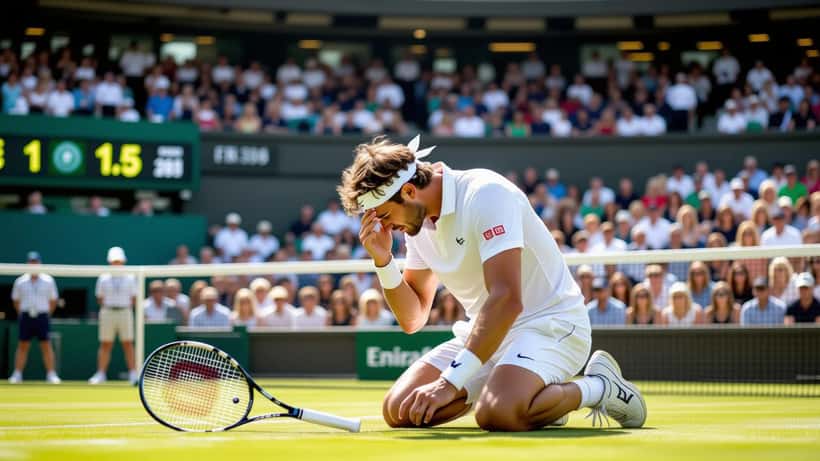
Roman Safiullin walked off Wimbledon's grass courts last week in tears — not from defeat, but from the sheer relief of being back. The 26-year-old Russian, ranked No. 132 in the world and entering as a qualifier, had just demolished Joao Fonseca, the 24th seed, 6-3, 6-3, 6-3, to reach the fourth round of the 2026 Championships. That victory came with a guaranteed prize check of £300,000 — roughly $396,100 — one of the single biggest paydays of his career.
For fans, Safiullin's return is the feel-good story of this Wimbledon. For wealth managers who work with professional athletes, it's also a textbook case study in one of sport's most misunderstood financial challenges: what do you do when a six-figure windfall arrives after months — sometimes years — of near-zero income?
A Comeback Measured in Dollars and Determination
Safiullin's 2025 season ended abruptly after the US Open due to injury. He spent much of the following months off the Tour, watching his ranking slide while his career earnings sat frozen at $4.28 million — accumulated over years of grinding through qualifiers, Challengers, and rare deep runs at Majors.
His return in early 2026 was cautious: two Challenger titles in February helped him rebuild both confidence and ranking points. Wimbledon 2026, with a record-breaking total prize pool of £64.2 million — a 20 percent year-on-year increase, the largest in the tournament's history — offered an opportunity he hadn't expected to capitalize on this soon.
Qualifying through three rounds before the main draw even began, Safiullin then won three main-draw matches to reach the fourth round. His R4 payout of $396,100 represents roughly nine percent of his entire career earnings — earned in a single week.
Why Prize Money Is More Complicated Than It Looks
In professional tennis, income does not arrive in steady paychecks. A player ranked inside the top 50 might earn $1.5 million in a single good year, then make less than $100,000 during an injury-plagued season. Safiullin's own trajectory illustrates this precisely: his best year financially was 2023, when a deep run at Wimbledon and several Masters events earned him over $1.2 million. The years on either side looked very different.
For US-based financial advisors — and for any athlete competing on the American circuit — this volatility creates a specific planning problem. Prize money is classified as ordinary income by the Internal Revenue Service, meaning it is subject to federal income tax at rates up to 37 percent for high earners in 2026. Players also face additional complexities: earnings at Wimbledon are subject to UK tax withholding under the UK-US tax treaty, state taxes apply depending on where a player is based, and self-employment taxes on athlete income can add another layer of cost.
The net result is that a $396,100 prize check may actually leave an athlete with significantly less than half that amount after taxes — if they haven't planned correctly in advance.
The Three Mistakes Athletes Make With Lump-Sum Windfalls
Wealth managers who specialize in professional athletes consistently flag three errors that are almost universally made at some point in a player's career.
Spending before setting aside taxes. The single most common mistake: treating the full prize amount as spendable income. Financial planners routinely recommend setting aside 40 to 50 percent of prize money immediately — before any spending decisions — to cover federal, state, and international tax obligations. Safiullin's $396,100 R4 check, for example, may carry a combined tax liability approaching $180,000 depending on his residency situation and applicable treaties.
Treating windfalls as salary replacements. A player who earns $400,000 in one week may unconsciously calibrate their lifestyle to that level — then face severe financial strain during a six-month injury absence. Building a genuine emergency reserve of six to twelve months of living expenses, held in liquid, low-risk accounts before any investment decisions, is foundational to athlete financial health.
Skipping professional guidance during the "up" years. Athletes often seek financial advice after a financial crisis, not before one. The strategic moment to engage a qualified financial advisor is precisely during a high-earning period — when there are actual assets to protect, structure, and grow. A certified wealth manager can help establish the right account structures, diversify investments across asset classes, and create a draw-down plan for the low-income periods that will inevitably follow.
What a Wealth Manager Actually Does for an Athlete
Wealth management for professional athletes is not simply investment portfolio selection. A qualified advisor working with a tennis professional might coordinate across several disciplines: tax planning to optimize withholding across multiple jurisdictions, insurance review to protect against further career interruption, and long-term investment strategy designed specifically for volatile income streams.
For a player like Safiullin — still in his twenties, with a career that has already seen significant highs and a serious injury interruption — the financial planning window is both valuable and finite. The financial challenges facing Safiullin echo those of other rising tennis professionals; Daria Snigur's Roland Garros prize money journey illustrates how quickly tournament earnings can shape — or strain — a career when not managed strategically. A wealth manager can model multiple scenarios: what if the ranking climbs back into the top 50 within 18 months? What if another injury occurs? What does early retirement look like at 32 versus 35?
According to the Financial Industry Regulatory Authority (FINRA), professional athletes are among the populations most at risk for rapid wealth erosion due to income volatility, short career windows, and the lifestyle pressures that accompany sudden large paydays. FINRA's guidance on managing financial windfalls recommends creating a structured plan before spending, addressing financial essentials first, and seeking qualified professional advice — a sequence that is straightforward in theory but routinely skipped under the excitement of a major career payout.
This article is for informational purposes only and does not constitute financial or investment advice. Consult a licensed financial advisor for guidance specific to your situation.
The Bigger Picture at Wimbledon 2026
Safiullin's story is one of dozens playing out simultaneously at the 2026 Championships. Qualifiers and lower-ranked players earning their way into the second week represent exactly the kind of income event — unpredictable, large, and brief — that demands immediate financial attention. The £64.2 million total prize pool means more athletes than ever are making life-changing sums in a single fortnight. Whether that money builds long-term security or disappears inside two years depends almost entirely on the quality of guidance those athletes receive right now.
For professional athletes — and anyone navigating a significant financial windfall — connecting with an experienced wealth manager through a platform like Expert Zoom can mean the difference between a windfall that transforms a career and one that simply passes through.
The grass at Wimbledon dries fast. The consequences of financial decisions made in the days after a big result last much longer.
