 Bernard Stone
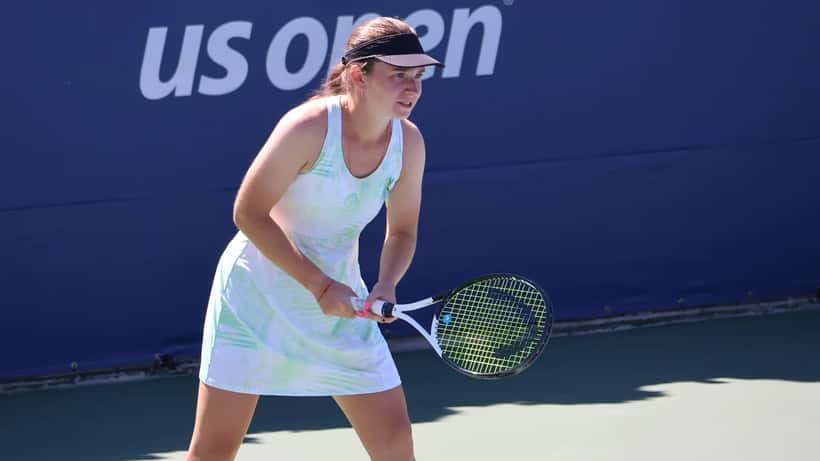
Ukrainian tennis player Daria Snigur reached the second round of Roland Garros 2026 on May 25 after defeating Clara Tauson 3-6, 7-5, 6-2 in a three-set comeback. Now at a career-high ranking, Snigur faces Peyton Stearns in Round 2 — with €130,000 guaranteed simply by progressing past the first round at the French Open. For touring tennis players like Snigur, the financial stakes at Grand Slams are higher than ever — and so are the tax and wealth management complexities that come with them.
A financial advisor explains what touring athletes should know about managing prize money earned at major tournaments.
Roland Garros 2026 Prize Money: Record Payouts, Real Financial Decisions
The 2026 French Open's total purse has reached a record €61.7 million — a 9.5% increase over 2025. For women's singles players, the breakdown by round is significant even for players who do not make deep runs:
- First round exit: €87,000 (up 11.5% year-over-year)
- Second round exit: €130,000
- Quarter-finalist: €470,000
- Semi-finalist: €750,000
- Runner-up: €1.4 million
- Champion: €2.8 million
For a player like Daria Snigur — Ukrainian, competing internationally, at a career-high ranking — earning €130,000 at a single tournament is not a windfall to be casually deposited. It is irregular income, earned in France, subject to withholding at source, and potentially taxable in multiple jurisdictions depending on the player's residency and domicile status.
"Most touring athletes receive prize money net of French tax withheld at source," explains a financial advisor specializing in international athletes. "But that withholding doesn't end their tax obligation — they may owe additional tax in their home country, depending on their tax residency, and the treaty relief available under bilateral tax agreements."
The Three Financial Challenges Every Touring Athlete Faces
1. Multi-Jurisdiction Taxation
Professional tennis players compete in dozens of countries each year. Prize money earned in France, the United States, the United Kingdom, and Australia — the four Grand Slam countries — is subject to the tax laws of each country, plus potential obligations in the player's country of tax residency.
Ukraine, where Snigur holds citizenship, has a flat personal income tax rate of 18%. France withholds tax on prize money at source before payment. The France-Ukraine bilateral tax treaty determines whether the French-withheld amount can be credited against Ukrainian tax — a calculation that requires professional tax advice to get right.
"Athletes who don't address this face double taxation on the same earnings," notes a certified financial planner. "Proactive residency planning and treaty-based credit claims can legally reduce the effective rate significantly."
2. Irregular Income and Cash Flow Management
Tennis prize money is inherently lumpy: a player might earn €130,000 at Roland Garros, nothing at the next two clay-court events due to early exits, then €200,000 at Wimbledon. This irregular income pattern creates specific financial planning challenges that salaried employees never face.
Financial advisors recommend that touring athletes maintain a minimum of 12 months of living and training expenses in liquid reserves. With annual training costs for a professional tennis player — coaching, travel, physiotherapy, equipment — easily reaching €200,000-€350,000 per year, a single tournament's prize money does not make an athlete financially secure.
"The gap between gross prize money and net income after taxes, agent fees, coaching costs, and travel is enormous," says a wealth manager. "Players who make it to the second round of a Grand Slam four times a year might net €150,000 after all costs — and that must be invested and protected carefully."
3. Career-Span Financial Planning
Professional tennis careers are short. The average age of retirement on the WTA Tour is approximately 27-28 years. For a player currently performing at career-high levels, the window of peak earning is typically five to eight years.
Wealth managers advise touring athletes to structure earnings into three buckets: an emergency fund covering 24 months of expenses, a medium-term investment portfolio (conservative, globally diversified), and a long-term retirement vehicle appropriate to the athlete's tax residency.
"The biggest mistake young athletes make is assuming their current earning trajectory will continue indefinitely," explains a financial advisor. "A single significant injury can end the income stream in weeks. Planning needs to start now, not at retirement."
What Daria Snigur's Trajectory Reveals About Smart Financial Planning
Snigur made her first major Grand Slam impact at the US Open 2022, where she defeated world number one Iga Świątek in the first round — one of the biggest upsets that year. That visibility led to increased ranking, better seedings, and higher guaranteed prize money at future tournaments.
Career momentum like Snigur's creates a financial planning window that must be used efficiently. A financial advisor can help structure the early career years — when prize money begins flowing regularly — as the foundation for long-term financial security.
The IRS offers guidance for athletes earning income in the United States on tax obligations for non-resident alien athletes competing at US tournaments (IRS Publication 519 — U.S. Tax Guide for Aliens). But US tax law is only one jurisdiction among many for international touring players.
When to Consult a Wealth Manager as an Athlete
Professional athletes at every level benefit from specialized financial advice when:
- They begin earning prize money across multiple countries in a single calendar year
- Their annual income exceeds their immediate living costs by more than 30%
- They receive a sponsorship deal or brand partnership (which has different tax treatment than prize money)
- They are planning retirement or a significant reduction in competitive schedule
At Expert Zoom, certified financial advisors and wealth managers with experience in professional sports income are available for consultations — helping touring athletes build financial security that outlasts their competitive careers.
As Daria Snigur steps onto the clay at Roland Garros for her Round 2 match, the financial decisions she makes off the court will determine how long her success on it continues to serve her.
