 Charles Jackson
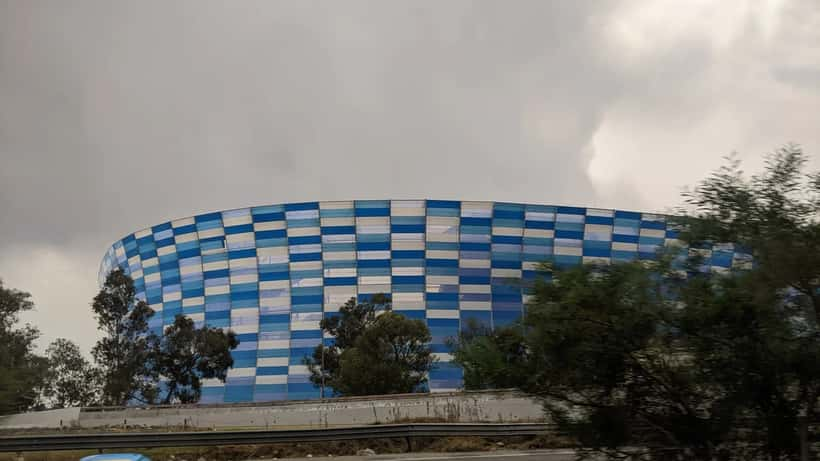
Club Puebla and Guadalajara's Chivas kick off their Apertura 2026 meeting Thursday, July 31 at Estadio Cuauhtémoc—one of Liga MX's most charged fixtures, in a stadium that holds more than 42,000 fans. Thousands of U.S.-based followers of Mexican soccer are tracking the match; some are flying in for it. But amid rising travel interest in Liga MX, a practical legal question has gone largely unanswered: what are your rights as a fan if something goes wrong inside a Mexican stadium?
The Question U.S. Fans Are Actually Asking
The short version: Am I protected if there's a fight, a crowd crush, or a security failure at a Liga MX match—and what can I realistically recover?
The question carries real weight. Liga MX's most infamous recent incident took place in March 2022, when a brawl between rival supporter groups during a Querétaro vs. Atlas match at Estadio Corregidora sent at least 26 people to the hospital. Criminal investigations were opened for tentativa de homicidio (attempted murder). Liga MX suspended all Sunday matches. In the aftermath, the league imposed what were then the harshest sanctions in its history: Querétaro FC's ownership was forced to sell the club, the group received a five-year ban from league activities, and a fine of 1.5 million pesos (about $84,000 USD) was levied against the organization. Dozens of individual fans received one- to three-year stadium bans.
But here's what most travel guides don't mention: criminal penalties against a club are not the same as civil compensation for an injured fan. Getting money in your pocket as a U.S. visitor injured at a Liga MX stadium requires a different—and considerably more complex—legal path.
What Mexican Law Actually Guarantees Stadium-Goers
Mexico's Código Civil Federal (Federal Civil Code) establishes the foundational obligation. Under Article 1913, stadium operators face strict liability for damages caused through mechanisms or conditions that generate special risk to persons on their premises. In practice, this means a club or venue that fails to deploy adequate crowd management, security personnel, or barrier maintenance can be held liable in Mexican civil court for injuries that result from that failure.
Liga MX reinforced the operator's duty of care in November 2022 by mandating Fan ID—biometric facial recognition technology developed by Incode—across all league stadiums. The system is now active at more than 30 venues, including Estadio Cuauhtémoc. Liga MX's stated capacity is 50,000 verified fans processed per match. Banned individuals are cross-referenced against a league-wide database. A stadium that allows a flagged person to enter, or that fails to deploy Fan ID correctly, compounds its legal exposure under the Article 1913 framework. (For more on how Fan ID data privacy works in practice, see our analysis of the Querétaro vs. América biometric fine.)
Mexico's Federal Consumer Protection Law—enforced by PROFECO, the national consumer protection agency—adds a second layer. Article 92 of that law entitles ticket buyers to a full refund if an event is suspended or substantially disrupted, regardless of fault. This applies whether you purchased through an authorized reseller like StubHub or directly from the stadium box office. PROFECO complaints are filed online, can be initiated in English, and do not require a Mexican attorney—making this the fastest recovery route for the most common outcome: a suspended or abandoned match.
The Concrete Case — One Fan, $180, a Fractured Wrist
Here is the scenario that illustrates how liability works in practice.
You are a Chivas supporter based in San Antonio. You paid $180 for a ticket in section Norte at Estadio Cuauhtémoc through StubHub—an authorized secondary marketplace. The July 31 Puebla–Guadalajara match escalates in the third tier when rival barras (supporter groups) clash during the second half. A section barrier collapses during the crowd surge; you fall and fracture your wrist. You later learn that security personnel had left that level unattended for at least 15 minutes before the incident.
Here is what changes for your legal position depending on a single variable: whether you document the security failure before you leave the stadium.
- If you document the failure the same day—filed police report (acta de hechos) with Policía Municipal on site, photographs of the empty security post, written witness statements—you have a viable negligence claim under Article 1913. A fractured wrist with documented medical costs and five to seven days of lost income translates to an estimated civil claim of 80,000–150,000 pesos (roughly $4,000–$7,500 USD at 2026 exchange rates), plus daño moral (moral damages) that Mexican courts typically add when bodily injury is proven.
- If you leave without filing a report, the documentation trail collapses. A PROFECO complaint for the disrupted match remains available—you may recover your $180 ticket cost—but the civil damages claim against the stadium becomes nearly impossible to substantiate in Mexican civil procedure.
- If your U.S. travel insurance policy covers "civil unrest" or "stadium incidents", that pathway does not require Mexican litigation at all. It is typically the fastest recovery route for amounts under $10,000, since you file in English with a U.S.-based insurer.
The if/then logic: if you act within the first hour, then your legal options multiply significantly. If you wait 24 hours, documentation gaps narrow them sharply. The distinction between a recoverable claim and no claim at all often comes down to a single document requested at the stadium that day.
Three Other Questions U.S. Fans Are Asking
If I bought a ticket on the street, does PROFECO still protect me?
No. PROFECO protections apply only to transactions with regulated commercial entities. An unofficial scalper is an individual, not a business subject to consumer law. If the ticket is counterfeit or the match is suspended, you have no statutory recovery mechanism—only potential criminal fraud charges against the seller, which can take years to resolve in the Mexican court system.
Can I sue the club in U.S. federal court?
Generally no. Guadalajara FC and Club Puebla are Mexican legal entities; U.S. federal courts typically lack personal jurisdiction over them for incidents occurring in Mexico. The exception would be if you could demonstrate that the club's U.S. commercial activities—broadcast rights, tour matches, merchandise sales—are substantial enough to establish minimum contacts in your state. That is a complex argument requiring experienced legal counsel, and it rarely succeeds for a one-time stadium injury. Mexican civil court, with a locally licensed attorney, is the realistic forum.
What does Fan ID registration actually do for my safety?
Fan ID links your biometric data to your match ticket before entry. It allows Liga MX to identify individuals involved in incidents and apply permanent bans enforced league-wide—including at 2026 FIFA World Cup venues, since the system was partly motivated by Mexico's co-hosting role. Registering before July 31 also reduces your risk of being caught in entrance bottlenecks, which in high-attendance fixtures like Puebla vs. Guadalajara can themselves become crowd-crush hazards. Our guide to Liga MX fan ticketing rights covers what your ticket contract requires the stadium to provide once you're inside.
What To Do Before You Go—and If Something Happens
Before July 31:
Register for Fan ID through Estadio Cuauhtémoc's official ticketing portal—a one-time process that speeds entry and puts your name in the league's security database. Review your travel insurance policy line by line: look specifically for "civil disturbance," "event cancellation," and "medical evacuation" clauses. Save the emergency number for the U.S. Consulate General in Monterrey, the nearest consular post to Puebla: +52 81 8047-3100.
At the stadium:
When you enter, note your section number, the gate letter on your ticket, and the location of the nearest visible security post. If an incident occurs, do not exit before requesting the written acta de hechos from the Policía Municipal desk in the stadium concourse. Photograph the document, your seat location, and any visible conditions that contributed to the incident. These three steps—report, photograph, stay—are the foundation of any subsequent claim.
After you return to the U.S.:
A lawyer with cross-border civil litigation experience can assess whether a Mexican civil proceeding, a PROFECO complaint, or a travel insurance claim is the most practical path for your specific losses. These three routes can run in parallel, and the right strategy depends on the size of documented damages and what you collected on the day. Liga MX's Fan ID system has meaningfully reduced brawl frequency since 2022, but the Puebla–Guadalajara fixture on July 31 remains a rivalry with a long track record of fan tension. Knowing the law before kick-off costs nothing. Reconstructing it afterward always does.
This article addresses general legal principles under Mexican federal law and is for informational purposes only. It does not constitute legal advice. Consult a licensed attorney in Mexico or a firm with cross-border civil practice for guidance on your specific situation.
