 Joseph Wallace
Philadelphia is experiencing one of its most dangerous heat events in decades. On July 4, 2026, the city's Department of Public Health extended a heat health emergency through Sunday, July 5, with temperatures reaching 102°F and a heat index topping 110°F — the third consecutive triple-digit day in the region. As thousands of PECO customers lost power and air conditioning units across the Delaware Valley struggled to keep up, HVAC experts are urging Philadelphia homeowners to act before a breakdown leaves them without cooling during the most dangerous hours.
Philadelphia's Heat Emergency by the Numbers
The National Weather Service issued an Extreme Heat Warning for the greater Philadelphia area on July 4, 2026, effective from noon through 8:00 p.m. Demand on the PJM electrical grid — which serves 67 million customers across 13 states including Pennsylvania — surged to 163,000 megawatts, approaching its all-time record set in 2006. PECO, the region's main utility provider, reported thousands of customers without power as the grid strained under record cooling demand.
This is not a routine summer hot spell. Philadelphia recorded its third straight day above 100°F, matching a weather pattern last seen in 1966 and 1993. The combination of extreme heat and overwhelming grid load creates a cascading risk: AC units work harder, draw more power, and are far more likely to fail during exactly the moments when you need them most.
Why Heat Waves Break Air Conditioners
Air conditioners are not designed to run continuously at maximum capacity for days on end. During a sustained heat emergency like Philadelphia's 2026 event, three main failure points emerge:
Refrigerant overload. When outdoor temperatures exceed 95°F, the heat exchange process that drives your AC becomes significantly less efficient. The compressor — the heart of the unit — must work longer cycles and runs hotter, which accelerates wear and overheating risk.
Condenser coil stress. The outdoor condenser unit releases heat from your home into the outside air. When that outside air is already 102°F, the condenser coil cannot dissipate heat effectively. This forces your system to run longer and can trigger thermal shutdown.
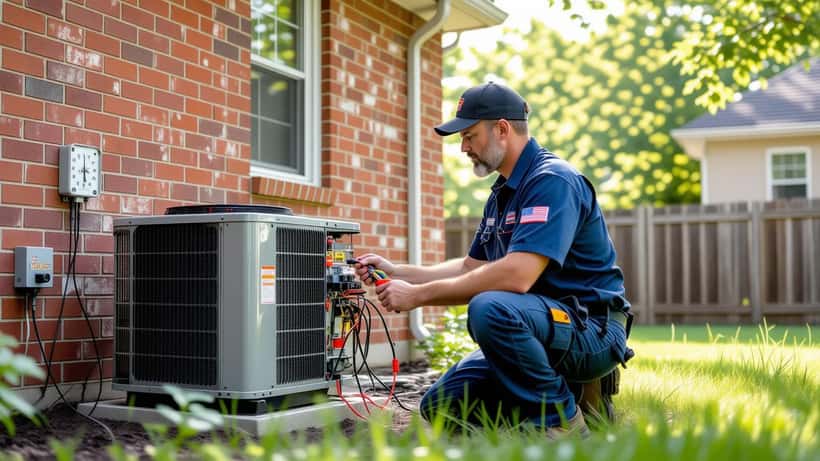
Electrical strain. Extended high-current operation in hot conditions stresses capacitors and contactors — components that cost relatively little to replace proactively but cause full system shutdowns when they fail. During the July 2026 heat emergency, HVAC contractors across the Philadelphia region reported call volumes three to four times higher than a typical summer week.
What to Check Before Your AC Unit Fails
HVAC professionals recommend a rapid self-assessment when a heat emergency begins. These steps take less than 15 minutes and can catch early warning signs before a costly breakdown:
Check your air filter. A clogged filter restricts airflow and forces your system to work harder. In summer, filters in Philadelphia homes should be replaced every 30 days. Hold it up to a light — if you cannot see through it, replace it immediately.
Clear space around the outdoor unit. Your condenser needs at least 18 inches of clear space on all sides. Remove leaves, debris, or weeds that have accumulated since spring. Do not run the unit with condenser fins caked in dirt.
Check your thermostat setting. PECO advises keeping thermostats at a steady temperature rather than repeatedly cycling the system on and off. Dropping from 78°F to 68°F in a sudden burst demands a power surge and increases breakdown risk.
Listen for unusual sounds. Grinding, rattling, or high-pitched squealing during operation are warning signs of a failing capacitor or blower motor. A failing capacitor can take the entire compressor with it if ignored.
Check your circuit breaker. If your AC trips the breaker and resets, this is not a minor inconvenience. Repeated tripping indicates electrical overload or a failing component. Resetting it repeatedly risks a wiring fire.
When It's Time to Call a Home Improvement Professional
PECO's guidance — closing blinds to block 40% of incoming heat, turning off unnecessary appliances, and locking windows while running central air — can extend your system's runtime. But there is a clear threshold where professional help becomes essential.
If your AC runs constantly and your indoor temperature is still rising past 80°F, if ice forms on the refrigerant lines, if the unit trips your breaker more than once, or if it stops blowing cold air entirely, these are situations that require a licensed HVAC technician — not a YouTube fix. If your home has a pre-2015 system, it may also face refrigerant compliance issues linked to the 2026 R-22 and R-410A phase-out changes that are adding cost and urgency to repairs this summer.
During a declared heat health emergency, the City of Philadelphia opens cooling centers at public libraries, recreation centers, and senior facilities — a critical resource for households whose AC has failed.
Longer-Term: What This Heat Wave Reveals About Home Readiness
July 4, 2026 is a preview of what climate data shows will be recurring conditions across the Delaware Valley. Extreme heat days in Philadelphia have doubled in frequency since 1980. According to the U.S. Department of Energy, homes with proper insulation, sealed duct systems, and correctly sized cooling equipment can reduce cooling costs by up to 30% while significantly lowering breakdown risk during extreme events.
The July emergency is a reminder that HVAC maintenance is not a luxury. A licensed home improvement contractor can assess your system's capacity before the next heat event, recommend proactive refrigerant recharges, capacitor replacement, or coil cleaning — and help you determine whether your equipment will realistically survive another Philadelphia summer.
A professional consultation through ExpertZoom connects you with licensed HVAC specialists serving the Philadelphia metro area, available to advise on emergency repairs and longer-term home cooling upgrades before the next heat emergency arrives.
